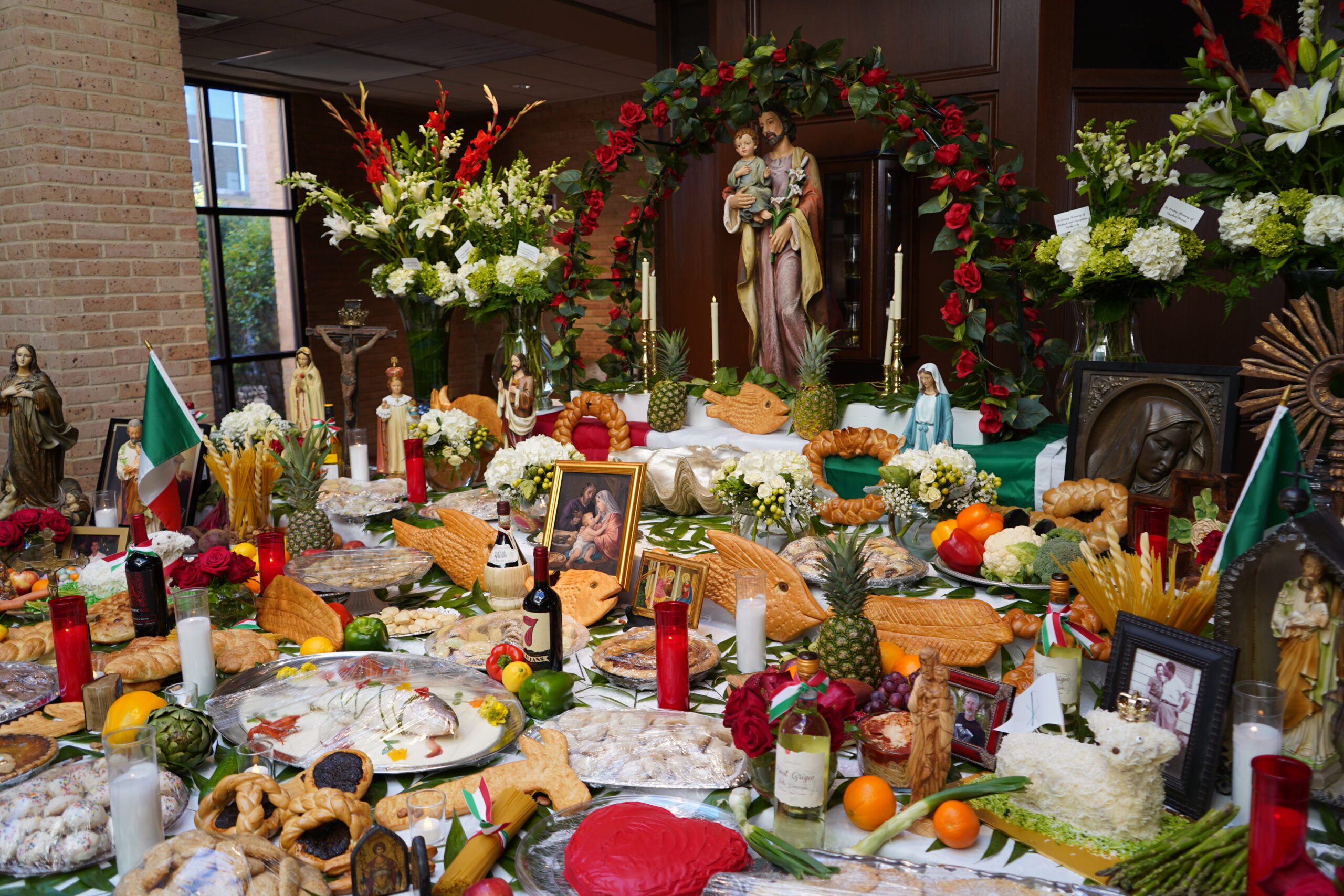
The Sicilian Catholic tradition of St. Joseph altars endures across south Louisiana
A common Crescent City practice now has a foothold in the Capital Region ⛪️🥖
Visions of St. Joseph altars dance across Amy Cannizaro Burris’ childhood memories.
Her grandmothers participated in the annual tradition in greater New Orleans when she was growing up, creating altars intricately arranged with homemade cookies and breads, along with candles and pictures of loved ones. The practice is a tribute to St. Joseph, believed to have delivered Sicily from famine during the Middle Ages.
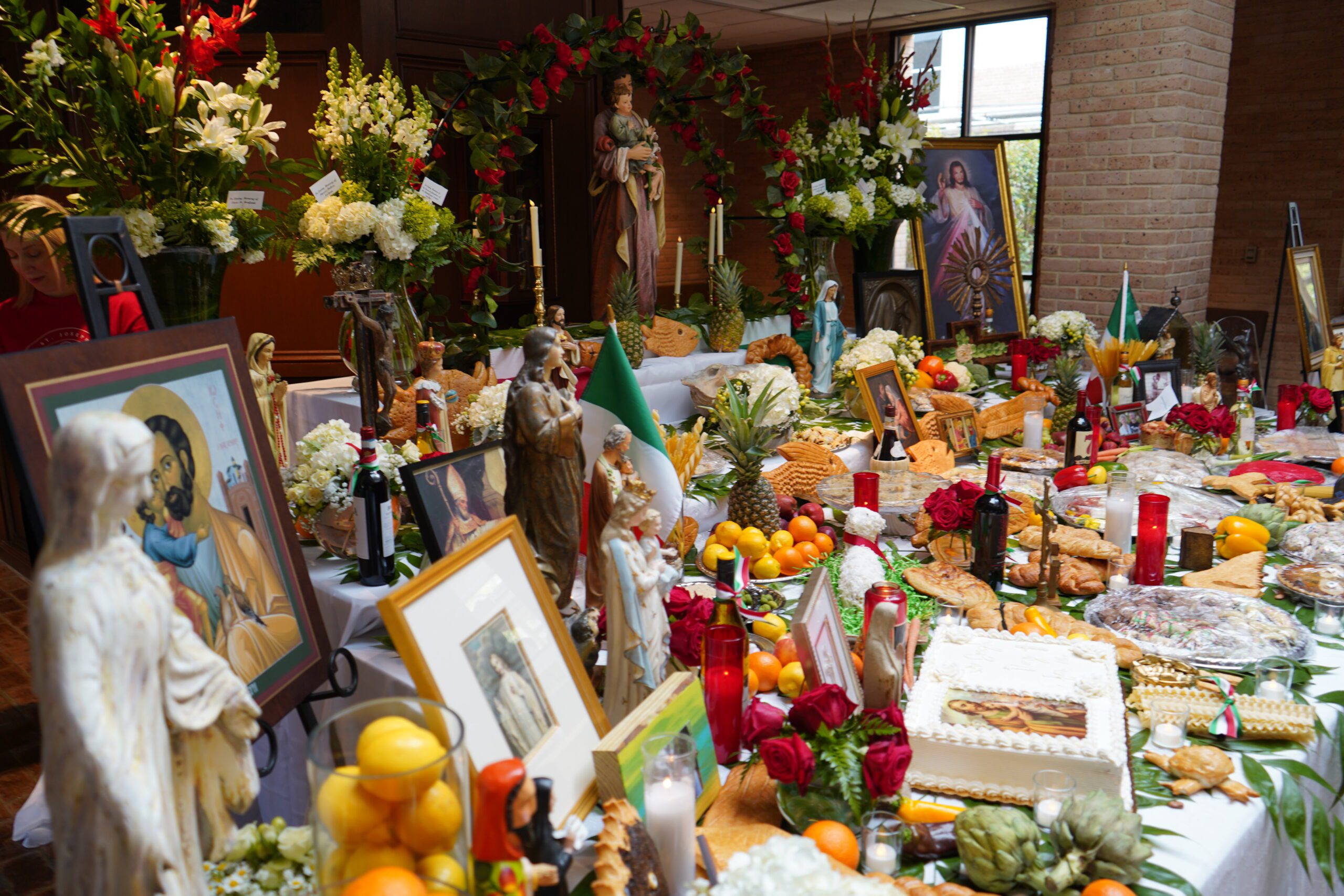 When Sicilians emigrated to south Louisiana in the late 19th and early 20th centuries, they brought along the Old World ritual, which honors Sicily’s patron saint with offerings situated on three-tiered spreads. It’s long been popular in homes and churches in the Crescent City, but now has a foothold in the Capital Region as well.
Burris, a married mother of three in Baton Rouge, says the 2022 death of her last remaining grandparent, Seraphine DiCarlo Cannizaro, inspired her to keep the practice alive in her own community. She and friend Molly Nelson, another New Orleans native whose family participated in St. Joseph altars, decided to reboot at their home parish, St. Aloysius Catholic Church, in 2023. (The church had had an altar 11 years earlier.) The project has been a big success, attracting both parishioners and community members for quiet reflection amid culinary beauty.
“People just jumped right in to help,” Burris says. “It’s truly been a group effort.”
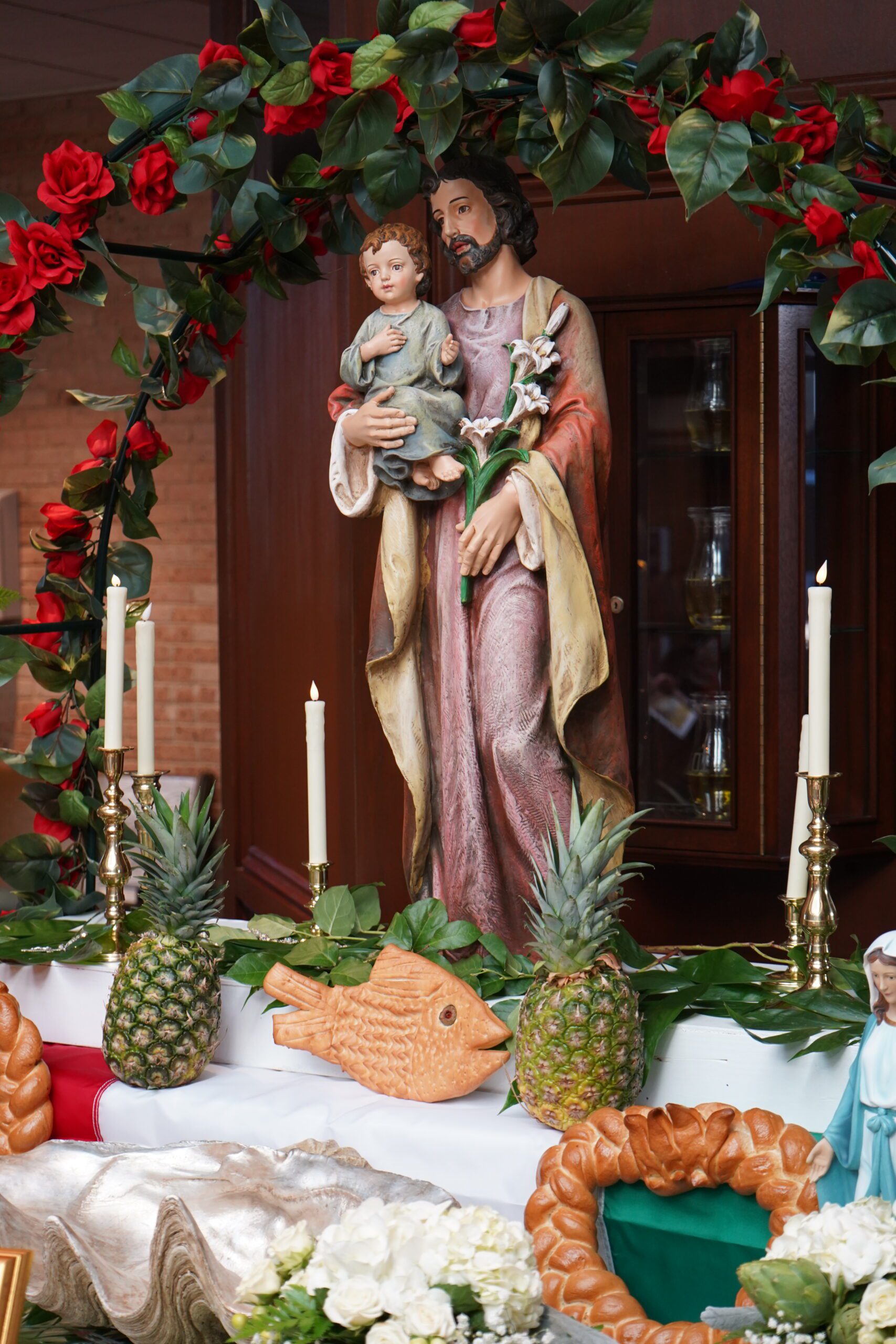 Numerous Catholic churches across the Capital Region host St. Joseph altars on or around March 19, the annual feast day of St. Joseph. Adorned with baked goods, fruit, fava beans and Italian ephemera, altars connect worshippers to a centuries-old practice that pays tribute to Jesus’ earthly father.
Across greater Baton Rouge, well-established St. Joseph altars take place at St. Alphonsus Liguori Catholic Church, the Cypress Mercedarian Prayer Center, Immaculate Conception Catholic Church in Denham Springs, and many others. Some are large, recruiting scores of volunteers to bake traditional treats. St. Alphonsus, for example, prepared nearly 20,000 cookies for its annual feast this year. Other churches, like St. Thomas More, have launched newer altars that are smaller scale—at least for now.
St. Thomas More parishioner Joe Macaluso grew up around the tradition in New Orleans and is part of the church’s St. Joseph altar committee.
“I think it was an outgrowth of people attending St. Joseph’s altars in other parishes or in homes over the years,” Macaluso says. “We decided to introduce it last year. The first step was getting familiar with the ground rules.”
Macaluso, who has advised other churches on St. Joseph altars, jokes that while each altar has its own style, there are also fixed requirements, including a meatless mandate. Requisite baked goods like fig-filled cuccidati, anise biscotti and sesame seed cookies are also in good supply. Traditionally, such sweets were exclusively homemade. Burris and Nelson recall their grandmothers baking for weeks in advance. But modern altar practitioners now rely on help from commercial bakeries, they say.
Breads are also a mainstay. They’re often baked in the shape of hammers, saws, sandals and other items representing Joseph. And offerings are positioned on three-tiered shelves or in three-leaf table arrangements, representing the Holy Trinity.
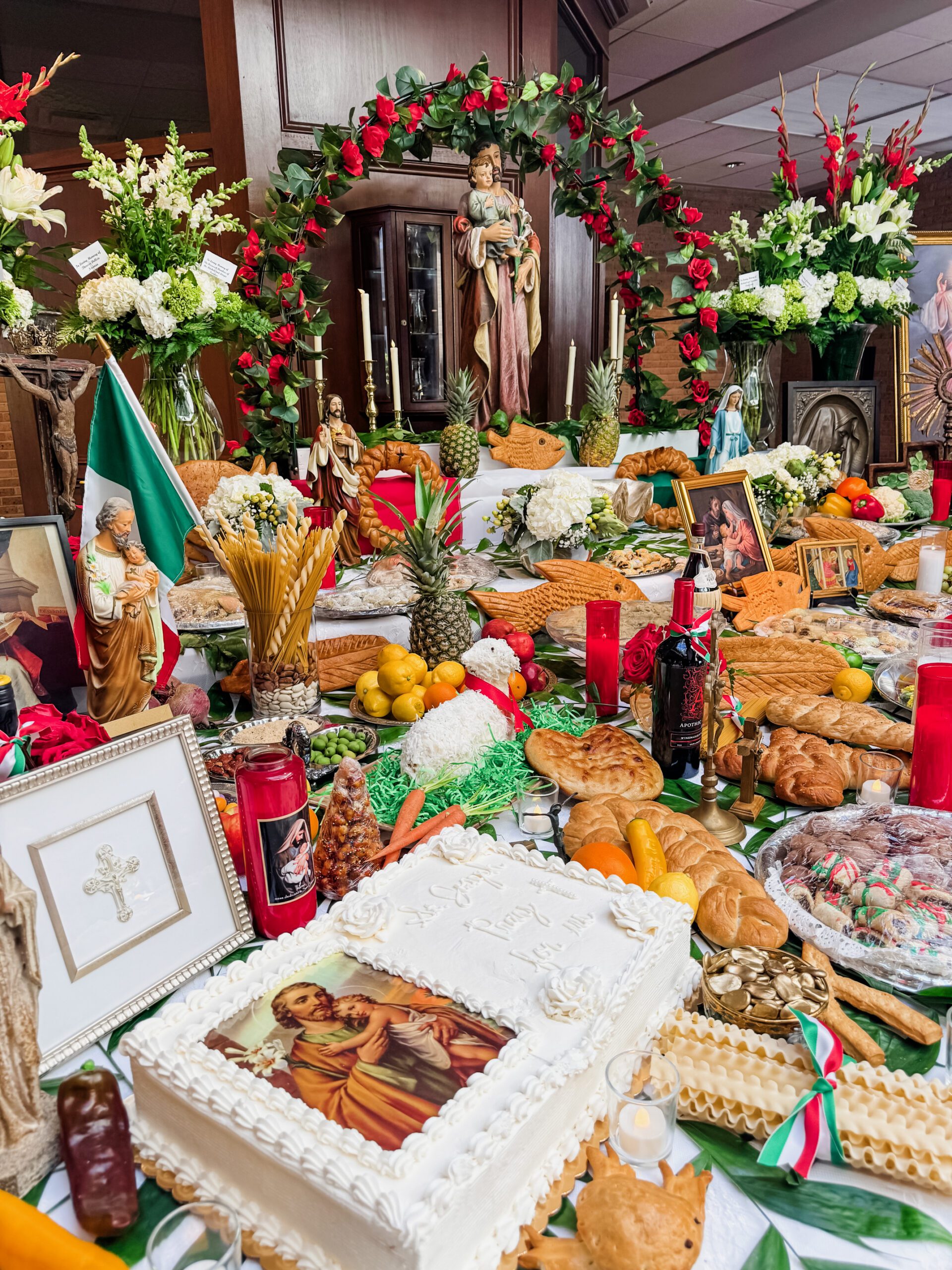 To the great disappointment of children, an altar’s mouthwatering spread isn’t for consumption–at least not right away. Culinary gifts are frequently donated to food pantries, a nod to St. Joseph’s association with eliminating hunger, Burris says. Parishioners typically hold a separate feast where they dine on some of the sweets and spaghetti topped with meatless red gravy and toasted breadcrumbs, representing the sawdust that lands at a carpenter’s feet.
Burris and Nelson say they’re grateful that St. Aloysius’ St. Joseph altar is set up in the sanctuary itself, a departure from the typical placement of altars in parish halls or gymnasiums.
“It’s an emotional experience,” Burris says. “It’s peaceful. People come in and sometimes just feel overcome. What’s really special for us is that so many people say it brings back memories of their childhood.”
This article was originally published in the March 2026 issue of 225 Magazine.