
Louisiana Art and Science Museum’s In Empathy We Trust exhibit provokes viewers to rethink assumptions
Familiar paintings from throughout the history of art are reimagined in a wildly creative format in the exhibit, In Empathy We Trust.
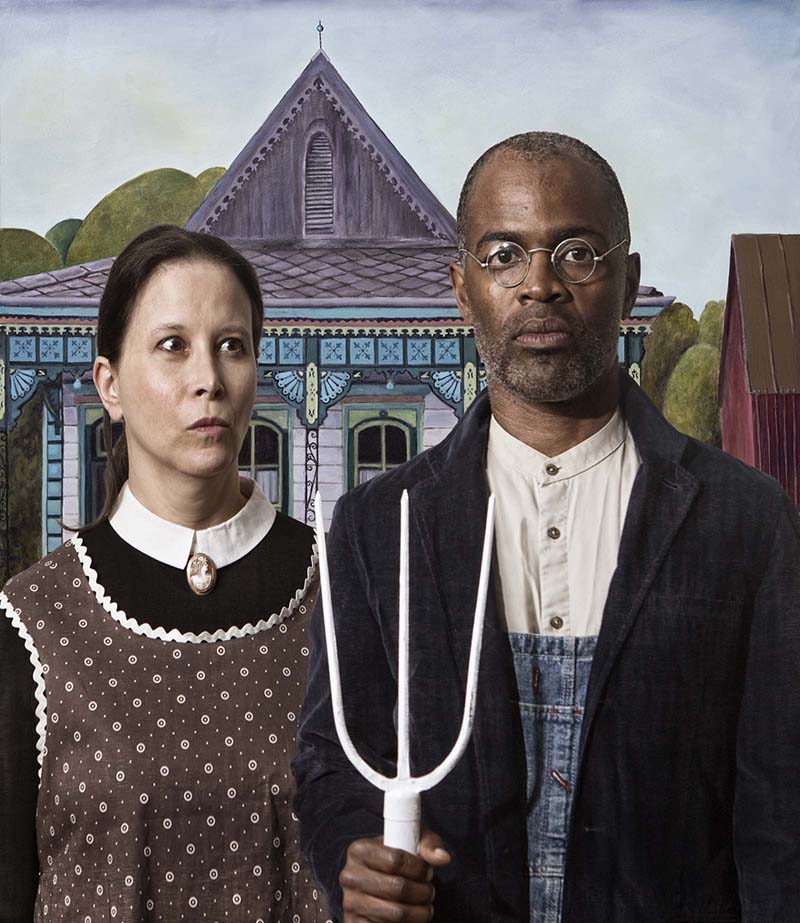
Sixteen iconic works viewers will recognize are recreated photographically with new subjects of different genders and ethnicities. The exhibit is open through October at the Louisiana Art and Science Museum.
The playful—yet moving—pieces are part of an ongoing series by E2, the artist duo of Elizabeth Kleinveld and EPaul Julien, and are meant to prompt viewers to think twice about preconceived notions as they view art and go about their daily lives.
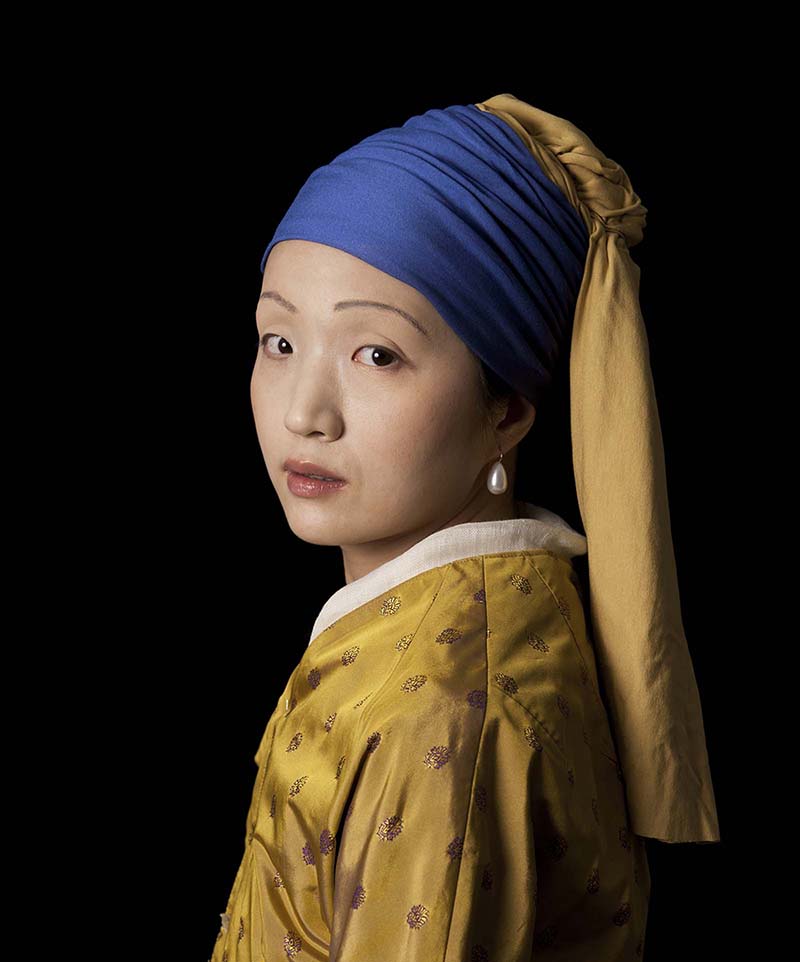
“It’s about reimagining history and changing expectations,” says LASM Interim Assistant Curator Beth Welch. “For the most part in historical paintings, you’d see females and males as usually white and depicted in traditional roles, and this changes that dynamic.”
Viewers will recognize new interpretations of Vermeer’s “Girl with the Pearl Earring,” Whistler’s “Mother” (“Arrangement in Grey and Black No. 1”), Emanuel Leutze’s “Washington Crossing the Delaware” and one of Frida Kahlo’s self-portraits. The setting of each piece is recreated with striking similarity, with fresh takes on subjects.
Kleinveld, an artist and photographer from New Orleans now based in Amsterdam, and Julien, a New Orleans fine art photographer and mixed media artist, began work on the series in 2010. The two met while working on the traveling exhibit and book project, Before (During) After: Louisiana Photographers Respond to Hurricane Katrina. Sparked by their shared interest in social equity, Kleinveld and Julien created In Empathy We Trust, an ongoing series that has traveled to multiple galleries nationwide.
In a retelling of Marcus Gheeraerts’ “Portrait of Elizabeth I” (known as “The Ditchley Portrait”), the virgin queen is replaced with a Black woman. In “Washington Crosses the Delaware,” the all-male occupants on board General George Washington’s boat are replaced exclusively by women. And Vermeer’s “The Milkmaid” is reimagined with a male subject.
Each labor-intensive work takes about six months to create, Welch says. The artists begin by building a physical set that mimics the setting of the original painting. E2 collaborated with the Dutch National Theatre, which provided many of the costumes, wigs and props worn by the modern subjects. They then stage the live subjects precisely, and shoot the photograph. The lighting, color and shadows are perfectly engineered to mimic the original painting.
It’s worth taking time to study each piece to understand the artists’ intentions, Welch says. In a modern depiction of Gheeraerts’ “Portrait of Elizabeth I,” a Black woman is dressed just like the queen. She wears an ornate white gown bedecked in Tudor roses, pearls and an Elizabethan ruff framing her face. But one element is missing—the crown, a symbol of imperialism. Its absence, along with the inclusion of a woman of color, asks the viewer to perhaps reimagine the British Empire and colonial structures of power.
Welch says response from patrons has been strong. Referencing familiar original works helps the exhibit feel accessible, and E2’s fresh twists are thought-provoking conversation starters. Viewers can read more details about E2, as well as the original paintings, through QR codes—one more way the exhibit brings the artwork into the future.
ON VIEW
In Empathy We Trust
Sponsored by the La Capitale Chapter of The Links, Incorporated
Now to Oct. 30
This article was originally published in the July 2022 issue of 225 magazine.