After an intense summer, the City-Brooks Park master plan seeks final public comment this month
Short of LSU football, you’d be hard pressed to find something that has divided local opinions and stirred emotions like BREC’s City-Brooks Community Park master plan. This month, residents will have a final chance to comment on a single draft proposal from national design firm Sasaki. The plan, initially presented to BREC’s master plan committee on Aug. 10, pulls elements from two earlier draft designs that were hotly debated in two public meetings and over social media this summer, as well as suggestions from community stakeholders.
This month’s meeting will give community members a chance to weigh in on the draft plan for BREC’s Wampold Park on Stanford Avenue, as well as a proposed conservancy to govern City-Brooks Park, the University Lakes system and Wampold Park. Following the public meeting, the final plan will go to the BREC commission for approval, possibly at the end of this month.
BREC officials say they rolled out the City-Brooks Park master planning process this year because it’s a rare moment to both improve the park, which hasn’t seen new investment in about 20 years, and to seamlessly connect its environs, particularly the University Lakes system. The waterways are nearing the end of an $80 million restoration project.
“The real conversation is what are we going to do in Baton Rouge that is excellent and special?” Baton Rouge businessman and BREC Commission chair Mike Polito says. “Are we going to keep waiting? That, to me, is the bigger question about City-Brooks Park and the Lakes.”
But all summer, the planning process has been eclipsed by cynicism and rumor. Community members have pointed to the Lakes project as proof that both Sasaki and BREC are ineffectual. The Lakes’ hefty price tag paid for its essential ecological restoration but has delivered almost none of the hyped pathways and amenities conceived in its 2016 master plan, another Sasaki project. Residents also point out its years-long unsightly shorelines.
For City-Brooks Park, Sasaki’s charge was to envision ways to make the enviable, centrally located swath of land a signature civic space. The firm looked at survey data, met with stakeholders and dreamed big with two mix-and-matchable options called “The Big Loop” and “The Stitch.” Both maintained the park’s 9-hole golf course but shortened it to accommodate other possible activities.
“For a number of reasons, we came to the conclusion very early on that golf, as a use, should remain,” says Denver-based Sasaki partner and project lead Joshua Brooks, a Baton Rouge native and LSU alum. “From a historic perspective, the course has been there for many years, and it’s a convenience to the central Baton Rouge population.”
But, he adds, the firm advised modifying it to maintain, and even improve, the experience while adding room for new amenities like walking paths.
The course’s supporters aren’t having it. Outspoken locals and nearby property owners have argued for keeping it “intact,” as numerous yard signs read, publicly citing nostalgia and history. Active users point out its popularity among large numbers of young people, many of whom emerge from the public First Tee program, a BREC partner. They also point out a dearth of public courses.
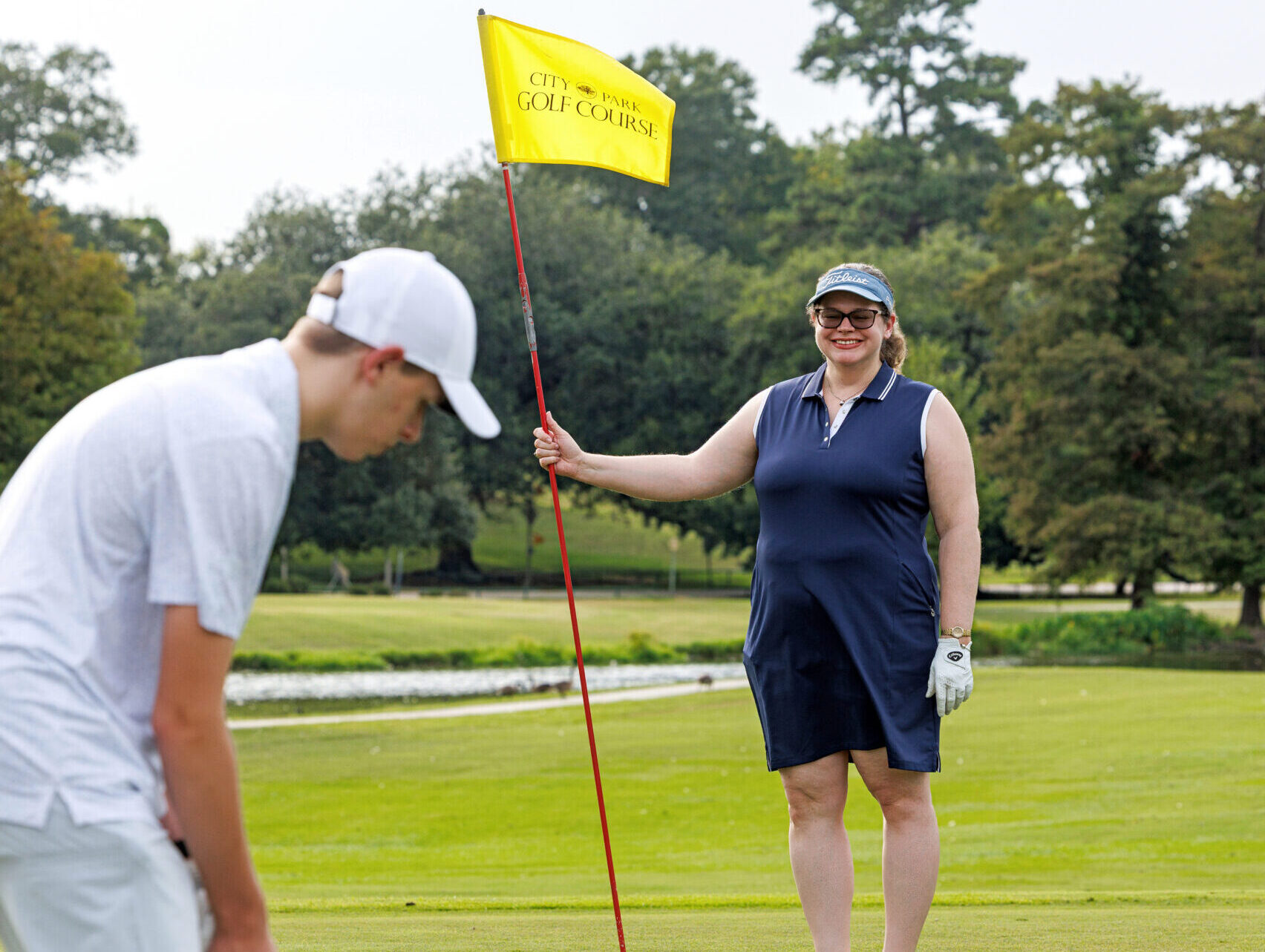
“This course is highly used every day. It’s a very relevant course,” says Liz Centanni, who routinely plays golf with her high school son at City Park. “We’re talking about hundreds of kids who are likely not going to be welcome at Santa Maria, Beaver Creek or Webb because those courses are so busy.”
Centanni says that until now she has never taken an active stand on a community issue. But she says she doesn’t like the golf course being “cut up” for the sake of adding more natural habitat, one of the ideas proposed by Sasaki.
“That small amount of land would mean nothing to wildlife, but it means everything to the golf course,” she says.
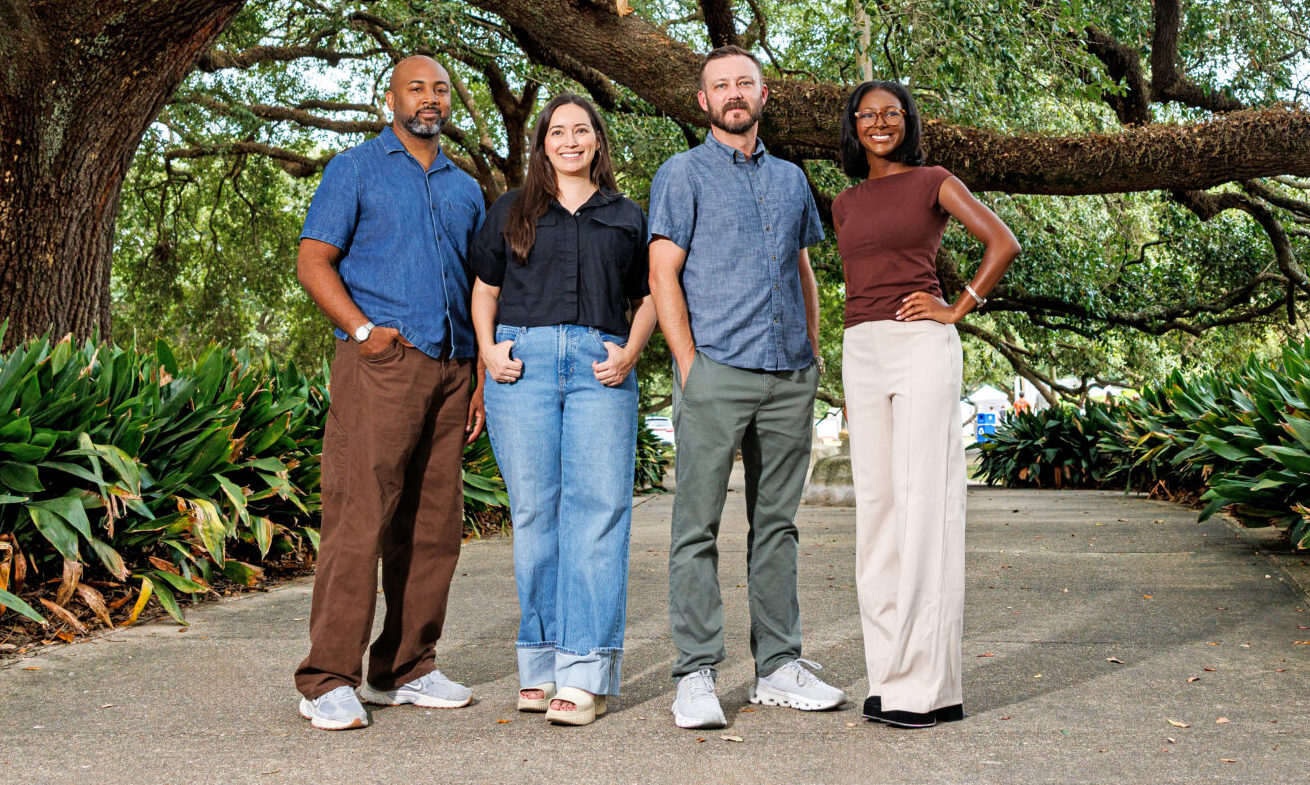
For nonprofit leader and activist Maggie Conarro and some other fellow young professionals, the energy being spent on discussing the golf course has been disappointing. Both plans maintain it, she says. And that should be enough to appease its supporters.
“I just don’t think we’re going to get another chance like this to make something incredible happen in Baton Rouge,” she says. “It really is kind of a perfect storm opportunity. The question is, is Baton Rouge willing to make something great happen in our lifetime?”
Conarro says she sees valuable ideas in the Sasaki designs that have excited many young working families, including an enhanced corridor on Dalrymple Drive that would prioritize cyclists, runners and walkers, the park’s biggest users according to cell phone data.
“There are great elements in both plans, yet the conversation is still about the golf course,” she says. “It’s frustrating.”
Days before BREC’s July 14 public meeting, the golf course conversation got even louder when State Rep. Dixon McMakin introduced the so-called “McMakin Plan,” an off-the-books third option he pushed on social media that, among other components, advised leaving the course alone.
Polito said it was disruptive to a planning process already underway. But McMakin’s plan seems to have influenced recommendations in the final draft, which softens the changes to the golf course.
One goal of the planning process has been to improve Brooks Park and better connect it to the rest of the park. Hidden from view but just minutes away on foot from the current playground and Picnic Hill, the park is located on Eddie Robinson Drive near McKinley Middle Magnet School. It is a stark reminder of Jim Crow Baton Rouge when Black families weren’t allowed to swim in the larger City Park pool.
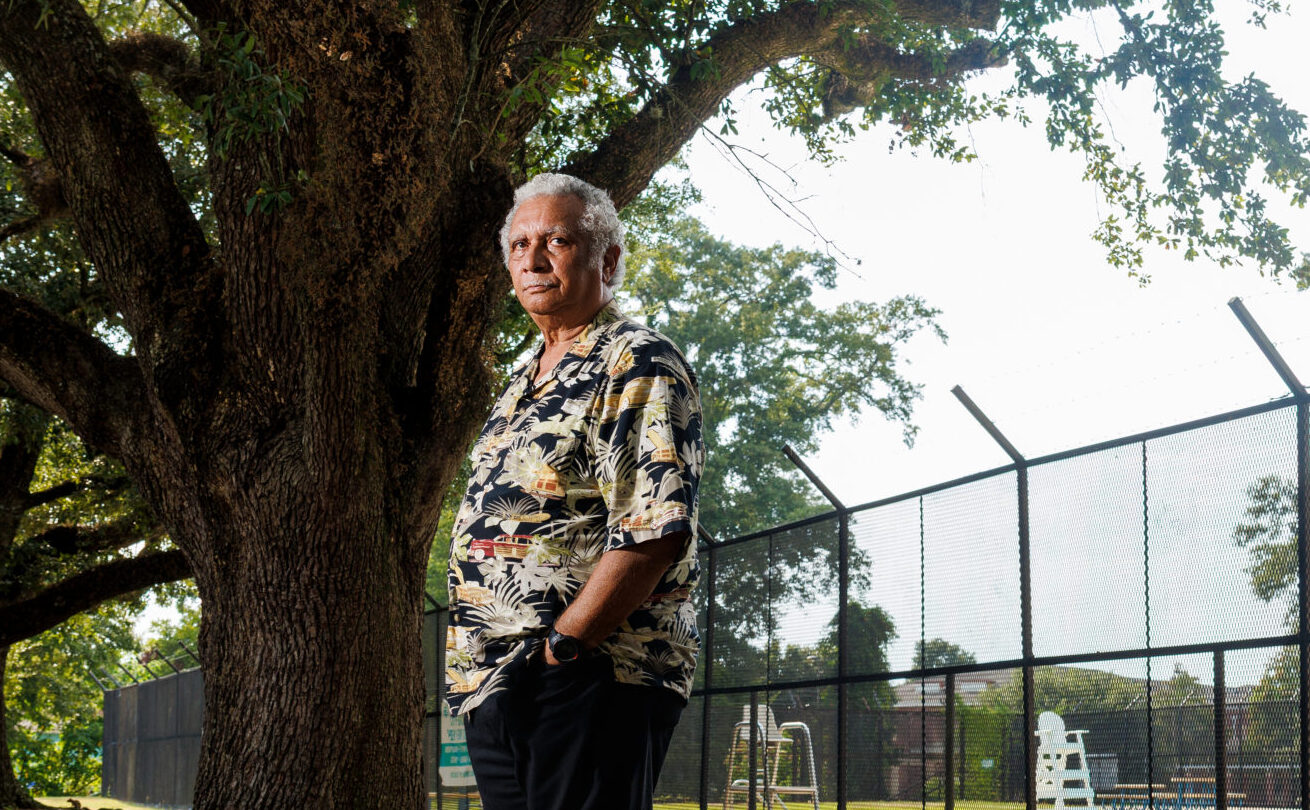
A handful of residents, including retired executive and former Together Baton Rouge head Edgar Cage, have brought attention to the need to prioritize Brooks Park.
Brooks Park still has a functioning swimming pool, but it’s a smaller version than the original. Its kiddie pool has been filled in, and the pool house hasn’t been improved since it was built in the late 1940s.
“It seems almost intentional to me,” Cage says. “I hate to say it, or think it, but as I said at the [July 14] meeting, BREC has spent more to improve the dog park at City Park than for Black kids to swim at Brooks Park, which I think is a tragedy.”
The Sasaki plans call for several Brooks Park improvements, including an outdoor track on the athletic fields located catty-corner from the pool, a feature echoed by McMakin. It also calls for a recreational center, pool improvements and connectivity to City-Brooks Park.
It’s possible that Brooks Park could see improvements sooner than other parts of the master plan, says BREC director of planning and engineering Angela Harms. While funding for most of the City-Brooks Park master plan will need to be raised privately, Polito has said, BREC will likely pay for some Brooks Park projects through its regular budget because the park has been slated for improvements for some time.
Meanwhile, Harms has been working to design this month’s third and final public meeting in a manner that allows as many voices to be heard as possible, she says. Small group discussions may be part of the format.
“It could be a way for people to have a conversation with others who may have different opinions,” she says. “Maybe someone says, ‘We disagree on this, but we agree on that.’”
 BREC is scheduled to host its final public meeting regarding the master plan for City-Brooks Community Park Sept. 17 at 5:30 p.m. The meeting will take place in the ballroom of BREC headquarters, 6201 Florida Blvd.
This information was correct as of press time; as events are subject to change, please contact BREC at 225-272-9200 for up-to-date details.
This article was originally published in the September 2026 issue of 225 Magazine.