From their family farm to their crawfish-centric restaurants, Cody and Samantha Carroll cook up a marriage built on mudbugs
During crawfish season, the Carrolls' operation hustles overtime to satisfy customer cravings 🦞❤️
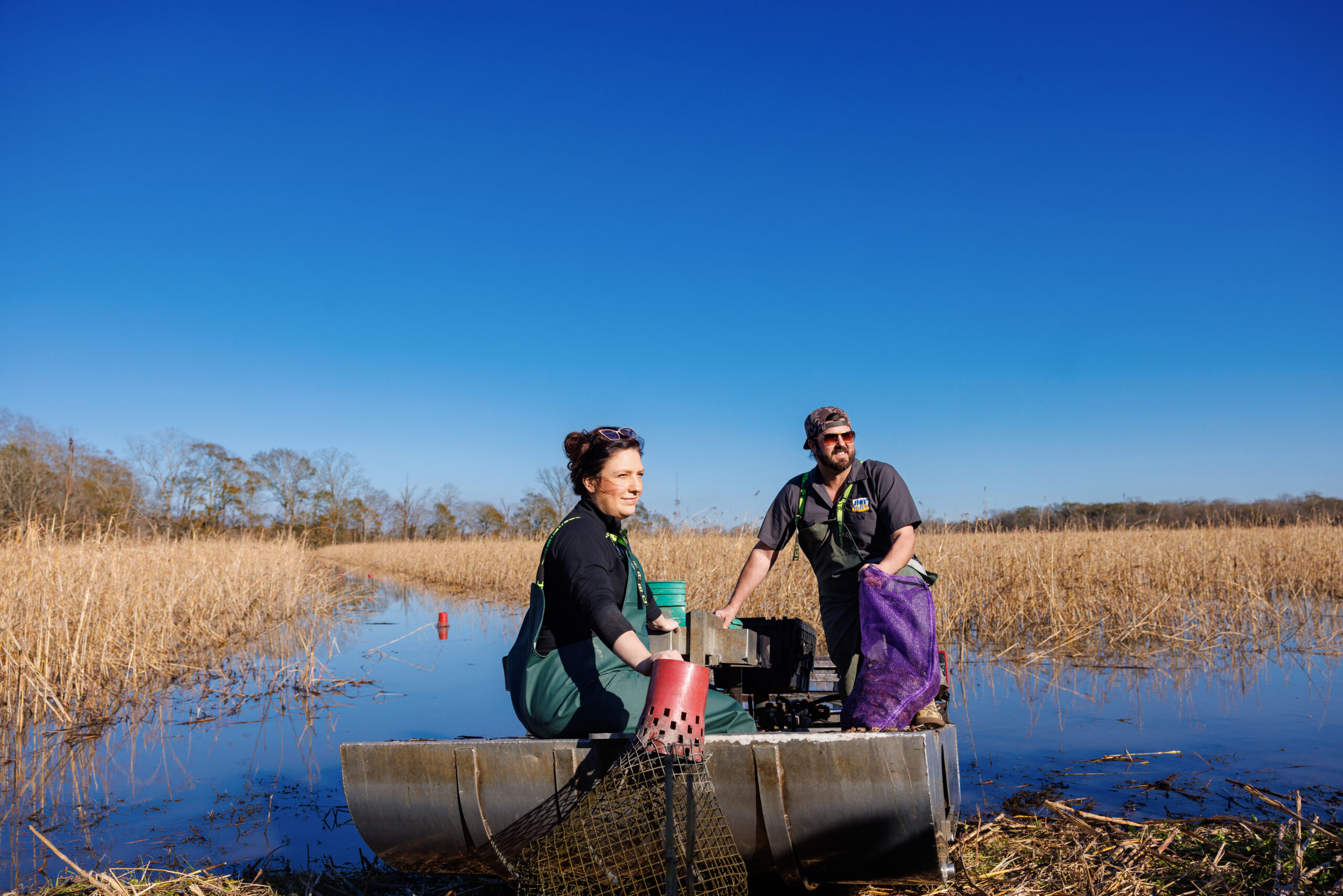
The skimmer boat lumbers through the shallow, muddy pond as Cody and Samantha Carroll pull crawfish traps, moving from one red-capped mesh cage to another through marshy rows of sweet sorghum. They yank a trap up from the murky surface, dump its contents of writhing crustaceans onto the boat’s sorting table, and funnel them through a slot into an attached mesh sack. A new baited trap goes into the water, part of a rhythmic process set on repeat for the rest of the day.
When crawfish season kicks off in late January and the hungry creatures begin emerging, the Carrolls’ team of employees might harvest every three days. But as temperatures warm and the crawfish pour out of their cozy mudholes, it’s a daily affair, neatly timed with eager fans’ inextinguishable appetites.
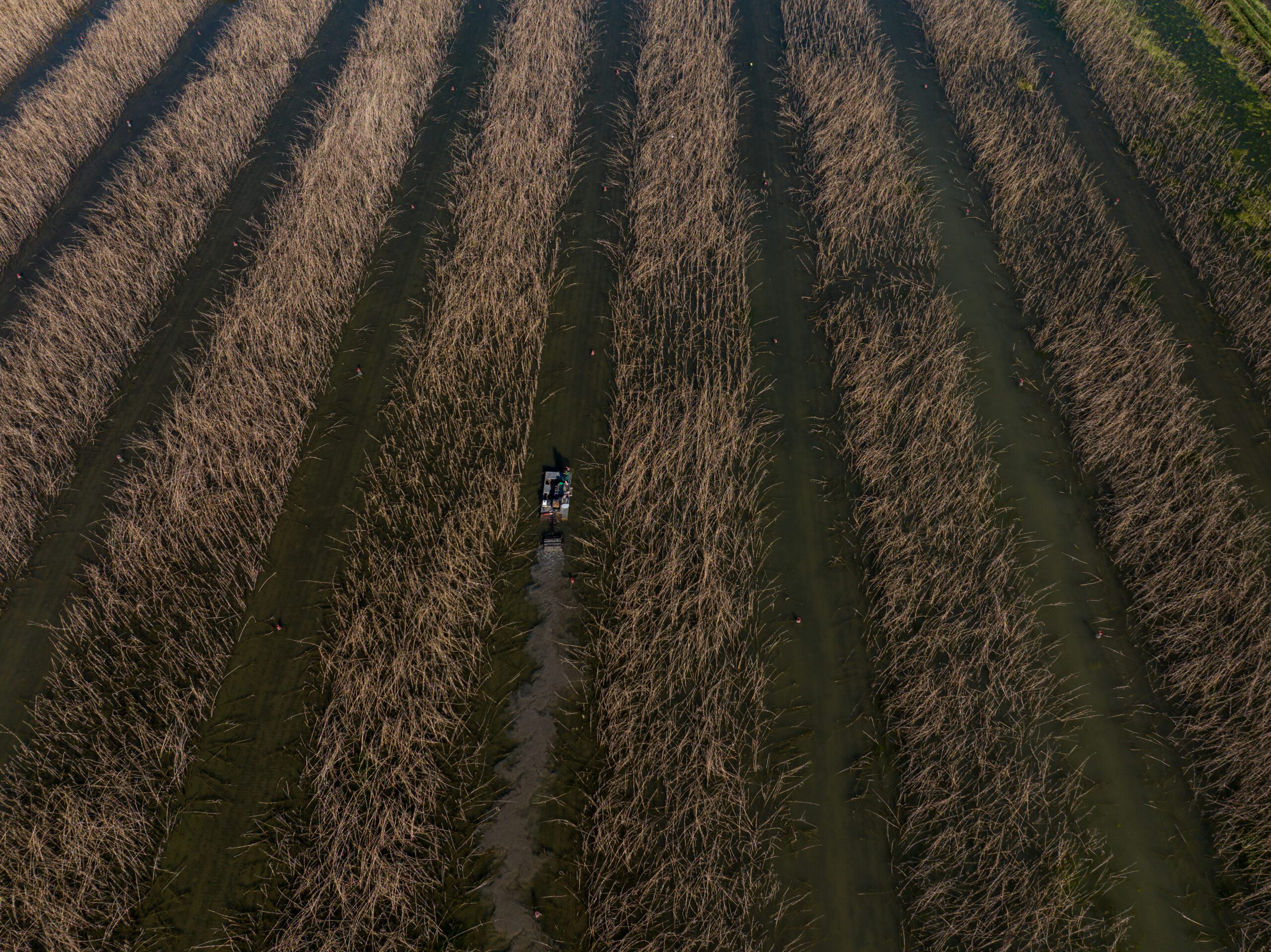
The Carrolls work 11 crawfish ponds across the Pointe Coupee family farm where Cody grew up, and where his father still farms sugar cane, milo and other crops. The couple is part of the state’s well-established fraternity of crawfish farmers, who, since the 1960s, have pulled mudbugs from manmade ponds and flooded fields. Farming created more predictable conditions than catching the creatures wild from the Atchafalaya Basin. Today, about 1,300 farmers harvest up to 120 million pounds of crawfish every season, according to the LSU AgCenter.
But few use the bounty for their own restaurants. In perfect pond-to-table harmony, the Carrolls’ sacks head straight for their popular Hot Tails restaurants in Zachary and Prairieville.
These days, Sam and Cody juggle a lot of balls, running the roads, operating eateries and parenting two children, Mally, 10, and Killian, 5. But they’re also a familiar culinary brand. After falling in love while students at the Louisiana Culinary Institute, they married and opened their first Hot Tails restaurant in New Roads in 2010. It was a huge success, garnering acclaim for the couple’s boiling prowess and their spice-forward flavor profile. The choice to focus on crawfish, as opposed to any other culinary category, seemed like a no-brainer, Cody says.
“We were very good at boiling them,” says Cody, whose cooking career began around age 10 at his family’s hunting camp. “All we served at first was boiled crawfish and po-boys.”
The now-closed original location was situated in a former drive-thru convenience store. The Carrolls manned it from an affordable, onsite FEMA trailer. The restaurant’s success and their easy charm springboarded them to a 2018 Food Network show, Cajun Aces, and a New Orleans restaurant, Sac-a-Lait, which had a three-year run. Today, they oversee operations at their two popular Hot Tails locations and an inventive sandwich shop in Prairieville called Dirty South Sandwich House.
Their crawfish farm’s operation is orderly, with the roughly 10-acre ponds arranged in an accessible grid. The shallow-draft boat, tricked out with a rear combine, crawls from pond to pond in an amphibious pursuit of the daily catch. From there, Cody, or someone from his team, delivers crawfish to the restaurants, where yet another sophisticated operation ensues.
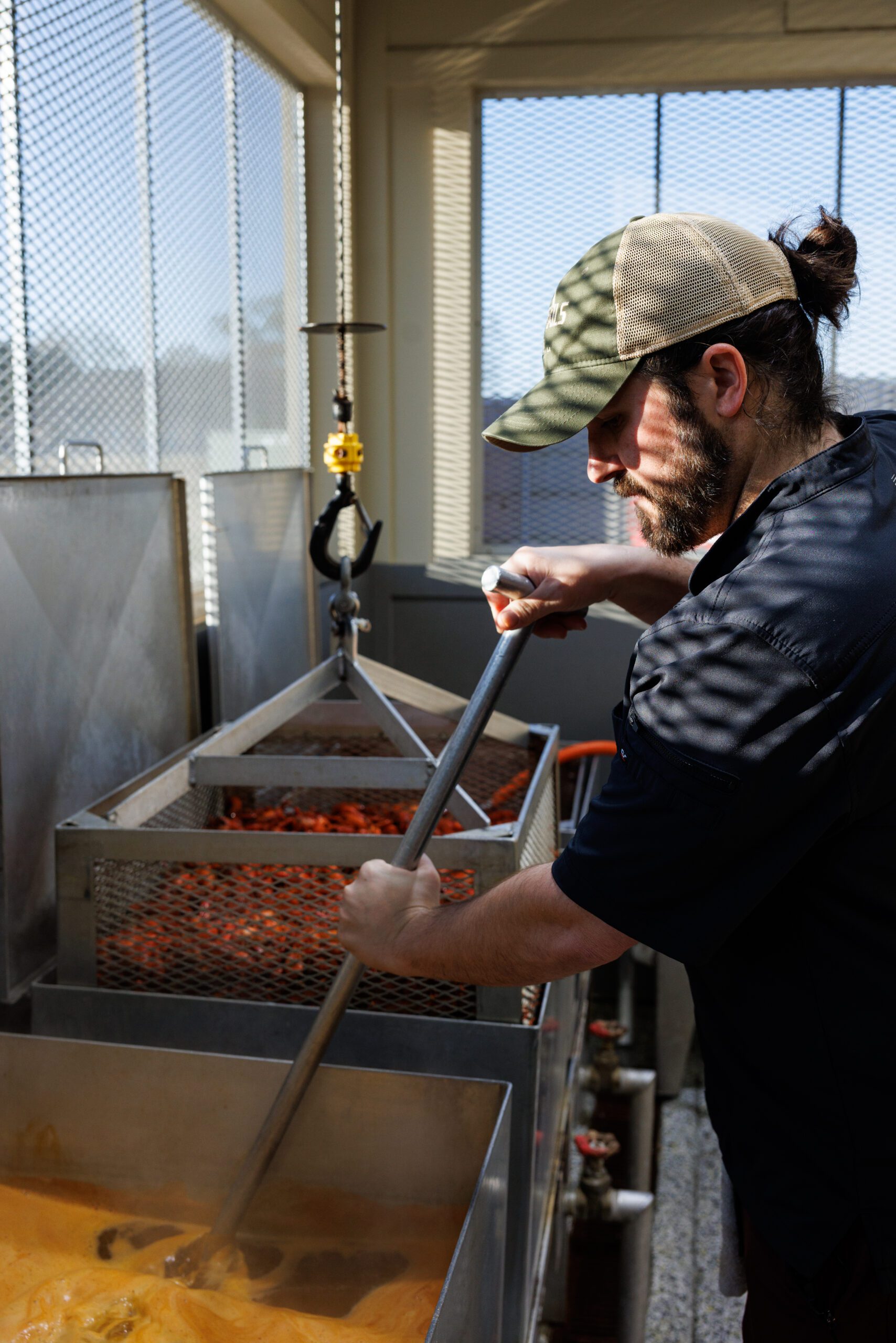
The boiling rooms at Hot Tails deploy military precision, thanks to a design Cody perfected over the last 20 years. He empties three sacks of live crawfish at a time into an elevated rectangular vat of clean water for purging, or clearing, the crawfish. Oxygen is piped in from below, energizing the creatures. Their movement helps knock off additional debris. Once this stage concludes, a motorized claw reaches down from the ceiling and lifts the basket, then lowers it into an adjacent vat of boiling water. Backyard boilers accustomed to manhandling heavy rigs would be green with envy.
The Carrolls opt to boil in unseasoned water, moving the crawfish—once more by motorized claw—into a side-by-side vessel of hot seasoned water for a 30-minute soak. It’s a large-scale version of the double pot technique that many boilers believe ensures better taste and texture, Cody says.
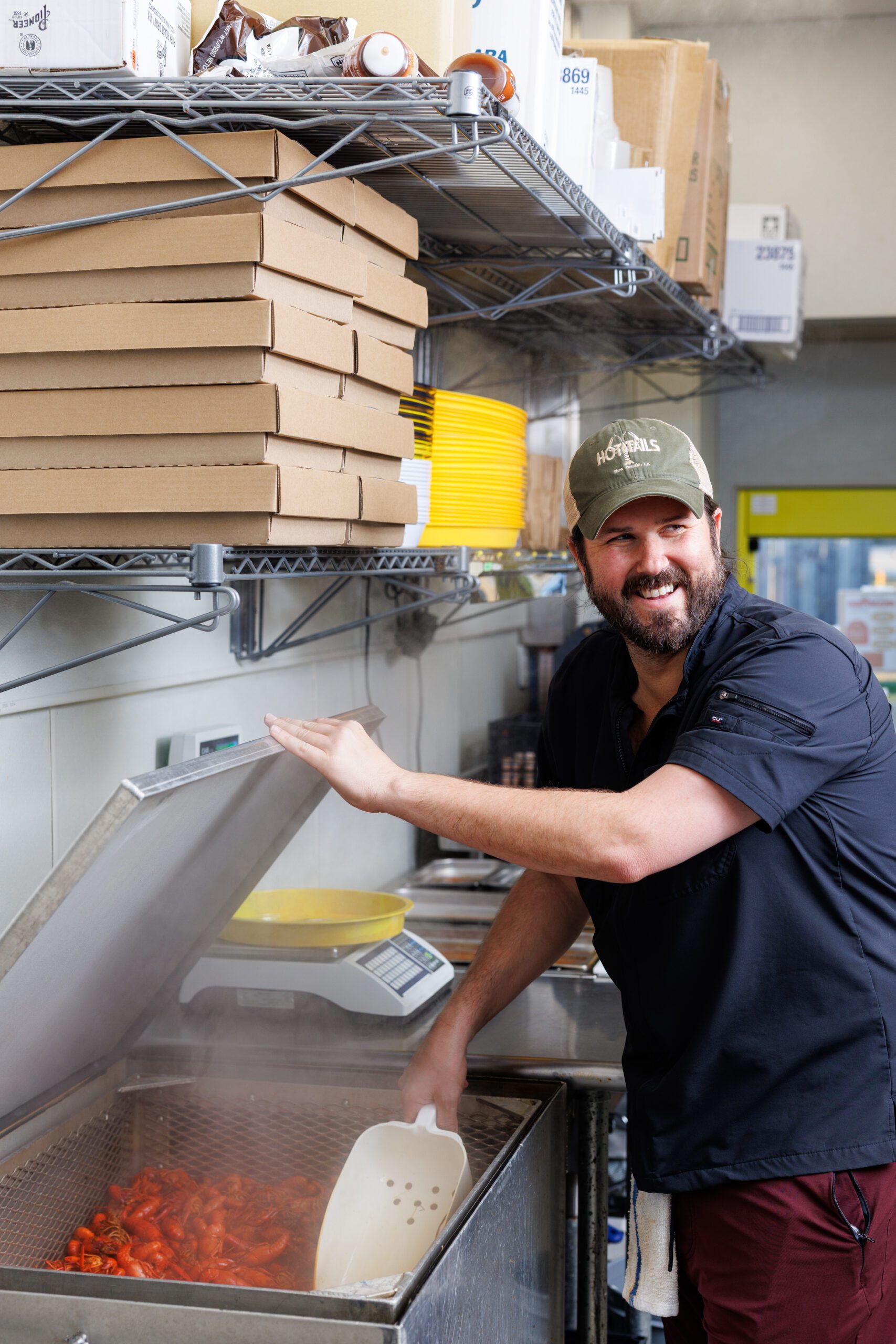
But this one includes more science. He describes his cooking process as a “high-temp pressure boil” that simultaneously boils and steams, allowing the crawfish to continue cleaning and better readying them for the soak, he says.
“After we boil them, they really open up and are ready to absorb that seasoning,” Cody says. “Makes them extremely juicy as well.”
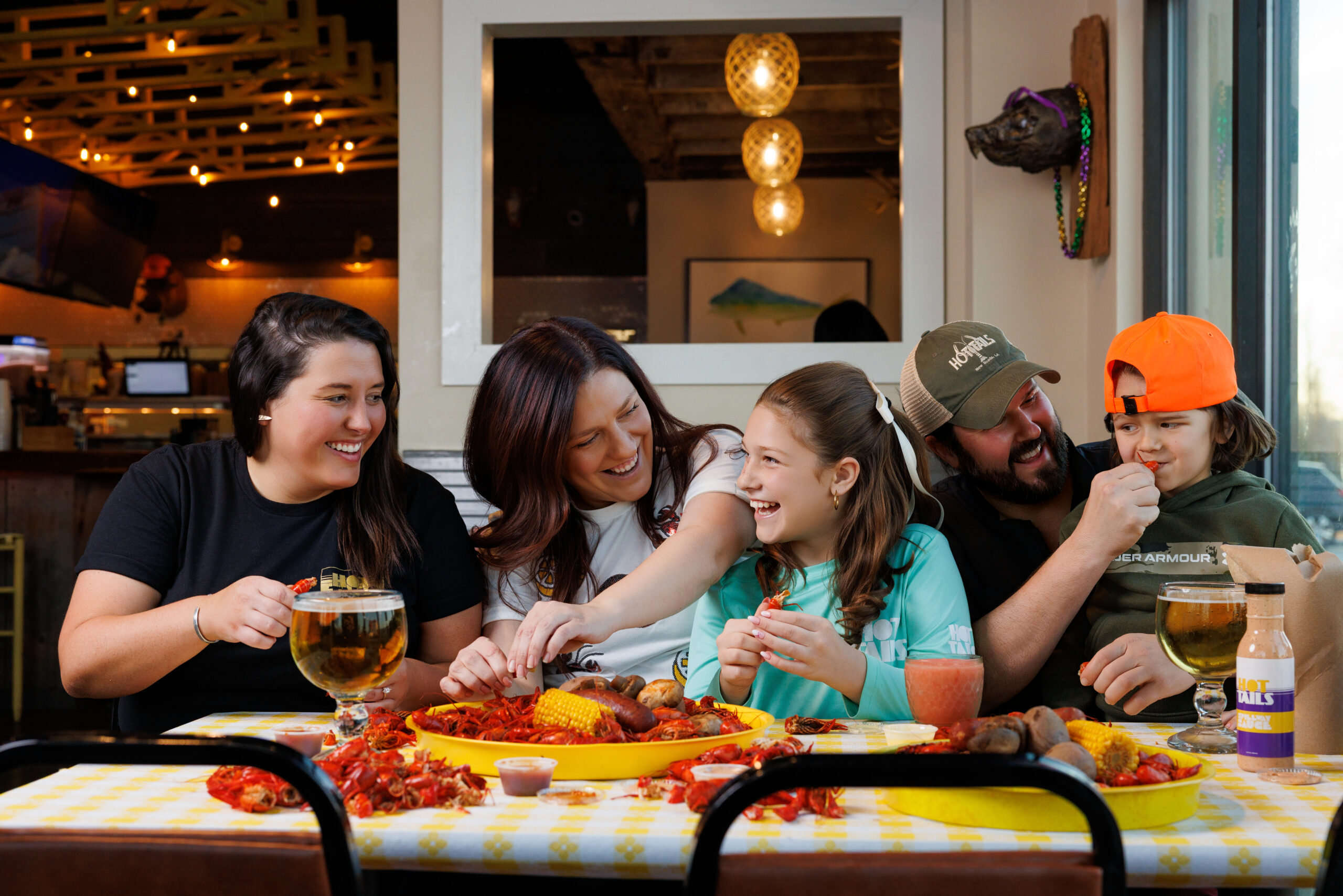
Again, the overhead claw lifts the now-finished crawfish, lowering them into a wheeled stainless-steel cart to be moved into the restaurant’s kitchen. From there, employees scoop up crawfish for countless leak-proof to-go boxes for the bustling drive-thru window and for trays for dine-in customers.
Like most operators these days, Hot Tails has responded to the growing trend of dipping peeled tails into the regionally adored ketchup-mayo combo. Their version, also sold in bottled form, is called Spillway Sauce.
This time of year, everyone in the Carrolls’ operation hustles overtime to satisfy customer cravings. “It gets crazy,” Samantha says.
But never old, even for them. As a batch finishes, she and Cody descend on samples for a taste test.
It’s possible no two people are capable of devouring crawfish faster.
This article was originally published in the February 2026 issue of 225 Magazine.