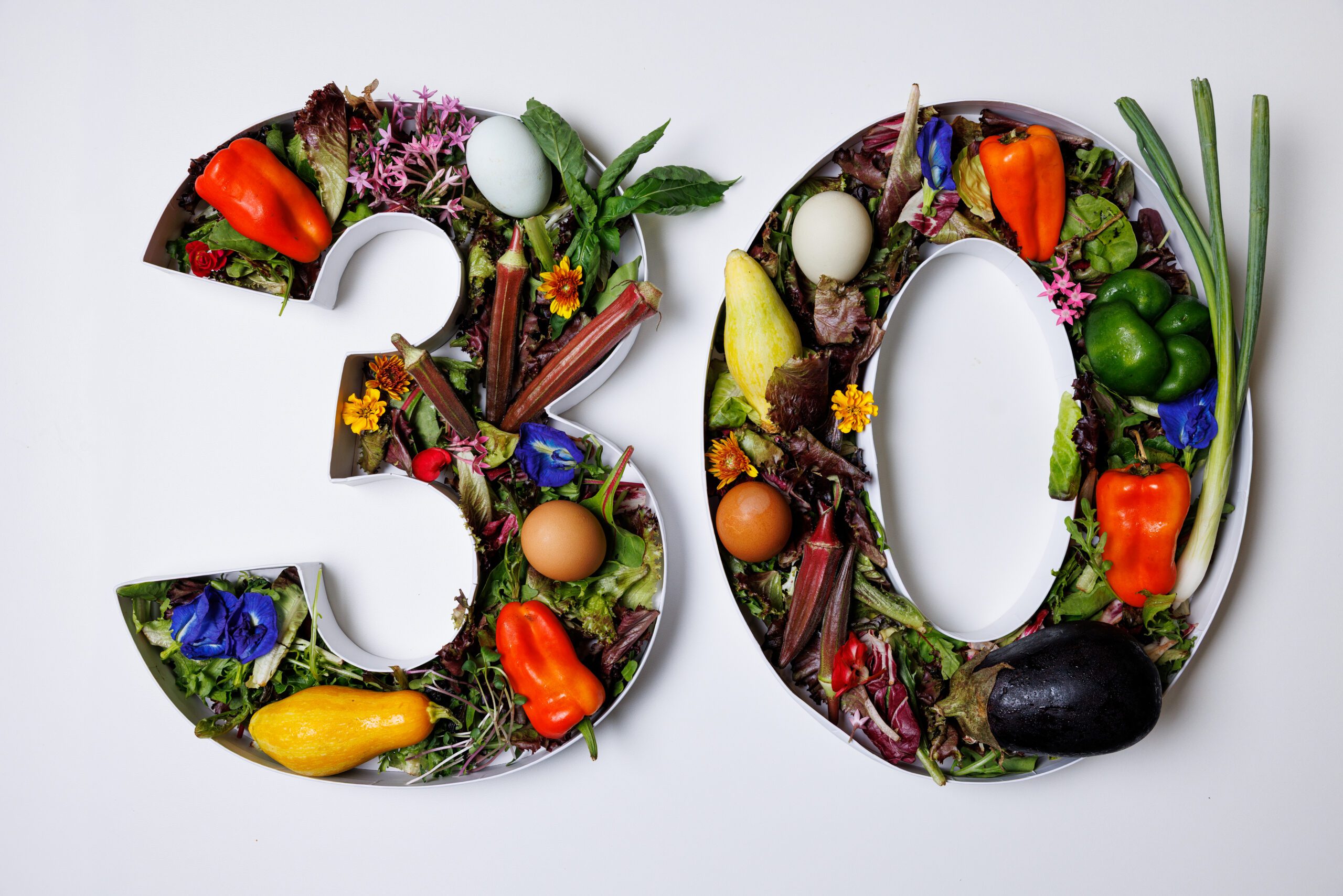
The Red Stick Farmers Market celebrates 30 years of connecting the community with local growers
These vendors are still keeping it fresh 🥕🍎
It’s Saturday morning at the Red Stick Farmers Market in downtown Baton Rouge, and Grant Guidroz welcomes a steady flow of regulars to his Fullness Farm booth. The shoppers stop by for the farm’s year-round organic vegetables, which include salad greens, carrots, radishes and beets in the fall and winter, and tomatoes, cucumbers and peppers in the summer.
Guidroz and his wife Allison launched their Baton Rouge farm in 2015, part of the couple’s shared mission to bring fresh, healthy food to the community. By then, the Red Stick Farmers Market had been in business for 19 years and was the well-established hub of Louisiana’s local foods movement. Its strength and stability meant a new farm like Fullness had a ready-made sales outlet, Guidroz says.
“It’s been huge for us,” he says. “The fact that, as a local producer, you had a place to go that had two to three thousand people on a Saturday was just incredible.”
Since then, the market has been a major source of Fullness Farm’s sales, says Guidroz, who got to know the weekly gathering as a child when he would stop by with his parents.
“Yeah, be careful,” he jokes. “You might come to the market and turn into a farmer one day.”
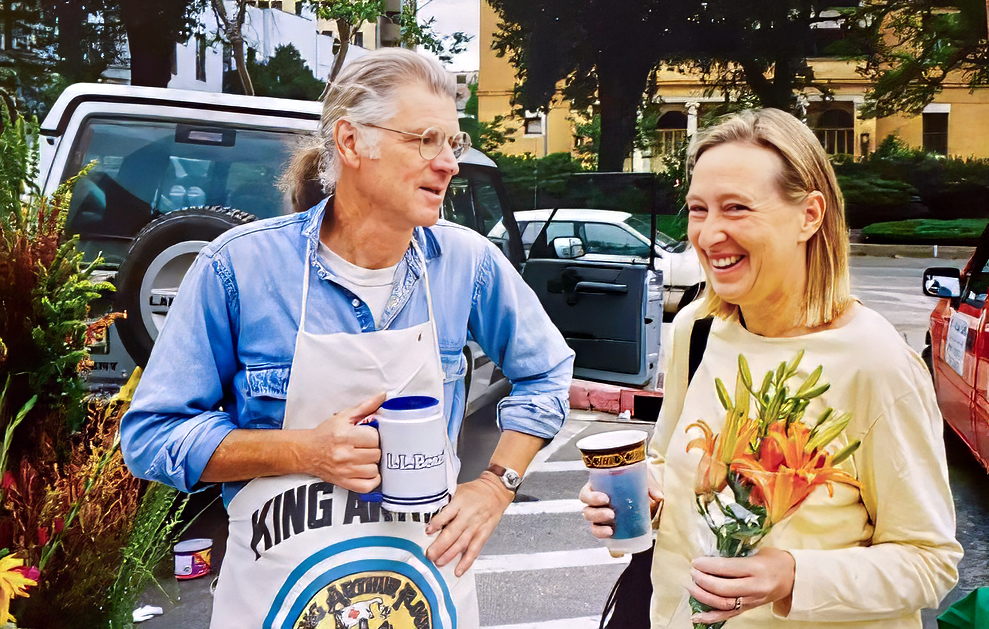
(right) with a volunteer. Photo courtesy BREADA.
This month, the Red Stick Farmers Market celebrates its 30th anniversary, a remarkable accomplishment in a national food landscape dominated by commercial farms, supermarket chains and mass-produced gastronomy. Its staying power stems from a steadfast commitment as a producer-only market whose partner farmers sell only items they have grown or made, says Darlene Adams Rowland, executive director of the market’s organizing body, Big River Economic and Agricultural Development Association, or BREADA.
“I think our success has been about sticking with it, and having a high level of integrity,” Rowland says. “We visit the farms and vet every one that comes in. And the farmers work hard to show up consistently week after week.”
The market began as a small gathering of booths that first assembled on a Saturday morning in November 1996. It met reliably week after week, building regular customers and attracting more regional producers. Today, BREADA hosts 130 markets a year, led by the flagship event at 5th and Main streets on Saturdays and another large market at the Pennington Biomedical Research Center on Thursdays. The organization holds additional markets seasonally at the ExxonMobil YMCA and the Main Library at Goodwood.
It’s not uncommon for communities to host farmers markets where the items sold don’t come from the farmer behind the booth. But Rowland says that can be a death knell. It’s one of the reasons why some markets that also started in the mid-’90s have since closed, she says.
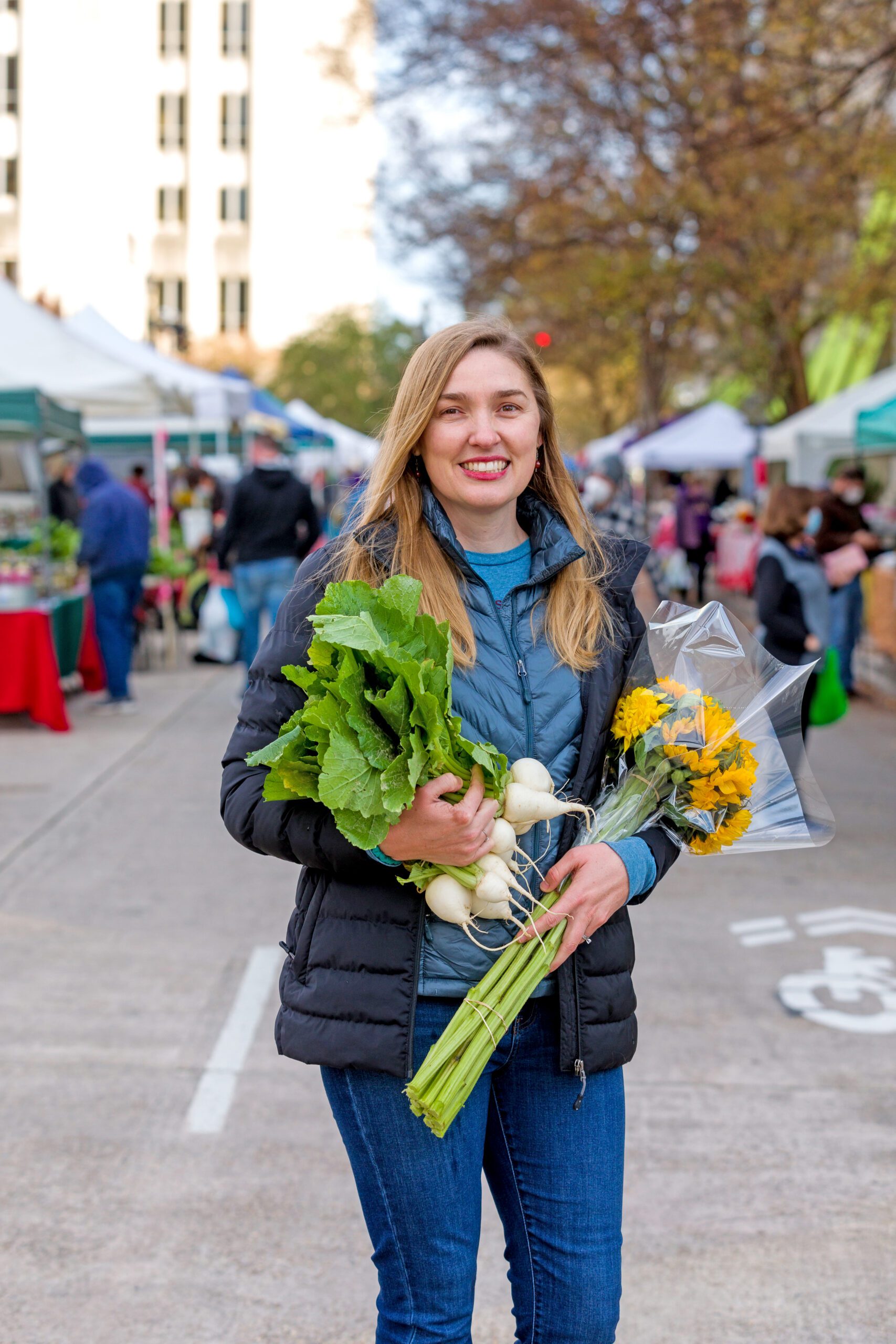
“When you let anyone in, it’s not special,” Rowland says. “It’s just been incredible to see the growth in the number of our vendors, the diversity of vendors, and the fact that we actually still have several vendors from 30 years ago.”
The idea for the Red Stick Farmers Market was first hatched in spring 1996 as the urban design studio project of then-LSU Robert Reich School of Landscape Architecture graduate student Christopher Campany. Working under then-landscape architecture professor Suzanne Turner, Campany proposed setting up a farmers market in Old South Baton Rouge. Campany had gotten to know a local grower named Matthew Byrd who sold fresh greens from the back of his truck at the Dr. Leo S. Butler Community Center. Byrd was proof that farmers were out there.
Soon, the idea morphed into something larger, a community farmers market that could operate downtown, then being reimagined through the first iteration of Plan Baton Rouge. The market first opened at the corner of North Boulevard and St. Louis Street, later moving to 5th and Main streets astride the newly completed indoor Main Street Market.
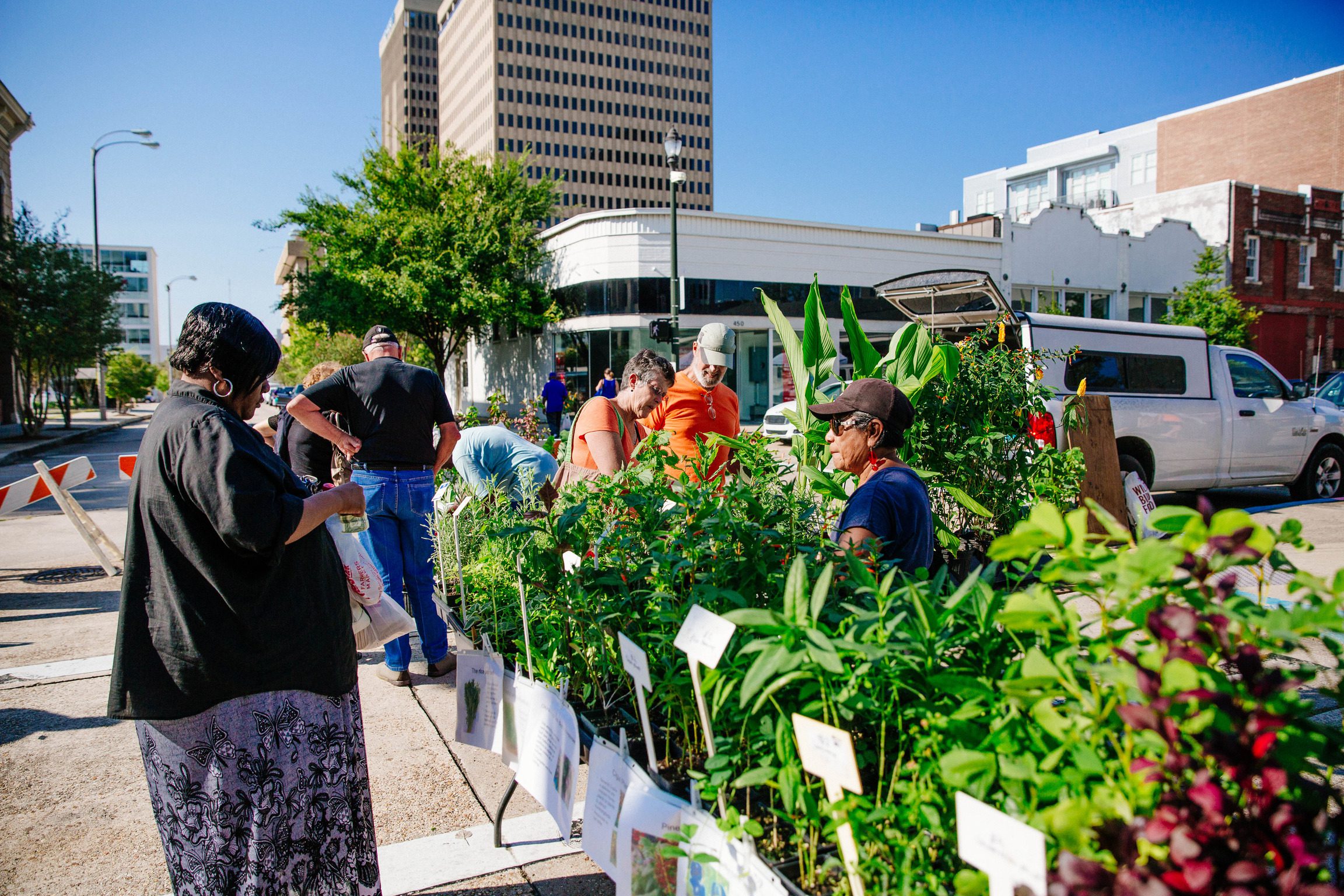
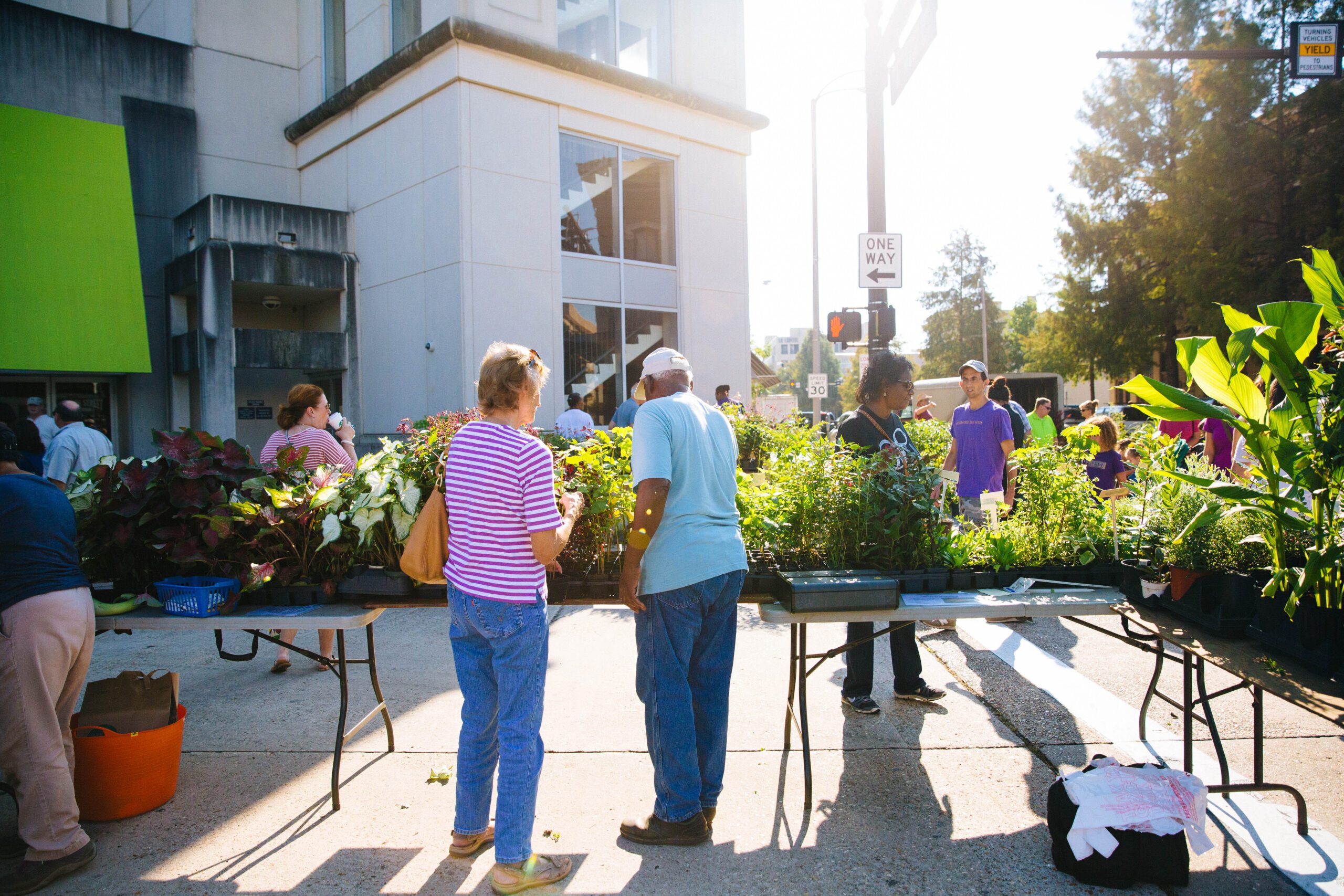
Byrd was an inaugural vendor in 1996, and like so many farmers who joined the ranks of the Red Stick Farmers Market since then, he participated for many years until he retired.
Campany, now the executive director of the Windham Regional Commission in Brattleboro, Vermont, served as BREADA’s executive director until the end of 1999. He says the Red Stick Farmers Market’s staying power stems from its commitment to farmers.
“It was always organized around the producers first,” he says. “The goal was to make it financially viable for them to sell directly to consumers.”
Back at the Fullness Farm booth, Guidroz says he takes pleasure in watching families come back week after week to shop his booth even as their lives evolve.
“I’ve seen couples have children and bring them back to buy our stuff. It’s that weekly affirmation,” he says. “We tell people, ‘Thank you,’ and they look you in the eyes and are serious, and they say, ‘No, thank you.’”
This article was originally published in the November 2026 issue of 225 Magazine.