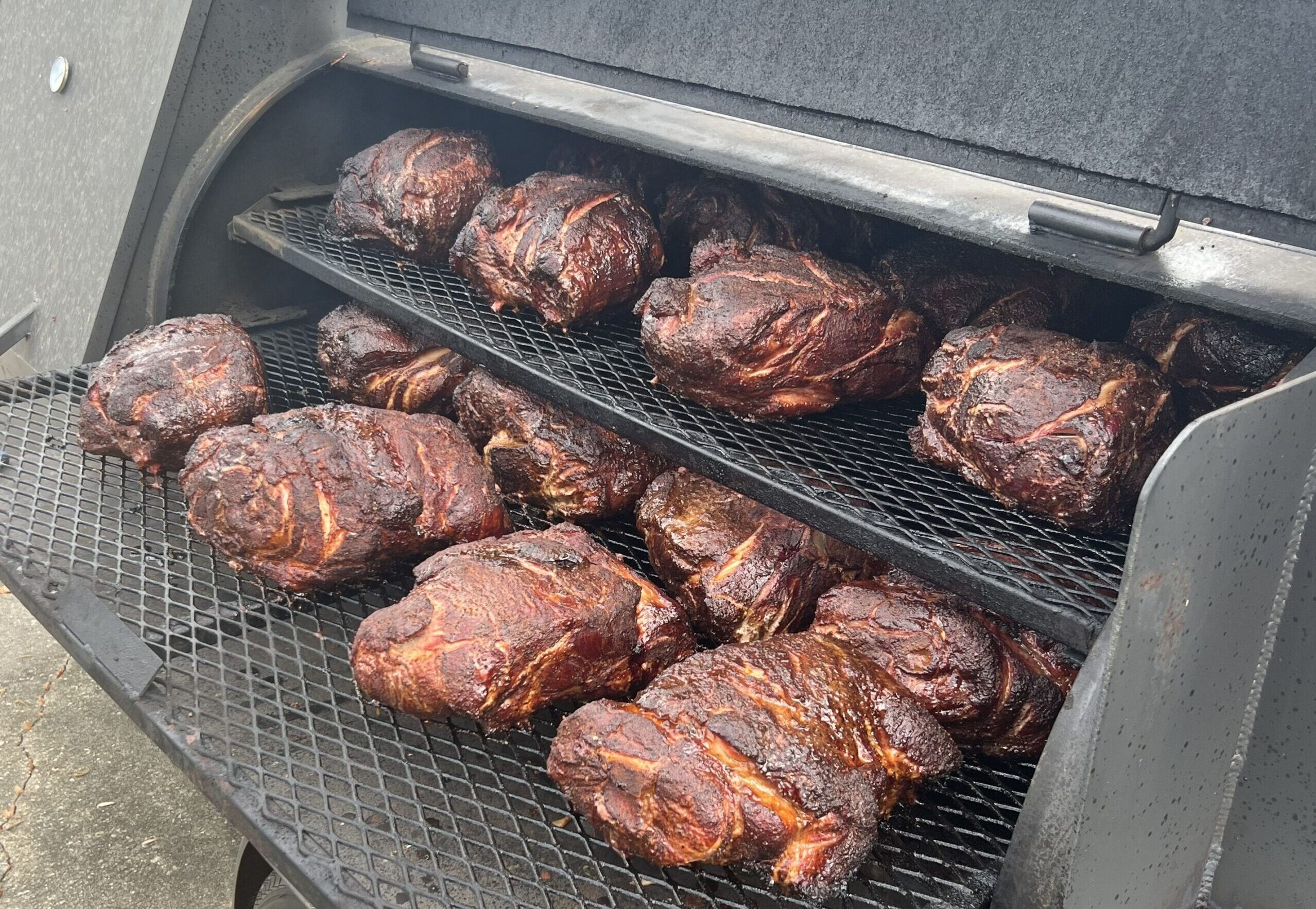
Competition pitmasters share their experience and tips
Barbecue enthusiast Brandon Pearce recalls the first time he heard about Hogs for the Cause, the New Orleans event that started as a grassroots fundraiser for pediatric brain cancer in 2009 and has grown into a sanctioned barbecue cookoff among nationwide barbecue teams drawing thousands of hungry spectators.
“I didn’t even have a team. I just wanted to do it,” says Pearce, a civil engineer. “I just started calling people.”
One of those calls went to Pearce’s friend and fraternity brother Matt Arrighi. Recruiting other friends, they created the team Bark and Bite and entered Hogs for the Cause in 2022. With no formal training, the team has since earned three top 10 finishes for ribs, a second place in pork butt and a sixth overall finish.
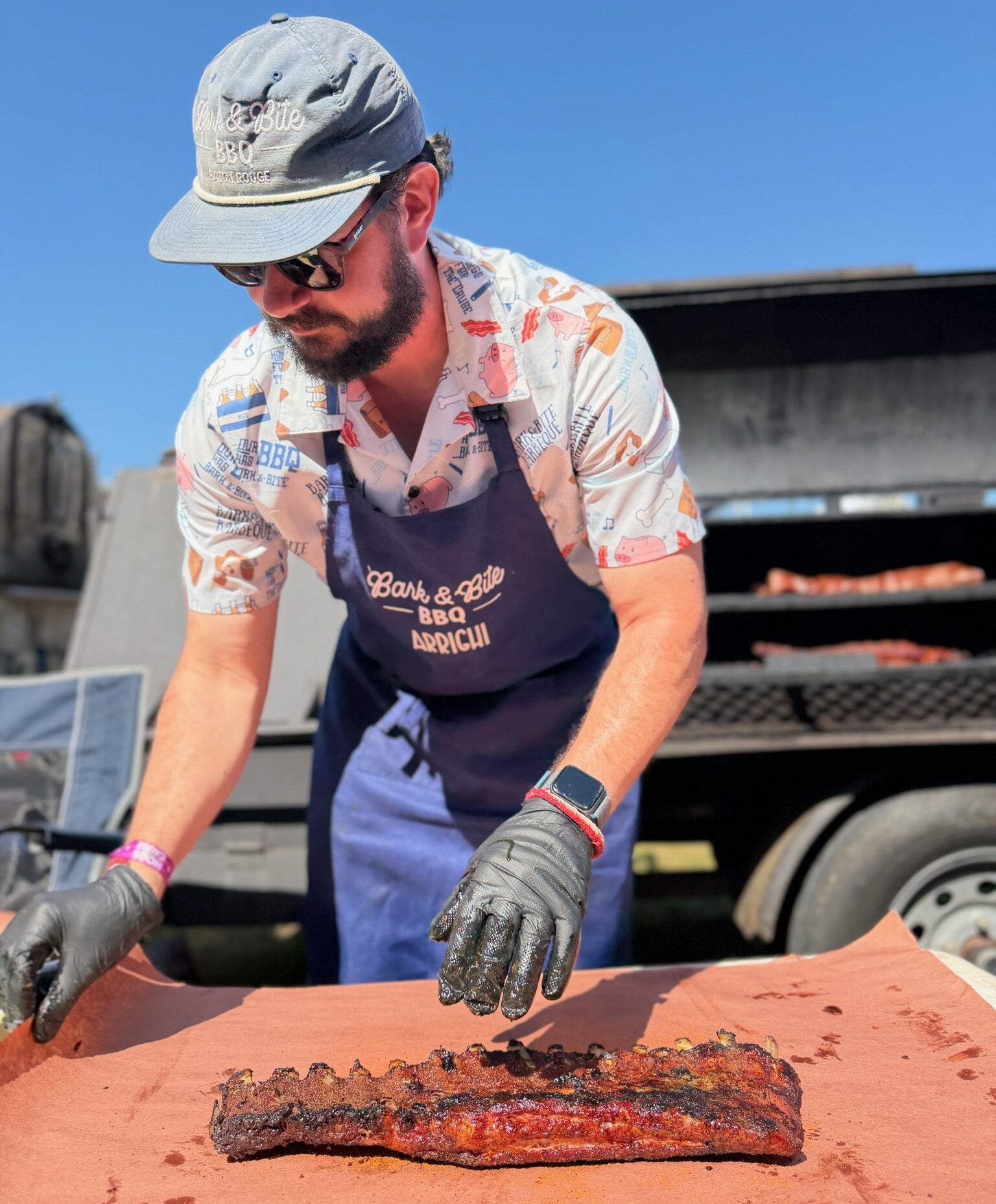 “The first time we placed, we acted like we’d won the Super Bowl,” Arrighi says. “It’s so cool to hear your name called.”
A 10th-place finish in ribs that first year led to tweaking the formula to try and place even higher 12 months later. But that backfired. Bark and Bite’s ribs fell to around 50th in 2023, teaching the team something valuable, Arrighi says.
“We learned that if you score in the top 20% of competition, you probably shouldn’t change a whole lot,” he laughs. “There’s so little separating teams at that level. We decided to really focus on what we were already doing and try not to get too creative.”
That’s one of many lessons barbecue teaches, the friends say. From time management to the right equipment, the pastime is rife with learning opportunities, inspiring endless musings and war stories among its participants.
Competition pitmasters are constantly asked for advice, and they’re usually happy to talk. So we couldn’t help ourselves–who better to ask for backyard tips than some of Baton Rouge’s own award-winning barbecue buffs?

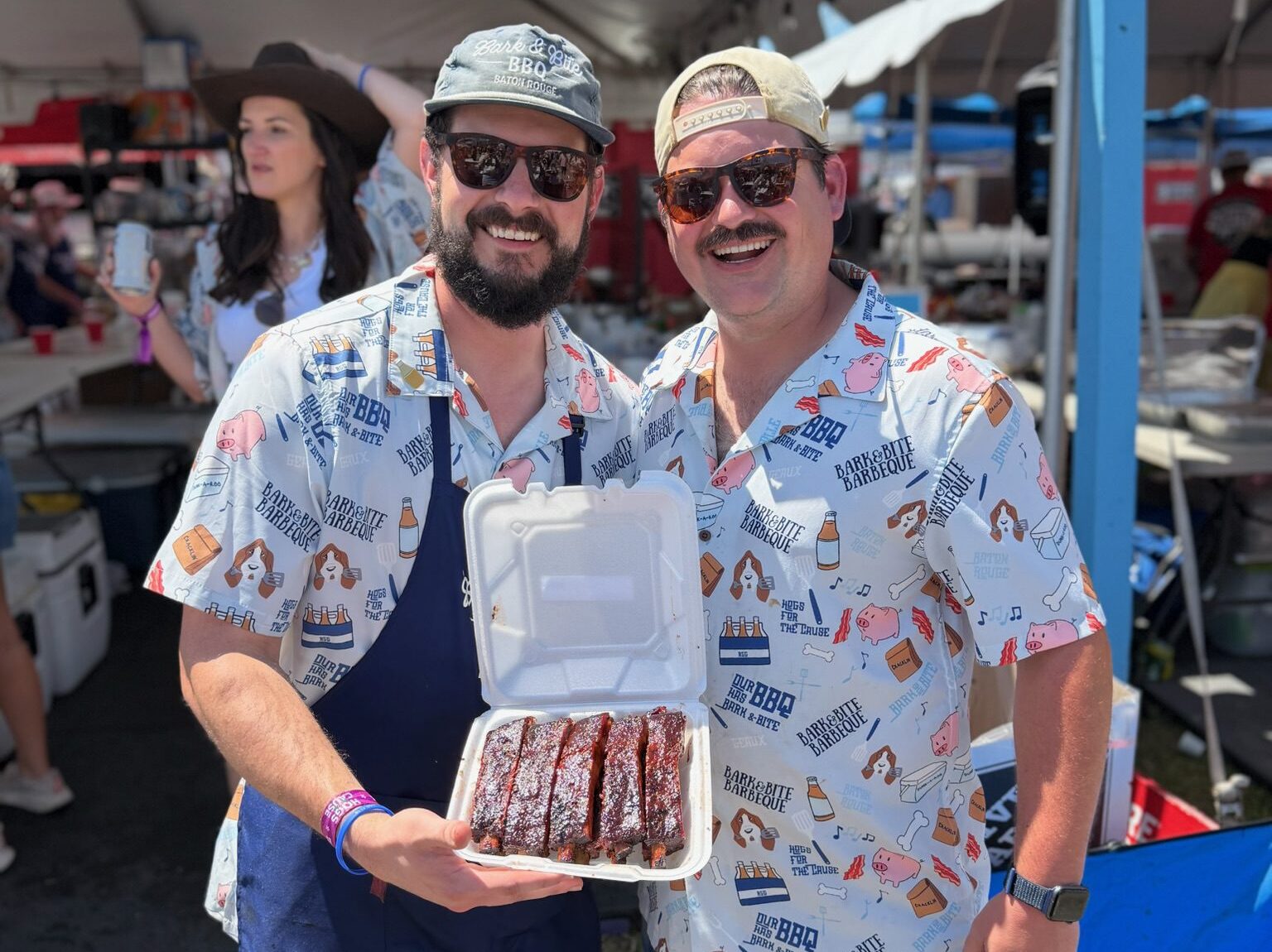
Matt Arrighi and Brandon Pearce
Focus on temperature, not time. “Home cooks are used to cooking by the clock,” Arrighi says, “but barbecue is more about using a meat thermometer to check internal temperature.”
Let the meat rest. Especially if it’s a larger cut; this ensures tenderness.
Lynnae Oxley
A two-time runner up on BBQ Pitmasters, former Chopped champion and a former barbecue caterer in the Pacific Northwest, Oxley is a Baton Rouge-based private chef and barbecue instructor.
Invest in good equipment. That means professional knives, a well-built grill or smoker and a digital thermometer. “Well-built equipment isn’t cheap, but neither is your time or the food you cook,” Oxley says. “Each aspect of your cooking experience matters.”
Keep learning. Watch videos on social media and take a class.
Nick Cormier
Owner of Envie Smokehouse and founding member of Porktoberfest, which earned a 16th-place finish in the whole hog category at Hogs for the Cause, Cormier is also a former grand champion at the St. Aloysius Catholic Church Holy Smoke competition.
Good barbecue takes time and requires your attention. “Have patience and don’t drink too much,” Cormier says.
Try and try again. “I’ve spent more money on bad briskets than I care to admit,” he says.
Brad Dupont
Owner of Ronnie’s Boudin and Cracklin’ House, Dupont is an award-winning competition barbecue pitmaster who has taken part in hundreds of sanctioned cookoffs across the country and earned multiple awards along the way.
Know your equipment. “If you really learn how your equipment performs,” Dupont says, “you can make a product 10 times better than what you’re currently making.”
Always buy quality meat. “Then cook it how you like it,” he says, “not how you think you’re supposed to.”
This article was originally published in the June 2026 issue of 225 Magazine.