Dumplings 101: An inside look at how these trendy Asian treats are made
It's dough time 🥟🥢
As he sat down to create a new dining concept a couple of years ago, restaurateur X Chen knew that anything dumpling related would be a hit. There’s just something about the diminutive, savory morsels that diners can’t resist.
Chen’s aptly named Dumpling & Bao opened last fall on Siegen Lane and immediately secured a loyal following with a straightforward menu largely composed of pan-fried and steamed dumplings, soup dumplings and bao buns, all stuffed with a handful of different fillings. A second Baton Rouge location opens later this month in Long Farm Village.
“I saw the idea in California in a restaurant that served soup dumplings and other kinds of dumplings,” says Chen, whose multi-unit Nova Restaurant Group is based in Lafayette. “People have loved Dumpling & Bao. It’s done very well.”
Another Dumpling & Bao has opened in Crowley, and more locations are planned for the Capital Region and Lake Charles, Chen says.
Dumplings of all sorts are widely available at a growing number of fast-casual Asian eateries in the Capital Region, as well as on the frozen food aisle of supermarkets. But there’s an art to making them fresh, Chen says.
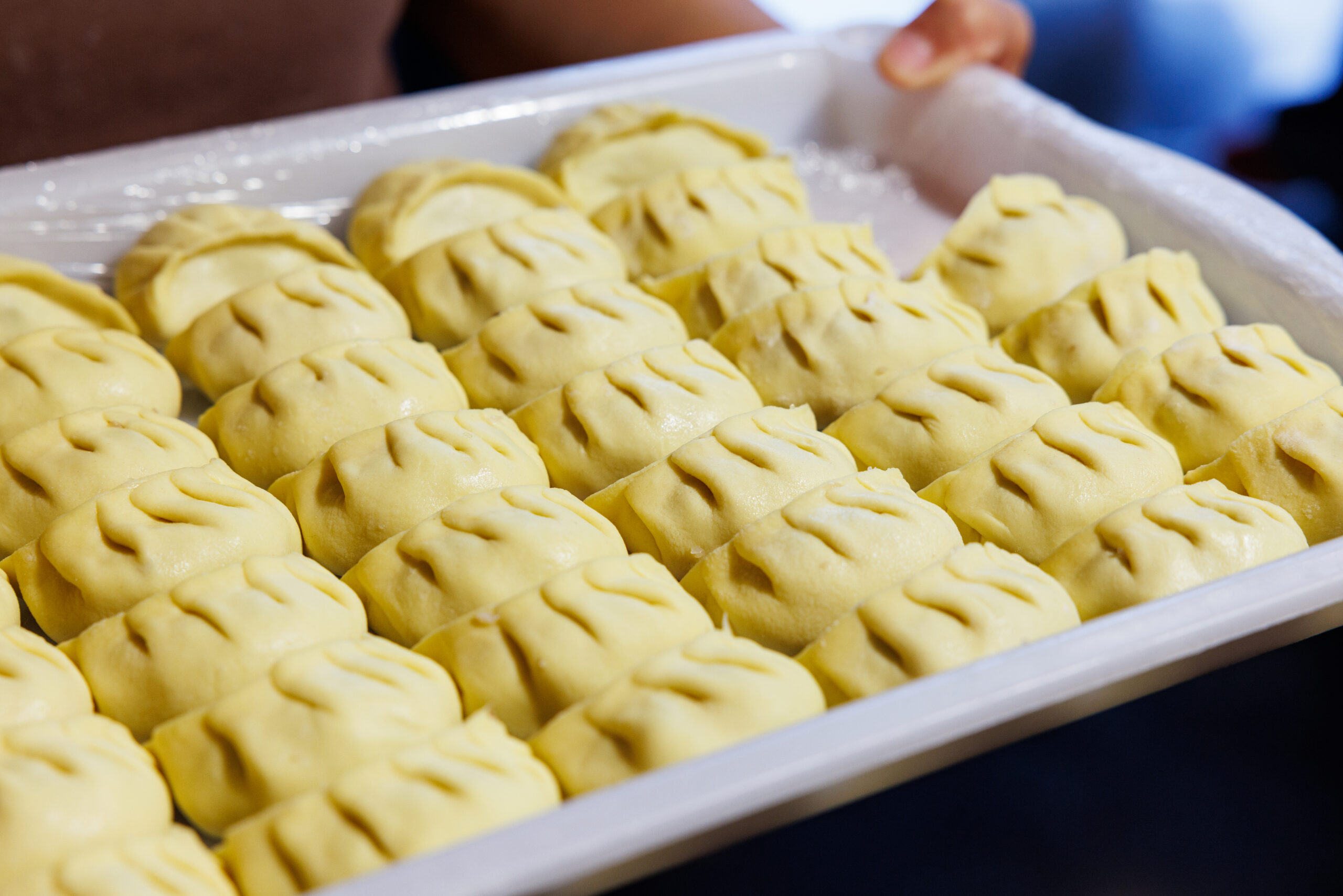
When planning Dumpling & Bao, Chen sent representatives to spend a couple of months at a Los Angeles dumpling eatery to learn the skill. It paid off. Not only are the dumplings made from scratch at Dumpling & Bao, but diners can watch the process unfold through a Plexiglas window. Workers roll out circles of dough that are precisely sized to hold tiny scoops of pork, chicken, shrimp, crawfish or veggie filling. Once they fill the wrapper, they crimp the edges before sending them off to the bamboo steamer or sauté pan.
“Not everyone can do it,” Chen says.
 How it’s done
It’s dough time
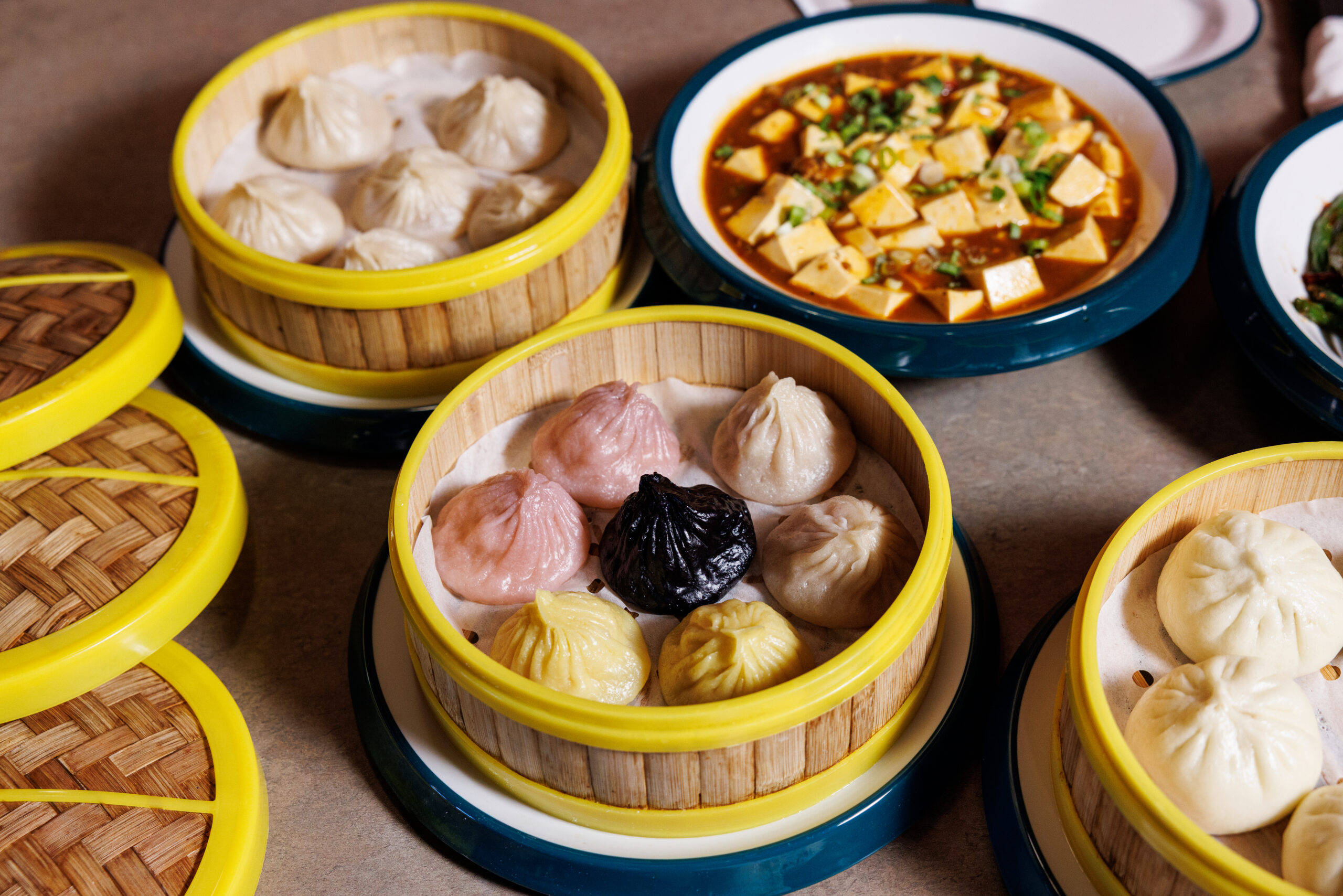
Chen uses a 50-50 combination of all-purpose flour and Korean flour, which has a finer texture and less gluten. The flours are combined with dry seasonings, then slowly mixed with water, Chen says. The dough is kneaded, rolled into balls, then set aside to rest. Chen adds coloring to batches of dough to designate what fillings they hold. Green denotes veggies, red signals crawfish, pink is for shrimp, and black is for black truffle. Chicken dumplings have a yellow hue, while pork dumplings are served in plain dough.
Have your fill
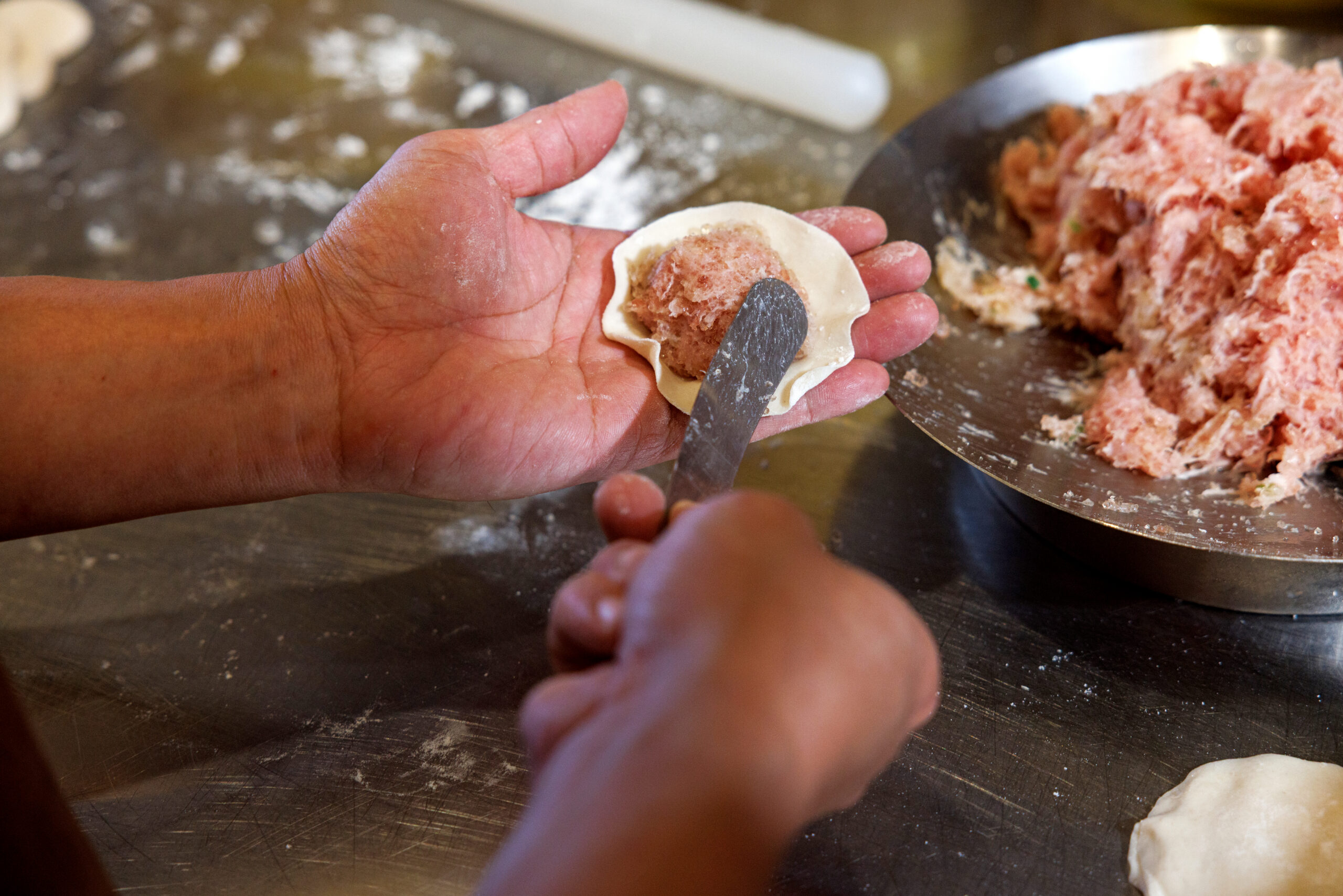
The fillings are various combinations of uncooked ground or minced proteins, finely chopped veggies and seasonings. Their consistency resembles a smooth paste.
Circle up
The dough is rolled into a long cylinder, then cut into small pieces and pressed into flat circles. A team member uses a small plastic rolling pin to roll each circle into a thin, even dumpling wrapper.
The right stuff
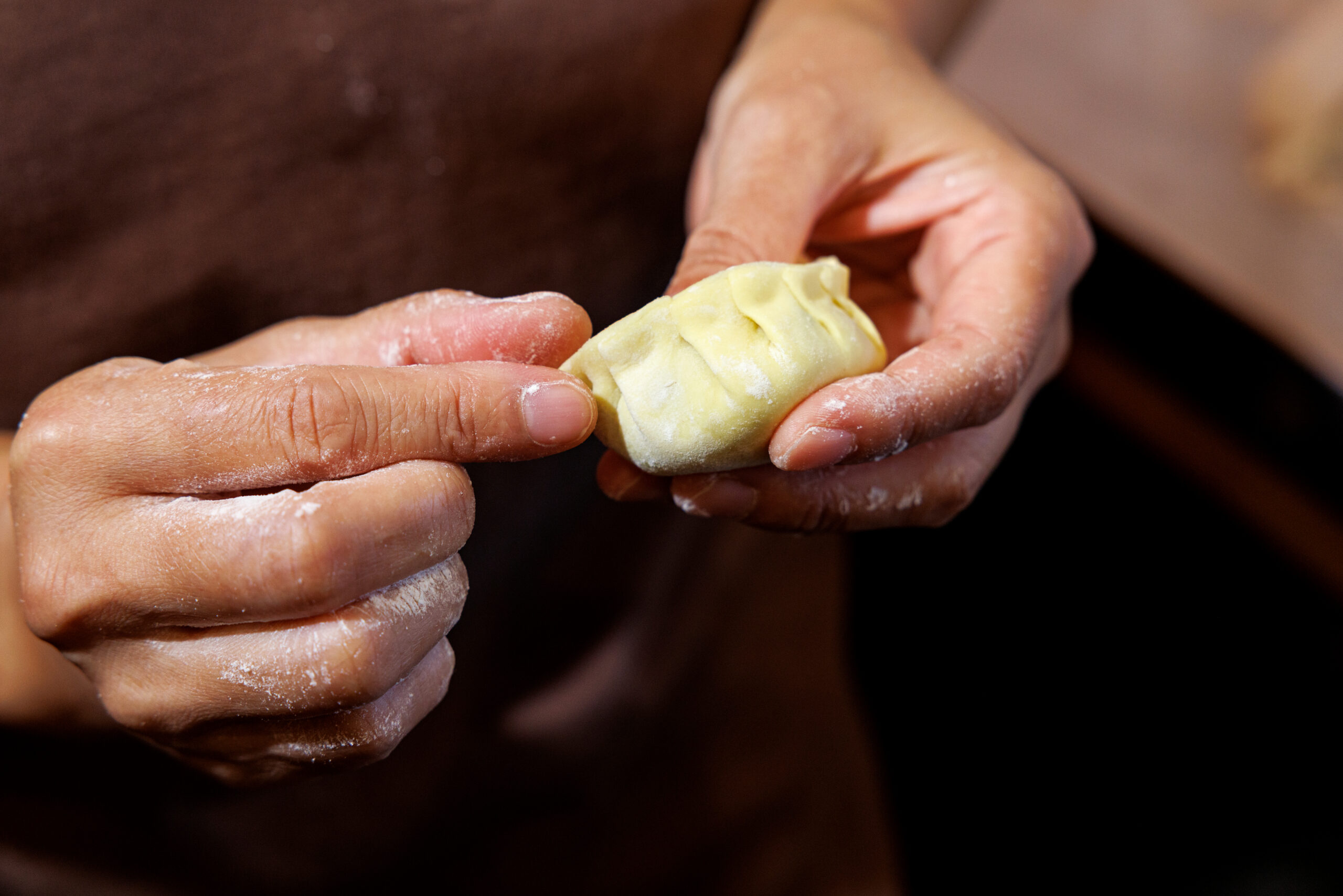
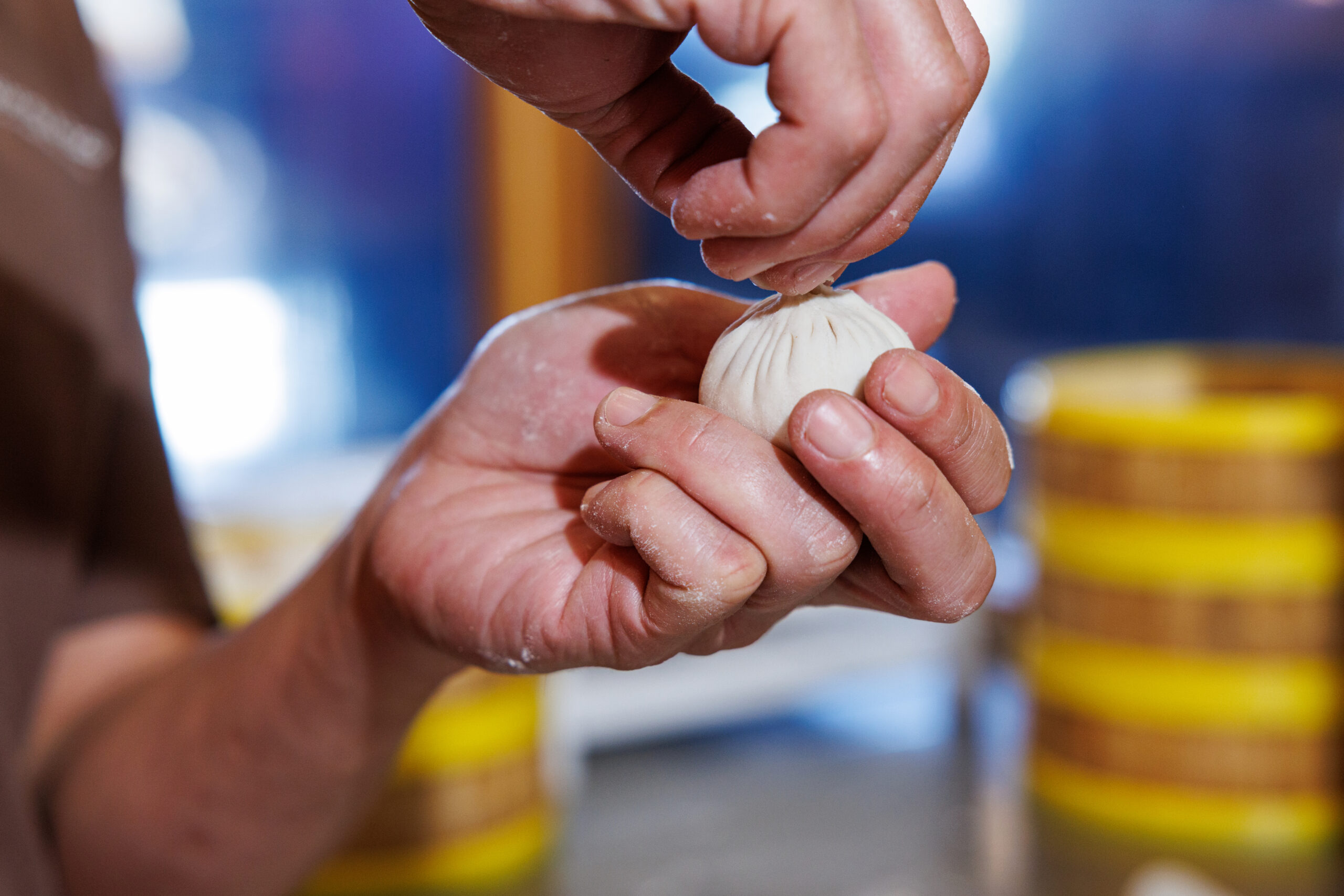
Careful not to overfill the dumpling, which will tear the dough, a worker places a small amount of filling in the center. Then they fold the dough over to form a crescent, folding and crimping to form an attractive edge that won’t loosen during cooking. In the case of soup dumplings, they palm the dumpling and gently twist the top knot.
Get it while it’s hot
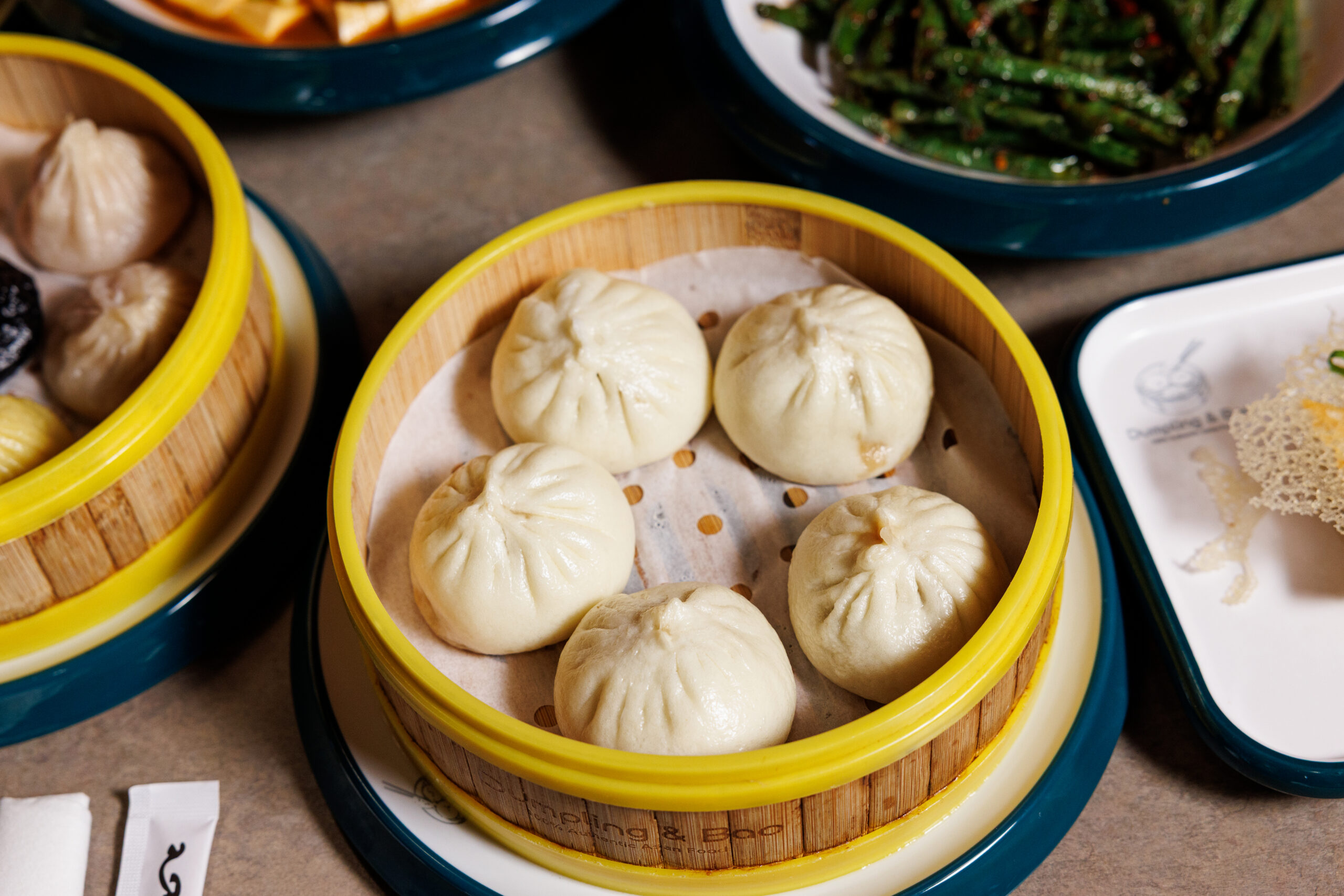
After a trip to the steamer or sauté pan, the dumplings are plated or served in a bamboo steamer, accompanied by dipping sauce and chili oil.
This article was originally published in the September 2026 issue of 225 Magazine.