Baton Rouge has struggled with negativity, but there’s an alternative
Shifting your lens about what the Capital Region has to offer is all about positivity and perspective 🏡📍
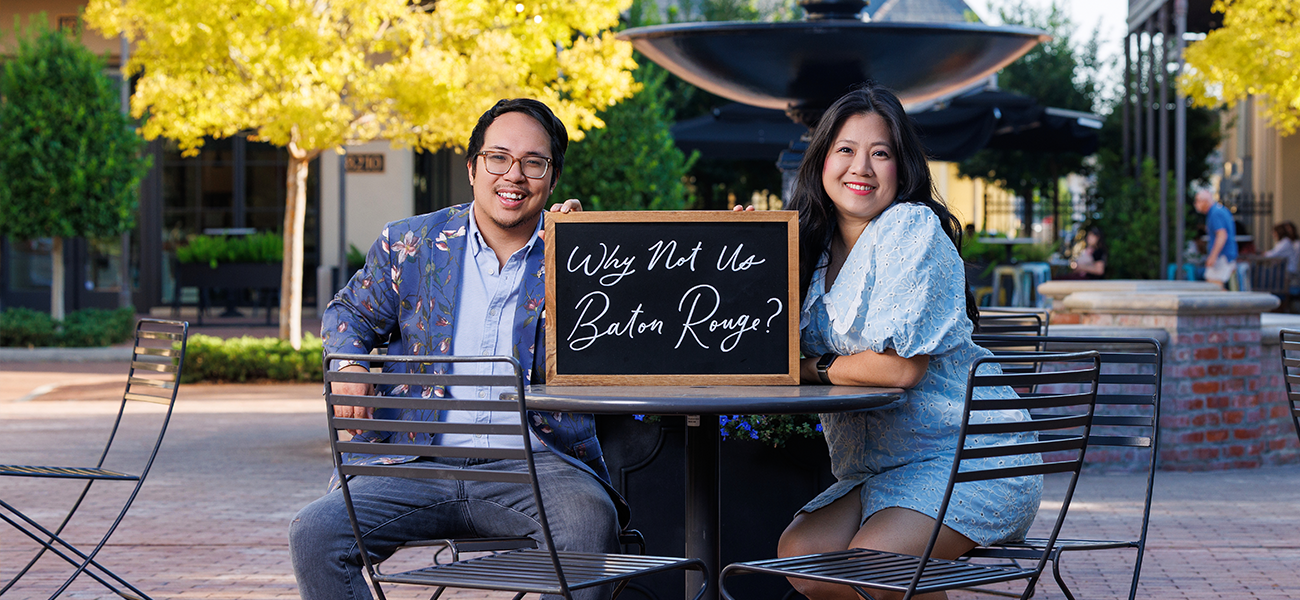
Back in 2017, Laura Siu-Nguyen was a newlywed who had just relocated to Baton Rouge from New Orleans. She and her husband, Kenny Nguyen, had been going back and forth between the two cities and had finally decided to make his hometown their home.
A native of Honduras, Siu-Nguyen admits to being unhappy at first. Baton Rouge seemed insular and boring, especially for someone who hadn’t grown up here.
“It got to the point where I didn’t want to be here,” she says. But then her attitude changed.
“Kenny said something really important to me,” she recalls. “He said, ‘The grass is greener where you water it, so unless you give Baton Rouge a chance, you’re never going to know its full potential.’”
Nguyen drove his wife around the Capital Region, telling stories about its history and rich culture and pointing out neighborhoods, arts and entertainment zones, and under-the-radar restaurants. By then, he’d made a name for himself as the founder of creative agency ThreeSixtyEight and a disciple of the positive, charging against Baton Rouge’s well-established tendency for negative self-talk.
Siu-Nguyen, a communications professional, received the message, shifting her lens about what the city had to offer. By 2019, she says she was convinced of its charms. Later, she founded two groundbreaking projects: Night Market BTR, a festival modeled after similar nationwide celebrations of Asian culture that swelled to 13,000 attendees in just three years, and Table Story Dinners, ticketed family-style gatherings where chefs share their personal stories. The two projects demonstrate a hunger for trendy events that bubbles just under the surface, she says.
“People argue with me about Baton Rouge not being cool, and I’m like, ‘Explain this,’” she says.
Negativity is a well-worn refrain in Baton Rouge. A talented executive who accepts a job is met with the question, “Why’d you want to come here?” Natives and longtime residents, despite deep roots in the community, love to lament traffic, crime and litter, declaring the region’s chronic inability to get out of its own way. Those same voices relish comparing Baton Rouge to other cities, with the Red Stick coming up short.
Nguyen, now executive vice president of operations at his family’s development firm, Nguyen America, says attitude is everything. Baton Rouge’s problems shouldn’t be minimized, he says. But many can be alleviated, he says, if people just get involved.
“We’re the exclaimers, not the complainers,” he says. “The complainers say, ‘Here’s why we can’t have it,’ and the exclaimers say, ‘Here’s why we can.’”
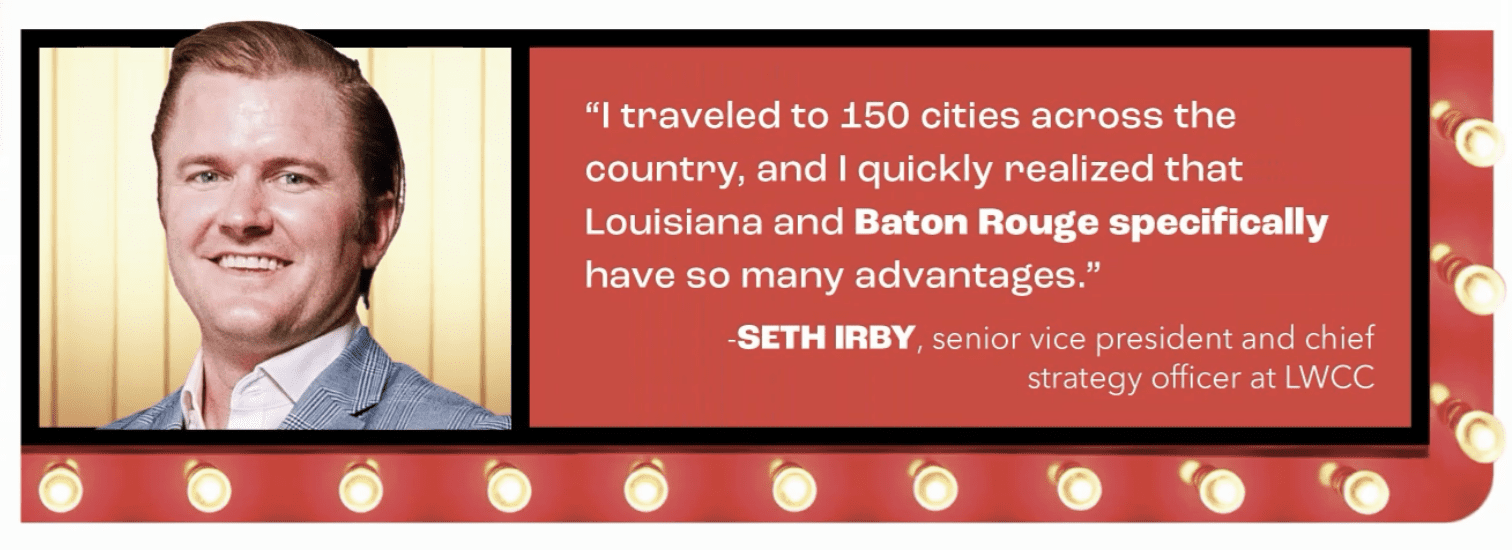 Seth Irby, Louisiana Workers’ Compensation Corporation senior vice president and chief strategy officer, also a champion of the positive, speculates that Louisiana’s high number of native-born residents contributes to its pessimistic leanings. Living elsewhere for a while can bolster goodwill toward Baton Rouge, says Irby, who spent his first five years out of LSU working in Richmond, Virginia, and traveling nationwide.
“I traveled to 150 cities across the country, and I quickly realized that Louisiana and Baton Rouge specifically have so many advantages that other cities don’t have,” Irby says. “You’ve got a powerful brand, you’ve got a world-class institution, sports, natural assets and resources, culture and hospitality.”
And while Baton Rouge has these assets, other cities Irby visited always seemed to have a more positive attitude, he says.
“I think it’s just systemic in the way that Baton Rouge has talked about itself,” Irby says. “And we have to break out of that cycle and see all the strengths that we have and lead with those.”
Nguyen believes the city is at an important inflection point with more voices trying to reverse the negative narrative.
The Baton Rouge Area Chamber and Visit Baton Rouge rolled out the Better in BTR campaign to point out the region’s vast assets. And projects like the proposed new LSU Arena, the River Center’s possible redevelopment and the proposed Memorial Stadium renovation and expansion are seen by many as being transformational for the city.
“People are starting to believe, ‘Maybe we can have this,’” Nguyen says.
This article was originally published in the November 2025 issue of 225 Magazine.