[Sponsored] Learning to spot the spots: Early diagnosis, better prognosis
Sponsored by The Dermatology Clinic
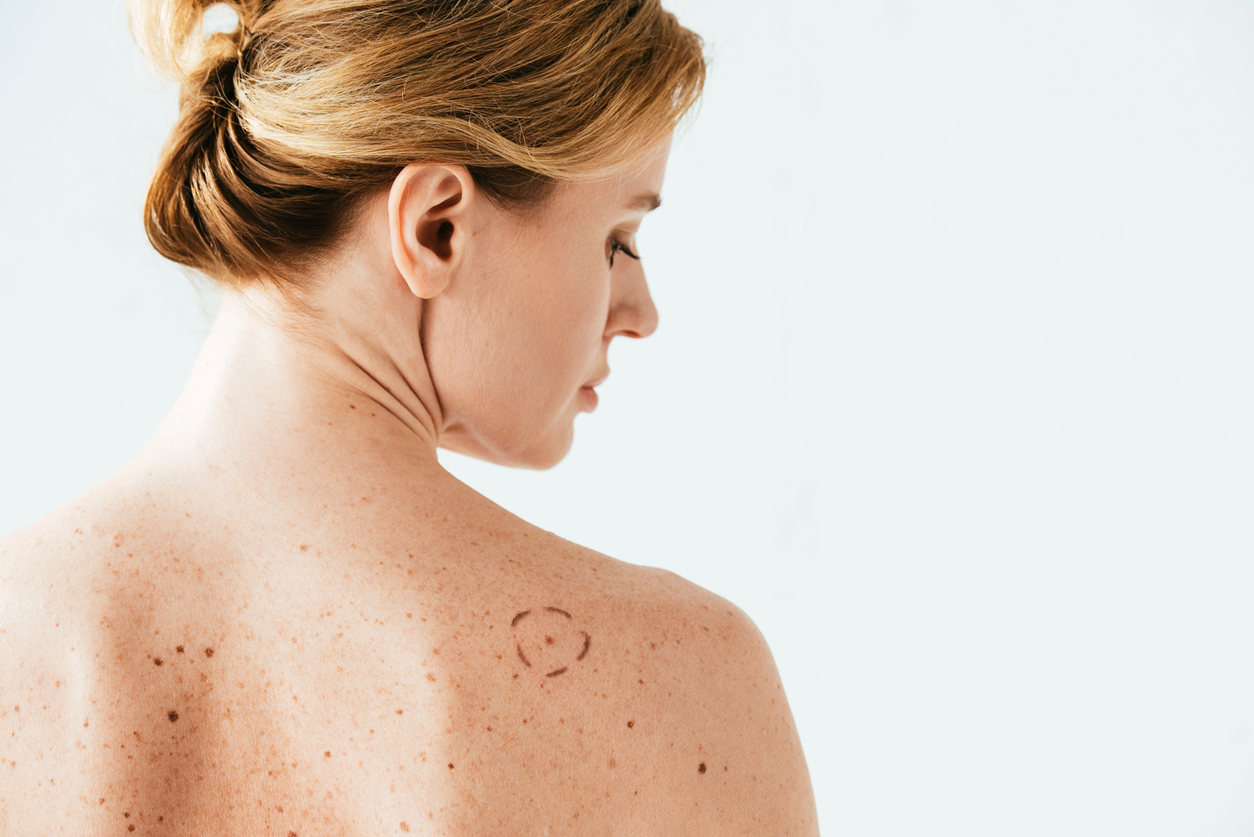
Melanoma is the least common and most severe type of skin cancer, but it’s often treatable if caught at an early stage. It’s important to know the early warning signs, usually starting out as a mole or a suspicious skin spot. Checking your skin regularly can help you identify issues in the early stages, when there is a higher success rate for treatment.

Dr. Harry Burglass is one of the talented physicians at The Dermatology Clinic, but he became a patient when he found a spot on his back that had to be removed. “My wife was giving me a haircut during the lockdown,” Dr. Burglass says. “While she was trimming my neck, she noticed a new mole on my upper back. I had her snap a photo, and while it was small, its dark color and asymmetry worried me. My partner Dr. Jordan Whatley removed the mole and testing revealed it was indeed melanoma.”
According to the Skin Cancer Foundation, monthly self-exams should be sufficient for most people, but they recommend checking with your doctor to make sure you don’t need to look more frequently. Dr. Burglass recommends having a family member inspect your scalp and back for you since those areas are tough to check on yourself. Learn how to spot the early signs of skin cancer and schedule an appointment with a dermatologist if you have concerns. “Removing a mole may leave a scar,” Dr. Burglass says, “but it’s one you’ll grow to love—it may be one that saves your life.”
Spot the spots
Take a closer look. When you know what to look for, anyone can perform a basic skin cancer self-exam to help distinguish between normal skin markings and what could be a cancerous mole. Together with annual skin checks by a dermatologist, regular self-examination is critical for catching all types of skin cancer early. Dermatologists use the acronym ABCDE to describe the differences between a benign (harmless) mole and a malignant one.
The ABCDEs of Melanoma:
A is for asymmetry
Most benign moles are symmetrical, so if you draw a line through the middle, the halves match. If the halves don’t match, make a note. Asymmetry is a warning sign for melanoma.
B is for border
A malignant mole can have scalloped, notched, or other irregular edges, while a benign mole normally has smooth, even borders.
C is for color
Most harmless moles are a single color, usually a shade of brown. Malignant moles might contain several differentshades of brown, tan, or black, or they could be red, white, or blue.
D is for diameter
A malignant mole is usually bigger in diameter, often larger than a pencil eraser (about ¼ inch), but could be smaller if it’s still in the early stages.
E is for evolving
Benign moles usually stay the same. Malignant ones can morph in size, color, shape, texture, and other characteristics.
There are other ways your body could be signaling distress. See a doctor if you have any of the following warning signs:
— Itchy, raised red patches of skin, a sore that does not heal or a change in sensation, like itchiness, tenderness, or pain.
— Redness or a new swelling beyond the border of a spot or pink bumps with low centers and raised edges, sometimes surrounded by exposed blood vessels.
– Shiny, small red or pink bumps with a pearly surface and occasionally black, blue, or brown spots.
— Marked change in a mole’s surface: oozing, bleeding, scaliness, or the appearance of a bump or lump.
– Flat and firm yellow or white areas that resemble scars.
 Schedule an appointment with a physician if you notice anything questionable. Click here or call 225.351.0622 to make an appointment for a skin cancer screening with Dr. Burglass or any of the Dermatology Clinic’s board-certified dermatologists.