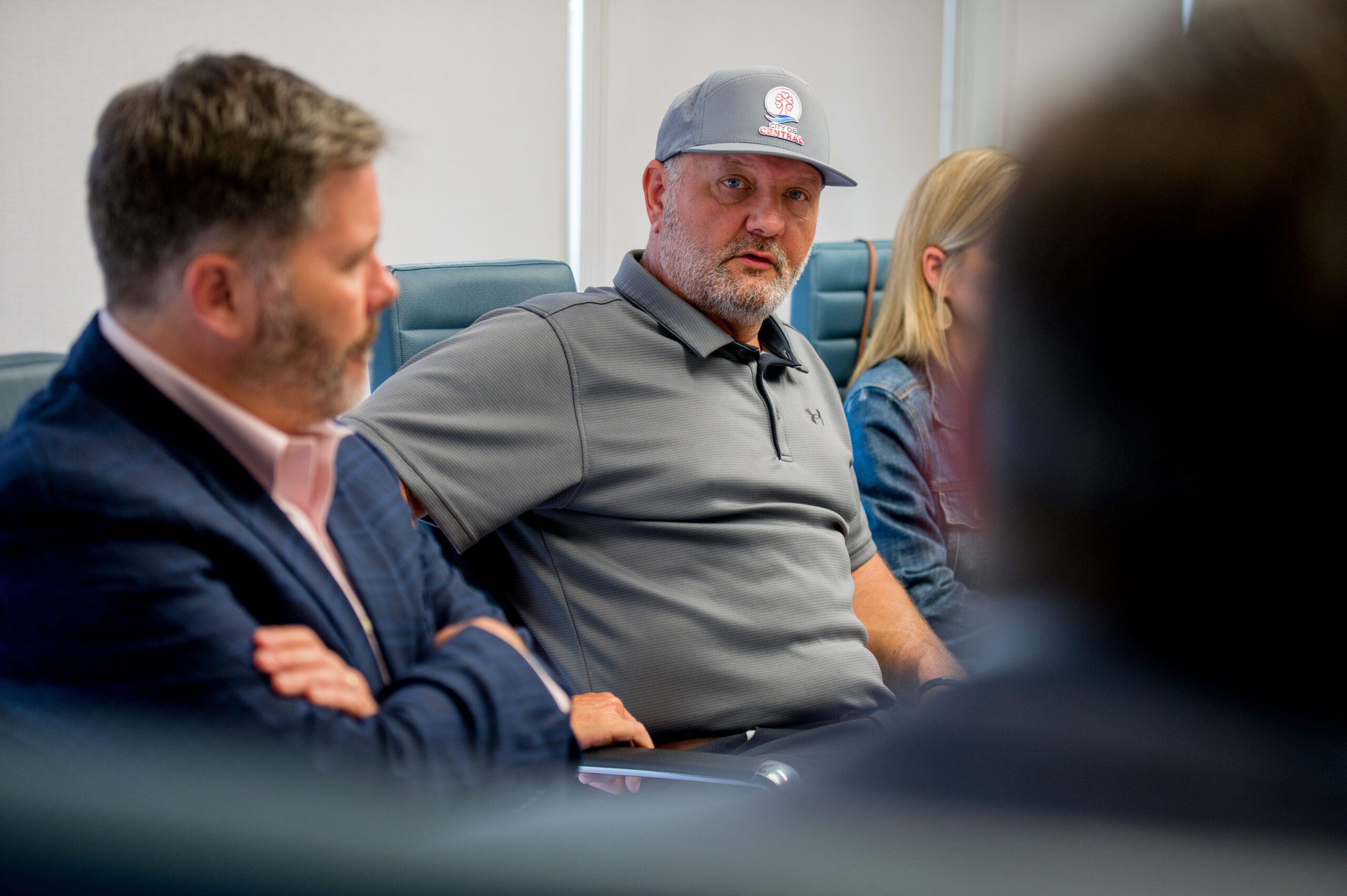
Parenting Roundtable: Wade Evans
How do parents navigate that gray area between the opportunity and risk associated with children’s access to technology?
We live in one of the greatest times ever, where we can have a phone in our pocket more powerful than computers 10 years ago. The key is knowing how to manage it and use it, not avoid it. As parents, we must teach discernment—how to discern whether something is right or real. AI is no different than the calculator was in the ’70s. Our job is to manage it in a way that’s beneficial and educational. The key is determining whether it’s accurate. Check multiple sources. Take what you read and fact-check it elsewhere.
What makes the Capital Region a great place to raise children – and what can Baton Rouge and the surrounding communities do to make it even more special?
The Capital Region is a very special place. Physically, we’re more connected than any other region in the state. We have two great universities, most of the industry, an amazing park system, an amazing library system—quality of life opportunities everywhere. The biggest problem is how we view this region. I can go down Jefferson Highway and find 10 good things or 10 bad things. When we choose to look for the good, it’s amazing how much good we have. The key is to grow our next generation of leaders and teach people how to see the world around them.
What are some common-sense ways parents can protect their children’s emotional and physical health in our increasingly fast-paced world?
I think we’re raising a much weaker generation. When a kid goes to school and is not equipped to do the work, we’re creating anxiety. We have to get back to teaching healthy coping skills. We have to teach them how to work through difficulties and still function. We have to create an environment where it’s normal to talk about problems. Remove the shame. Give kids and their parents permission to acknowledge, “I need help.” At some point, we have to stop coddling and get real again.
Economic volatility is affecting every level of society in some way. How do parents help their children prepare for a future that seems so uncertain?
Don’t worry about the future—live in the present. Read everything. That builds critical thinking. We have to build resilience. Don’t solve every problem—let them learn how to solve problems. We push kids on paths they’re not ready for. Not all kids need the same track. That creates anxiety. We need to let children grow and experience life instead of protecting them from it. We also need to slow down. We have our kids involved in too much. When we focus on what’s important, every moment becomes more valuable.
How is your organization stepping up to support parents and their kids during these historically challenging times?
As mayor, our role is to create stability in times of stress. We do that through nonprofits, helping families and kids however we can. We build capacity and resilience through the faith community, helping people learn how to manage and cope, especially when they don’t have access to mental health resources. We create an environment that brings people together and enhances quality of life. We have to be intentional—plan, grow strategically, and work with our school systems. Our job is to provide services in a way that supports families and creates an environment of continued progress.
To read more parenting insights from local community leaders, see The Parenting Roundtable: Raising Children in an Age of Uncertainty.