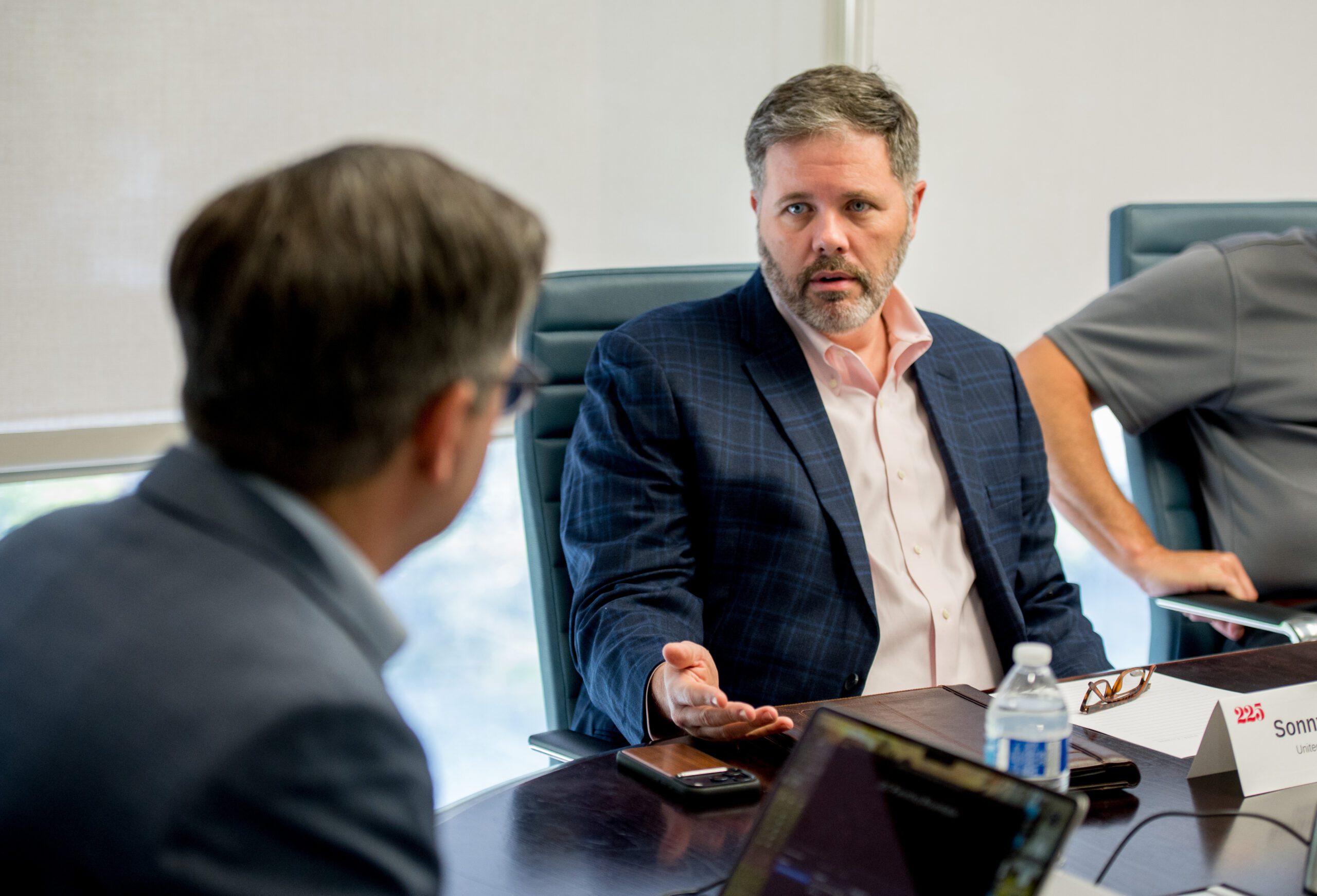
Parenting Roundtable: Sonny Aldridge
How do parents navigate that gray area between the opportunity and risk associated with children’s access to technology?
As adults, we spend too much time on technology, so it’s hard to think a child wouldn’t have the same temptation. Honestly, the only thing you can do is communicate. I have two teenagers, 18 and 16. Misinformation is something we talk about a lot. Cyberbullying is another issue. We know children who have been hit hard with that. It would be easy to say, “limit their access,” but technology is so ingrained in everything they do. There’s really no way to take it away. Communication on the dangers of what can happen and how to conduct and protect yourself online is the key.
What makes the Capital Region a great place to raise children – and what can Baton Rouge and the surrounding communities do to make it even more special?
The Capital Region strikes a good balance. We have opportunities—education, healthcare, culture—but we still have small-town values. I want my kids raised in a place where they want to stay. I remember standing outside a store with my daughter, and she wanted to ride one of those little carousel rides, but I did not have any cash on me. A stranger noticed and handed her a dollar so she could ride. That’s where I want to raise my children. A lot of big cities are not like that. I travel for work, and in larger areas, you don’t get that same response. Here, people stay. You see rooftops, subdivisions, growth. We have that balance, and I think that’s why people choose to stay.
What are some common-sense ways parents can protect their children’s emotional and physical health in our increasingly fast-paced world?
Everything moves faster today, and kids are exposed to so much earlier. My son, at 11, was asking me about a conflict in the Middle East, and I remember thinking, I did not even know about things like that at his age. The level of information, and really the level of stress, that kids are carrying now is just different. As a parent, that can be challenging. Sometimes the hardest part is simply recognizing what they are dealing with and how to respond. I was raised in an era where if you fell, you got up, dusted off, and kept going. That mindset still has value, but it does not always address what kids are facing today. Overall, Parents need better resources to know how to handle these issues.
Economic volatility is affecting every level of society in some way. How do parents help their children prepare for a future that seems so uncertain?
I’ll never forget as a kid walking down the street with my grandpa. I saw a penny on the ground, picked it up, looked at it, and tossed it back. He just about had a heart attack. That moment stuck with me, because to him, every bit had value. I think we’ve lost a little of that mindset. Even in financially stable homes, it’s important that kids understand the value of money and what it takes to earn it. At some point, they’re going to be on their own, and we have a responsibility to prepare them for that.
How is your organization stepping up to support parents and their kids during these historically challenging times?
We do a lot of community outreach, but the gap we found was financial literacy for young people. People get out of high school and don’t understand how money works or banking or financial stability. We’ve put a big focus on that—visits to schools, after-school programs, churches. Our officers are required to do financial literacy hours. We send things home for parents to open savings accounts and let kids go through the process. We’ve invested in tools like the Greenlight app, where kids go through financial literacy courses, manage allowance, chores, and spending. It sets a foundation.
To read more parenting insights from local community leaders, see The Parenting Roundtable: Raising Children in an Age of Uncertainty.