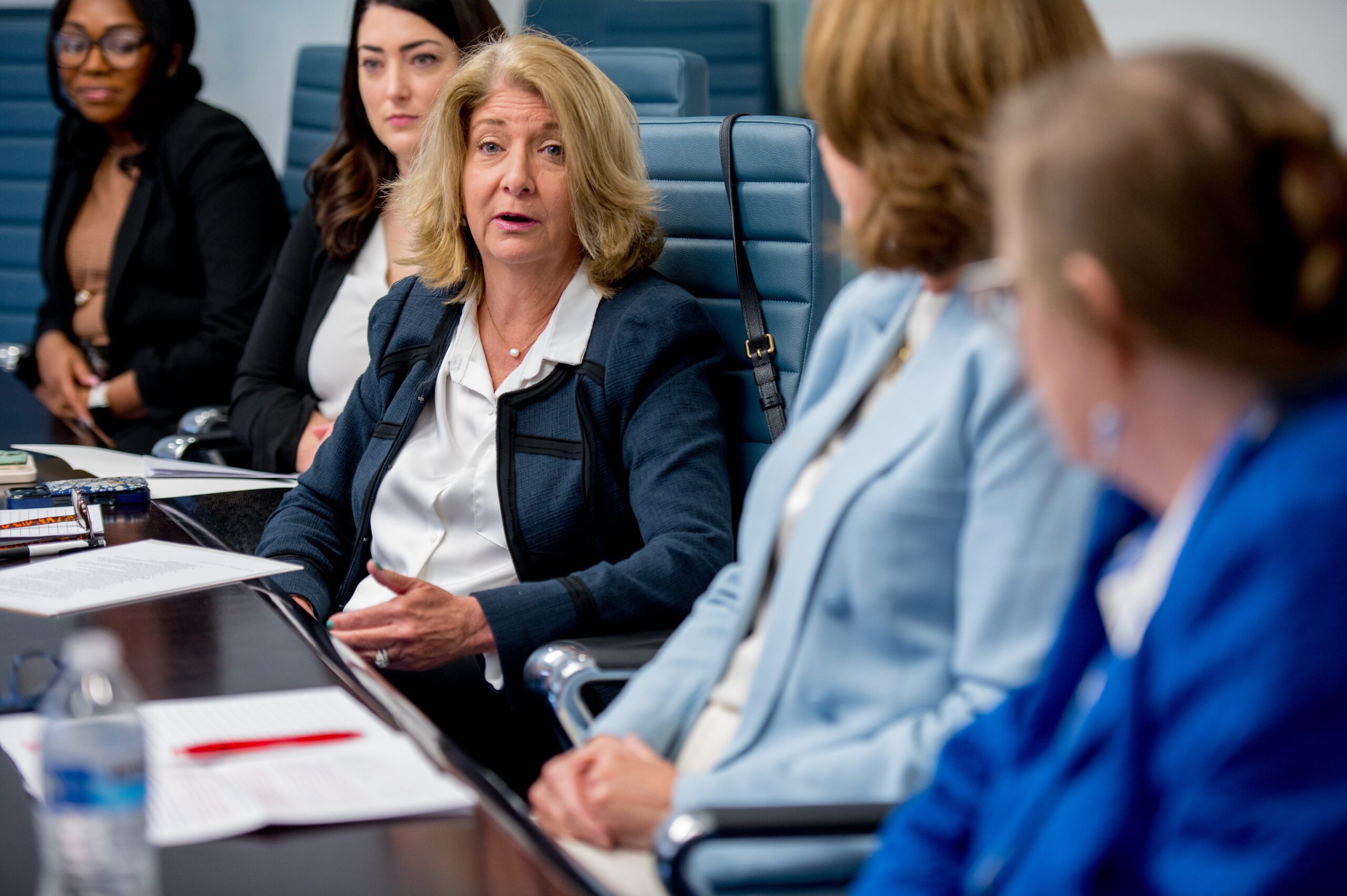
Parenting Roundtable: Emily Greene
How do parents navigate that gray area between the opportunity and risk associated with children’s access to technology?
Technology offers a lot of beneficial things. In schools we see smart boards, speech to text, word prediction software—things that foster greater independence. But we’re also seeing negative effects of excessive screen time. We’re seeing students come in with lower attention spans and difficulty with retention in the classroom, not to mention difficulty with delayed gratification. How do parents navigate that? First, be a role model. If you’re sitting on your phone and not interacting, you’re teaching that behavior. Limit your own technology. We need a balanced approach between digital use and real-world experiences. Engage with children in active play and get back to face-to-face communication.
What makes the Capital Region a great place to raise children – and what can Baton Rouge and the surrounding communities do to make it even more special?
The Capital Region has great places for children to learn and grow. We’re fortunate to have many school systems that give opportunities for all learners, especially our neurodiverse students and those with disabilities. Community businesses are working with our diverse population, offering sensory modifications. Our children have endless opportunities to experience organized sports through BREC, the YMCA, or schools. Children can experience our rich culture through a variety of affordable experiences such as our library system, the Baton Rouge Zoo, Louisiana Arts and Science Museum, and Knock Knock Children’s Museum. We also have a huge medical community able to provide collaborative care. The opportunities are there if parents seek them out.
What are some common-sense ways parents can protect their children’s emotional and physical health in our increasingly fast-paced world?
We’ve gone from a play-based society to a phone-based society. Get back to basics. Sit down face-to-face and engage with your child. Really have a conversation where your child knows you’re intent on what they’re saying. Take time to play together, eat meals together, communicate over the family table, put away technology. That goes a long way with emotional health. If basic needs are not met—a warm meal, a loving home—it’s difficult to thrive. Use outlets like arts and crafts and reading with your children. By going back to basics of communication, we can reduce anxiety and stress.
Economic volatility is affecting every level of society in some way. How do parents help their children prepare for a future that seems so uncertain?
Children learn from us as role models. We need to model smart financial behaviors—live below our means, avoid unnecessary debt, and plan for the future. Teach practical life skills—time management, money management. Teach children to set goals and delay instant gratification. Allow children to experience failure and guide them through it. If they earn money, teach them the importance of a budget and sticking to a budget. Make it concrete—give them choices and responsibilities so they can learn through experience.
How is your organization stepping up to support parents and their kids during these historically challenging times?
First Choice Therapy provides occupational, physical, and speech therapy in 21 school districts across Louisiana at no charge to parents. We provide services for children in their natural environments—schools, libraries, wherever they are. We work with teachers to provide resources not just for students receiving therapy, but for entire classrooms. We provide home programs for parents to use over the summer to maintain skills. In addition, First Choice Therapy invests heavily in our therapists to ensure they’re using the most updated evidence-based practices so they can best serve students and families in our region.
To read more parenting insights from local community leaders, see The Parenting Roundtable: Raising Children in an Age of Uncertainty.