Infant metabolism: How Pennington Biomedical scientists are rethinking the first year of life
Sponsored by LSU’s Pennington Biomedical Research Center
At LSU’s Pennington Biomedical Research Center, tiny research participants are at the heart of big science. In the Developmental Physiology Laboratory, led by Dr. Emily Flanagan, researchers are working to answer questions that may seem simple at first glance but could have implications far beyond infancy: How do babies grow, and what does that mean for their future health?
Dr. Flanagan’s team focuses on infant development and the risk for obesity and chronic disease, beginning in pregnancy and extending through a baby’s first birthday. The lab is especially interested in how the intrauterine environment and early feeding patterns shape growth. Factors such as maternal weight gain, metabolism and conditions like gestational diabetes can all influence how a baby develops before birth.
“Every baby is born with their own metabolic fingerprint. What we’re trying to understand is how that biology interacts with everything that comes after birth to shape their growth during their first year of life,” Dr. Flanagan explains.
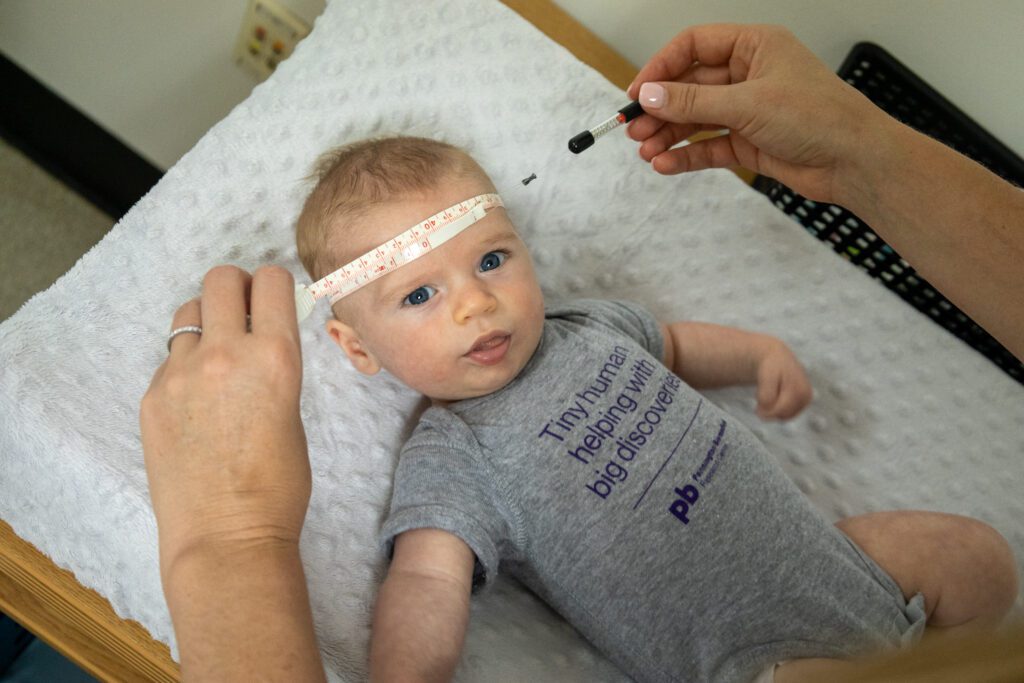
What happens after birth is just as important. Research shows that growth from birth to 12 months is the most predictive period for later childhood obesity, more so than any other early developmental window. Yet parents are often left guessing how much to feed their infants, and many of the guidelines that pediatricians rely on are based on data that is nearly 50 years old.
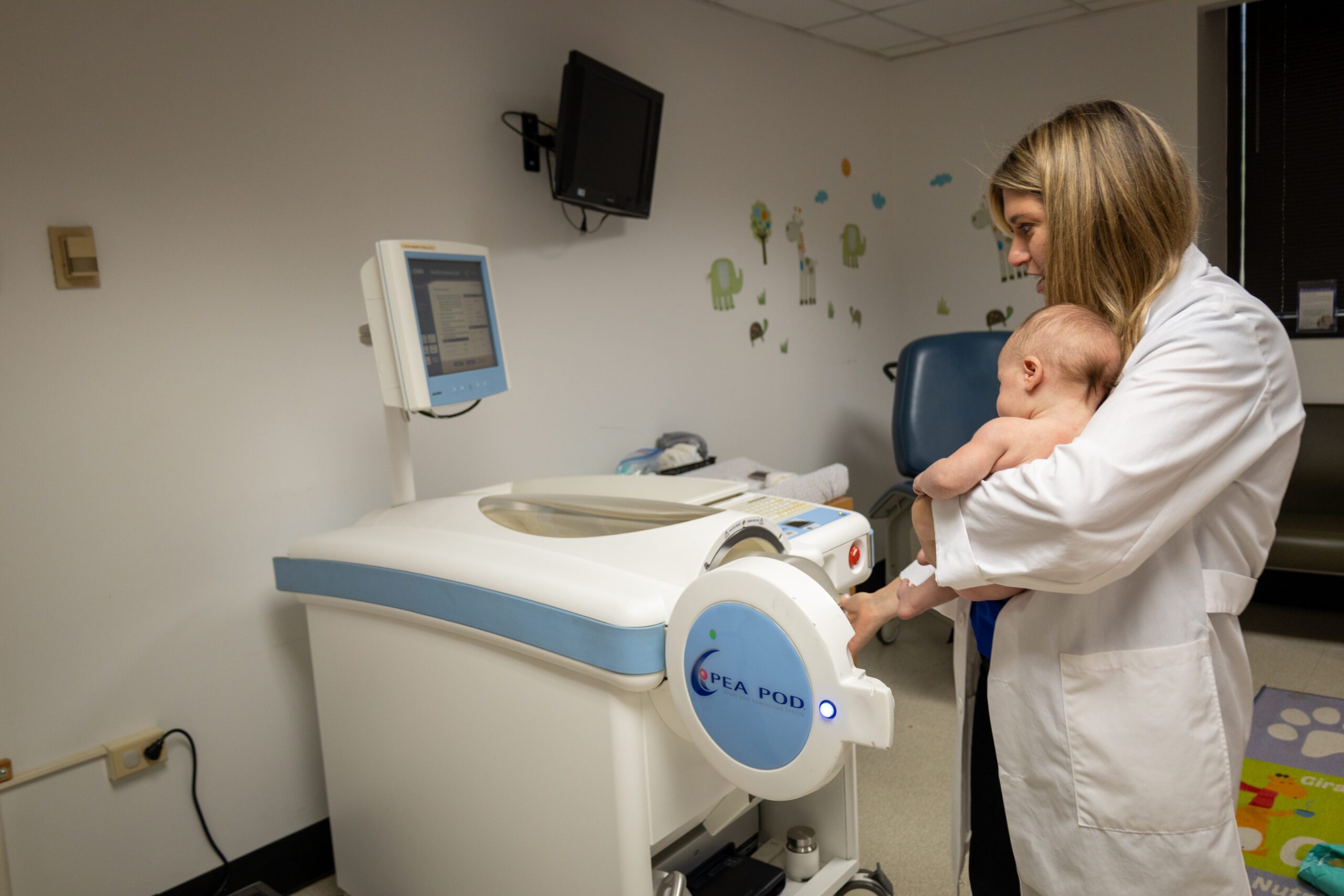
To close this gap, Dr. Flanagan’s group has spent more than a decade adapting Pennington Biomedical’s gold-standard metabolic tools, originally designed for adults, for use with infants. These gentle, baby-friendly methods allow the team to measure how many calories babies burn while they sleep and move. Tools such as an infant metabolic chamber allow them to capture the full picture of an infant’s energy balance, which is how many calories consumed compared to how many calories expended.
One ongoing project compares how babies metabolize breast milk versus infant formula, asking whether differences in milk composition change how infants burn calories and how many they need. The broader goal is to move toward precision nutrition for infants, recognizing that every baby is different in birth size, feeding patterns, metabolism and activity.
Recently, the lab received a $3.5 million grant to launch the first study of its kind to track infant energy balance across the first year of life. Families will visit the lab shortly after birth and again at 3, 6, 9 and 12 months, allowing researchers to link feeding, metabolism and developmental milestones with growth patterns over time.
Ultimately, Dr. Flanagan hopes this work will reshape the Dietary Reference Intakes for infants, which guide pediatric recommendations on how much to feed babies. By building a modern, evidence-based understanding of infant physiology, the Developmental Physiology Laboratory aims to help optimize growth in the first year and support healthier trajectories for children into the future.
“This physiology that we’re studying is the physiology that’s going to end up in textbooks,” Dr. Flanagan says, “because the science that exists right now on energy balance and metabolism in infants is so far and few between.”
To learn more about infant studies being conducted by Pennington Biomedical’s Developmental Physiology Laboratory, visit pbrc.edu/research-trials/programs/pediatrics.