New technologies are training the next generation of filmmakers—to live and work right here in Louisiana
As film crews took over streets and spaces around downtown and Mid City to film National Treasure earlier this year, it sent a clear message: the local future of filmmaking is bright.
The Disney reboot is a signal fire for the innovations coming out of the Capital City, with the next generation of filmmakers being taught on state-of-the-art technology at LSU.
Thanks to a five-year $1.25 million grant from the Louisiana Economic Development’s Entertainment Division awarded in 2021, LSU’s digital media center was outfitted with a virtual production stage, utilizing the same technology from Michigan-based Fuse Technology Group that brought The Mandalorian to the small screen.
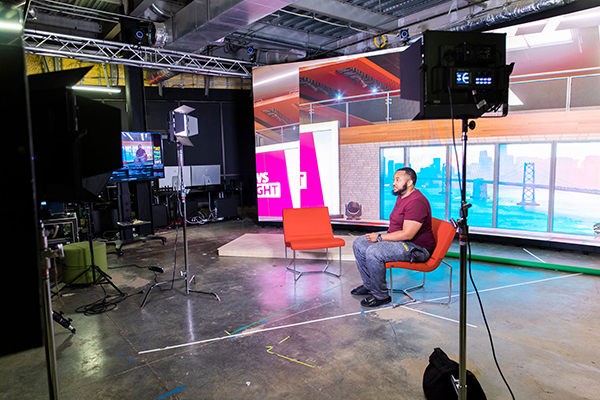
A curved wall of LED screens capable of producing 3D environments, in conjunction with video game design software from Epic Games and motion capture programs, was installed in February. By the start of the summer semester, the first class completely utilizing the technology was underway.
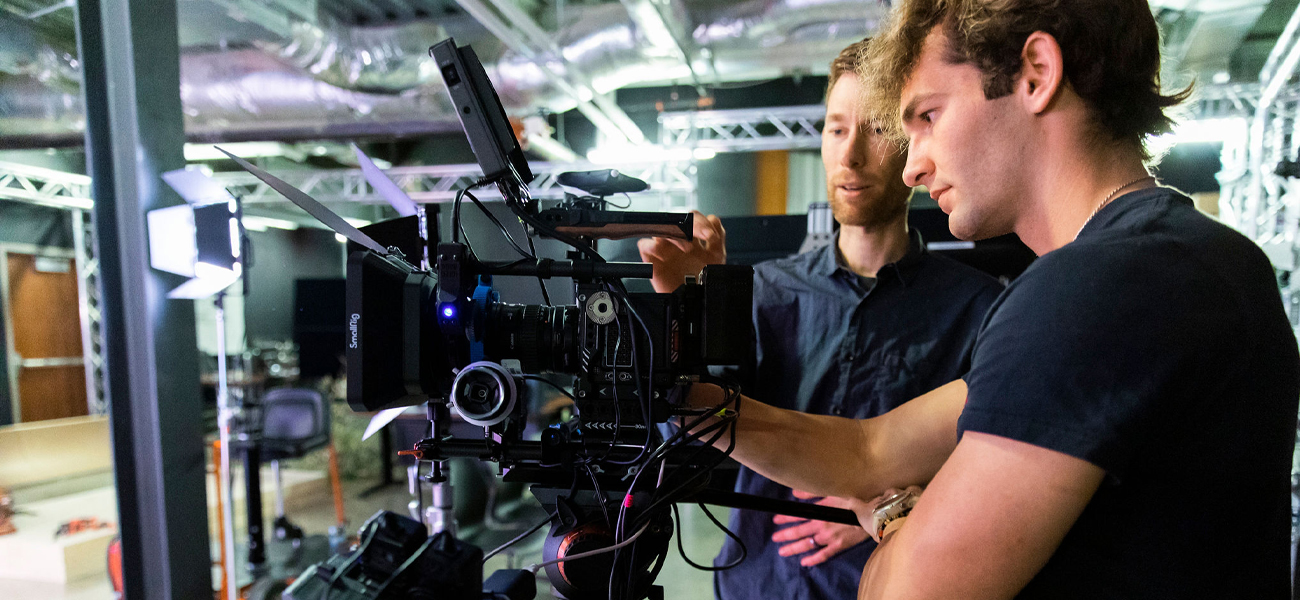
By the second day, professors Derick Ostrenko and Marc Aubanel were already allowing students to take on roles within their film crew, including camera operator, motion capture supervisor and video engineer. The technology is run like a professional film set.
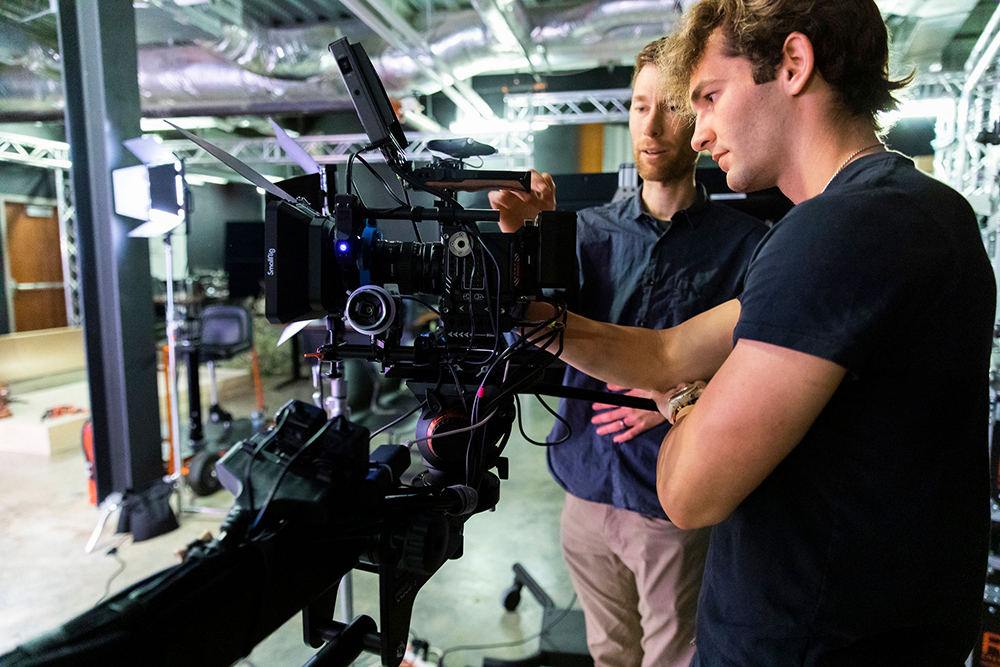
“One of the coolest things is that we are able to get students from the school of theater, screen arts, science, digital media, engineering, music. There are just a lot of areas we are able to bring together that do a really good job at a particular skill set,” says Ostrenko, a professor at the College of Art & Design. “We’re showing the students what’s possible and how to bridge all these technologies together.”
Ideas are exchanged in this new environment, with the set being adjusted on the fly to create a makeshift talk show set to test the screen’s capabilities.
“We’re hoping this can close the gap with what a professional production might be and what a student projection is. We’re evening that playing field,” says Aubanel, the director of digital media arts and engineering.
Just a 15-minute drive from the groundbreaking innovation on LSU’s campus is Celtic Studios, the central hub for almost all filmmaking in the city, bringing together various talents to sustain the industry. And with help from organizations housed there, like the local branch of the New Orleans Video Access Center (NOVAC), the studio helps connect individuals to opportunities.
On the set of National Treasure, carpenters and painters transform soundstages into lost temples, while electricians work on screens similar to those used at LSU. The goal of a place like Celtic, the studio’s executive director Aaron Bayham explains, is to open up the industry to every kind of career.
“A lot of people don’t realize there are a lot of different types of opportunities to work in film,” Bayham says. “People think of actors or directors, but there’s a lot of things that happen behind the scenes, whether it’s construction or wardrobe or makeup or visual effects.”
One of the thriving parts of the industry in Baton Rouge and on Celtic’s lot is Crafty Apes, the largest cinematic visual effects company in Louisiana.
Launching in January 2020, the group is involved from script-to-screen, head of studio Sam Claitor explains, working with the filmmakers to develop a film’s visual language through its effects.
“Working in visual effects means we work in tech,” Claitor says. “The technology is always evolving, so a big part of our job is staying ahead of the curve.”
Their work has kept them busy, with local productions like Where the Crawdads Sing and Home Team booking them well into next year. In fact, Crafty Apes helped LSU install and develop its virtual production stage earlier this year.
Between the innovations at LSU and the work at Celtic, the future of Baton Rouge’s film industry is operating on a digital frontier.
“It’s like the wild west right now,” Ostrenko says. “The future is this merger of the virtual and the physical and what you can do between that.”
With films and television shows increasingly utilizing technologies like motion capture, virtual sets and computer-generated images, institutions in Baton Rouge are on the cutting edge of bringing what’s on the big screen closer to reality than ever before.
“We’re helping (creative partners) make their dream a reality,” Claitor says.

Recently shot in BR
- Greyhound (feature film shot in 2018)
- Paradise Lost (scripted series filmed in 2019)
- Crater (feature film shot in 2021)
- National Treasure (scripted series filmed in 2021-2022)
- The Mascot (feature film expected to begin this year)
This article was originally published in the October 2022 issue of 225 magazine.