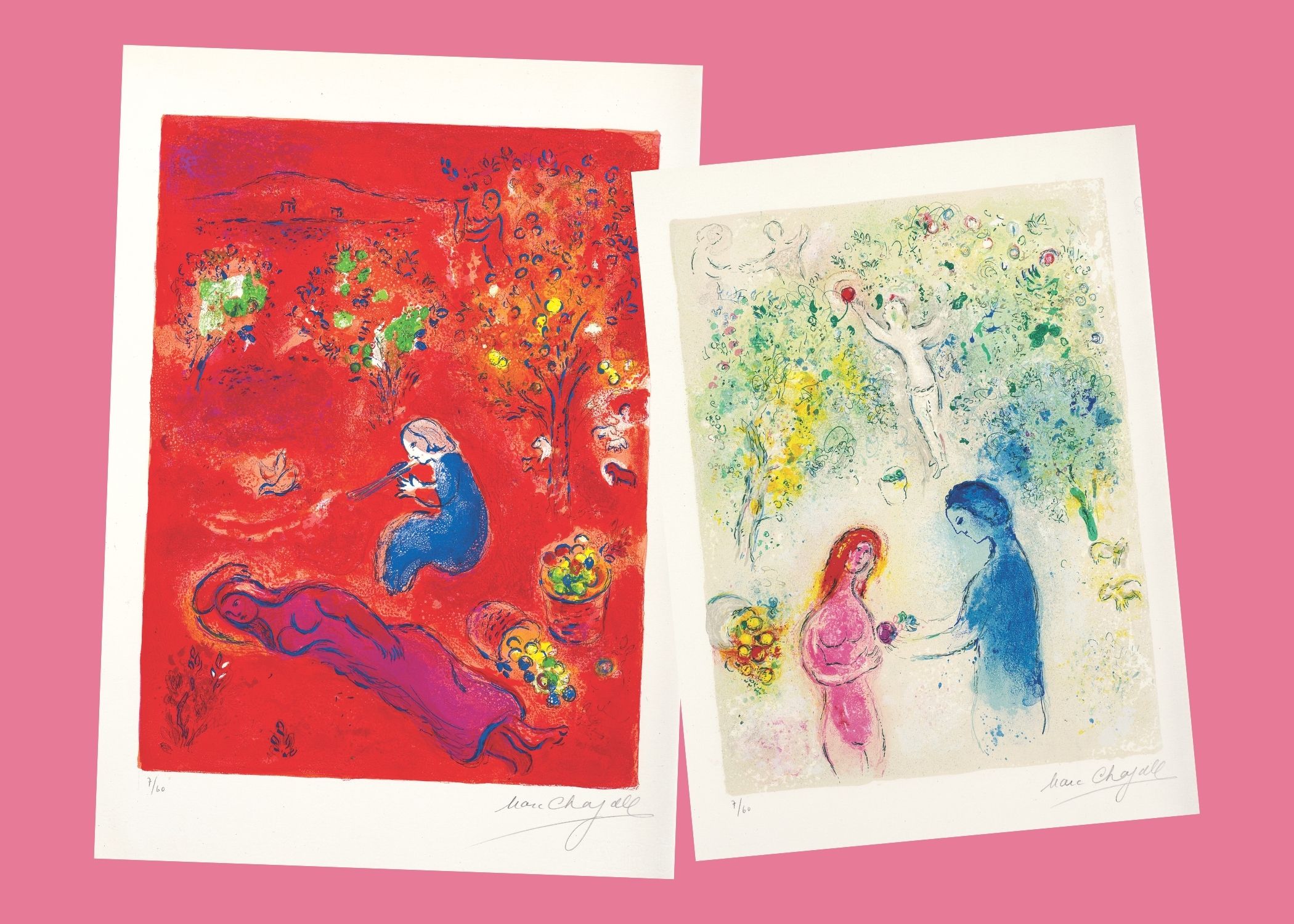
As interpreted by Marc Chagall, a classic love story finds its way to the LSU Museum of Art
Some of the artist's most romantic works have made their way to Baton Rouge ❤️🎨
Modernist artist Marc Chagall loved love.
Illustrations of couples embracing, dancing and wearing flower crowns and wedding garb are easily found in the printmaker’s portfolio. This spring, some of his most romantic works have made their way to Baton Rouge.
Just before Valentine’s Day, the LSU Museum of Art unveiled “Daphnis and Chloe and Other Lovers: Lithographs by Marc Chagall.” This new exhibition contains 50 pieces by Chagall, including the entire “Daphnis and Chloe” collection.
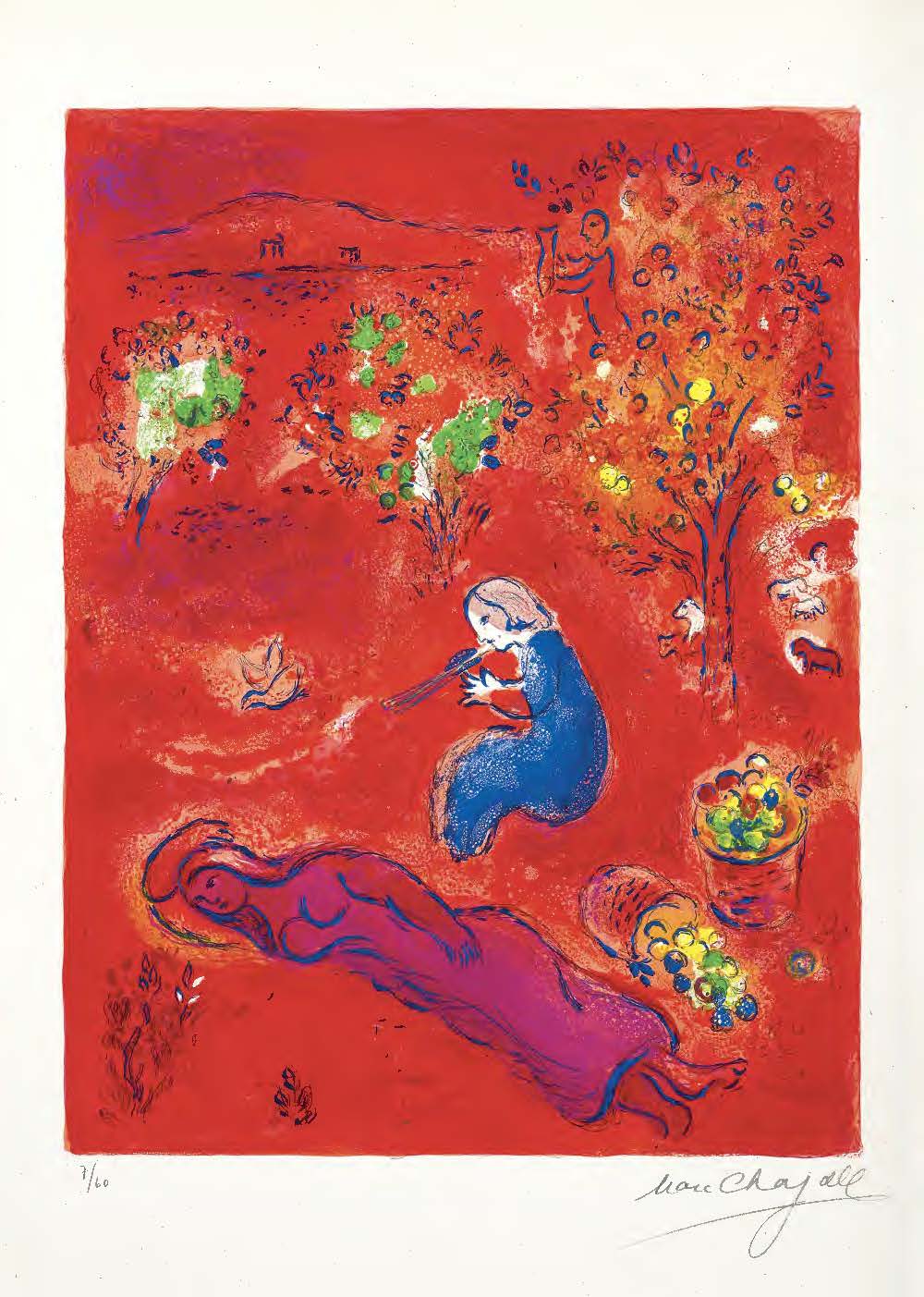
Michelle Schulte, LSUMOA chief curator of exhibitions and collections, says she was excited to bring these pieces to Baton Rouge, particularly in the springtime. Pastoral colors and natural imagery fill Chagall’s work, making these pieces the perfect representation of the season.
“We love to be able to have these master works here in this community,” says Schulte. “And you don’t have to travel to New Orleans to see these works; you don’t have to go to Little Rock or Houston. You can see these artists right in Baton Rouge.”
Daphnis and Chloe’s story originates from a Greek novel that’s over 2,000 years old. It is a tale of two people falling in love on a small island in Greece. Like many artists, Chagall was a romantic. The vision for his depiction was rooted in his own love for his wife, Valentina “Vava” Brodsky.
Schulte says this timelessness is what has kept this collection sought after for over 60 years. “Even though it’s a dated story–
I mean, it’s from 2 A.D., and it’s by this Greek philosopher–it is a love story. When you read it, it’s about two young people who grew up together. And they just learn through each other what love is.” Schulte says.
A metaphor-ridden Greek myth is a perfect match for Chagall’s unique style. The artist included natural elements and animals in nearly all of his personal works. A goat often represented Chagall himself, donkeys were for his daughter Ida, and birds represented love, freedom and expression.
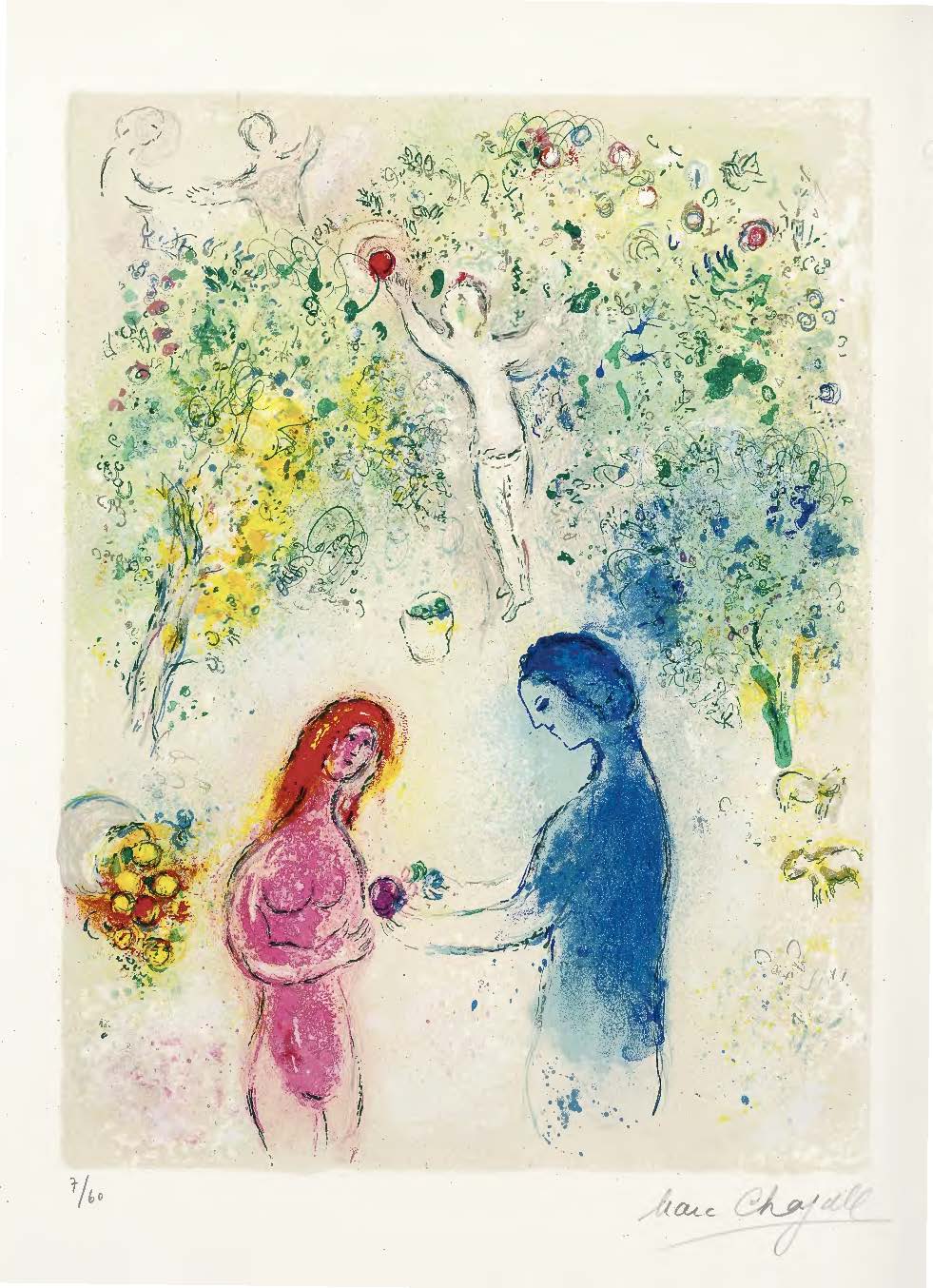 According to Schulte, Chagall also infused his Russo-Jewish background into his pieces, especially “Daphnis and Chloe.” The collection features many connections to the creation story in Genesis, beginning with their shared setting of a secluded garden covered in greenery.
Much of the museum’s educational programming for this exhibit, including a members-only curator talk set for April 23 and Chagall-inspired activities on
May 3, revolves around these symbolic connections.
“He had his own personal symbolism, and you almost have to decode it sometimes when you look at the works. And I think that’s what’s fun about it,”
Schulte says.
Chagall experienced many dark times in his life, from fleeing his home in occupied France to the death of his first wife, but his works remained bright and joyous. His optimism clearly spills into the works on display. “Even when some of the scenes become darker because the story is a little dark, there’s still this joy that pulls through, and I think that’s what makes his work so timeless and so popular,” Schulte says.
“Daphnis and Chloe and Other Lovers: Lithographs by Marc Chagall” is on display at the LSU Museum of Art through May 24.
This article was originally published in the March 2026 issue of 225 Magazine.