Local physicians and researchers are champions for young athletes’ health and safety
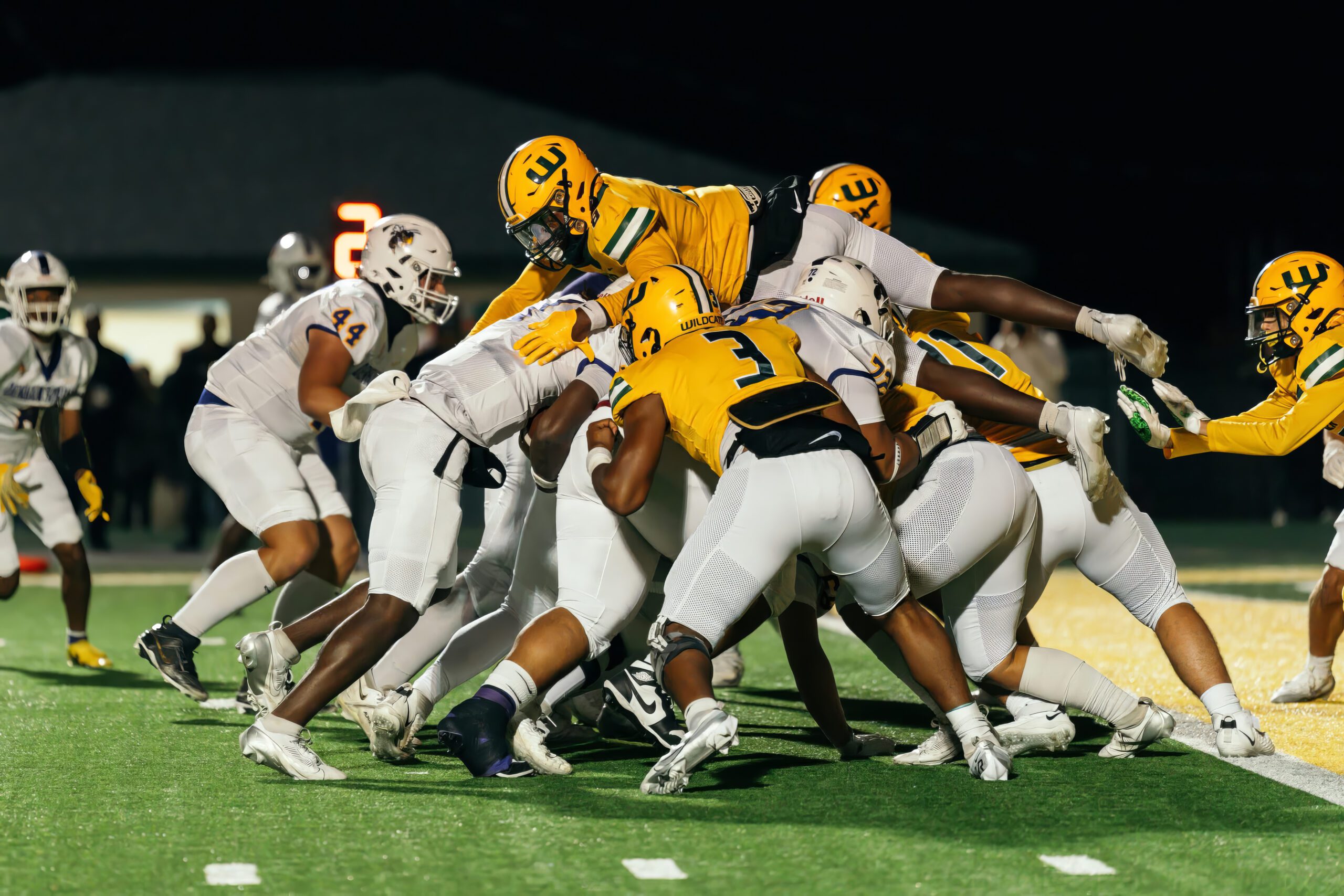
Fall means football, a game beloved for its gutsy scores, big stops and hard hits. It’s steeped in tradition but forever moving forward with scientific advancements that revolutionize the game and the experiences of the athletes playing it.
Throughout the years, advancements in equipment, like better helmets and air-cooled pads, have made football safer and reduced injury risks. Modern coaches are backed by talented teams of trainers who understand the importance of limiting head-to-head contact, prioritizing hydration and gradually acclimating players to full gear.
Still, concussions and heat illnesses continue to plague the sport and remain major concerns for athletes on the field. On the sidelines, researchers across the state are taking detection and prevention to new lengths to tackle these issues in innovative ways.
While their studies focus on football players, the implications of success expand far beyond—not only to athletes in other sports, but also to firefighters, police, military, construction/oilfield workers and more, who are regularly exposed to difficult and dangerous conditions.
Detecting brain injuries with spit tests
Football has the highest rate of concussion among youth sports, according to the CDC’s Heads Up initiative.
Dr. Guillaume Spielmann, associate professor of kinesiology at LSU and lead trauma researcher at Our Lady of the Lake, has assembled a team of eight to study a new way to detect traumatic brain injuries, like concussions.
Previously, Spielmann studied how concussions affect the proteins present in blood, but current tests are not sensitive enough to reliably detect damage, and blood draws are impractical and invasive in on-the-field settings.
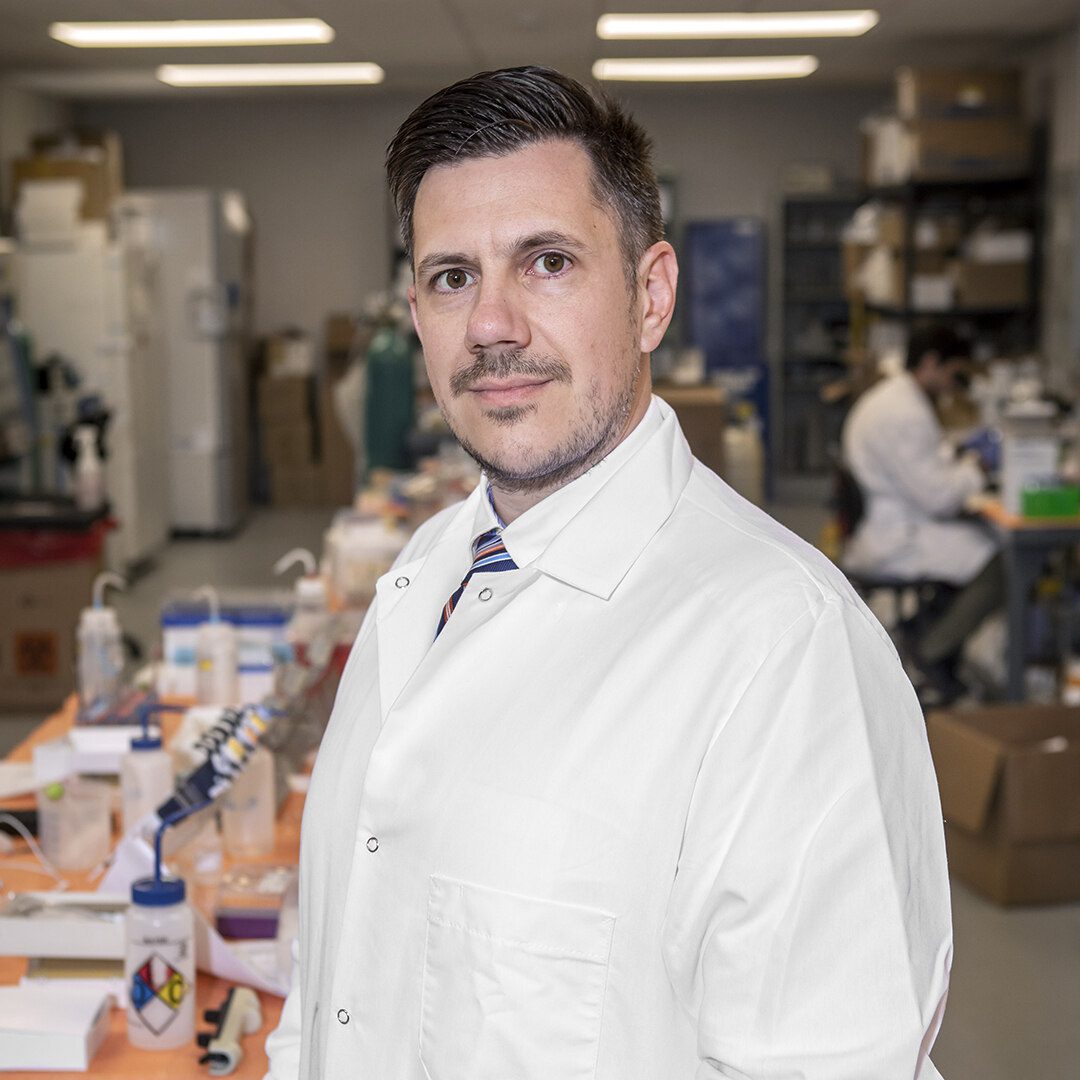
Spielmann’s current research project, which earned a grant of $238,073 from Our Lady of the Lake and the LSU System, is using saliva as an alternative measuring point.
Through a partnership with LSU Athletics, Spielmann’s study will collect spit from up to 60 football players throughout the season. Sampling began in camps and will continue approximately every four games. If a player experiences a concussion, they’ll be monitored more closely, with several saliva and blood samples taken the week following the injury.
The goal is to build profiles to determine reliable salivary biomarkers of concussions. The hope is to eventually have saliva samples act as rapid detection tests for brain injuries.
Saliva samples are taken via a small cotton swab that sits underneath the tongue. It’s practical for the sidelines. Furthermore, biomarkers are more quantifiable than current cognitive tests for concussions, meaning identifying affected markers could give deeper insight into the extent of injury, necessary sit-out/recovery times and longer-term effects.
By creating the groundwork for salivary profiles for concussions, Spielmann’s study has the potential to inspire more specific areas of research that could benefit former, current and future athletes for generations to come.
“It’s really easy to get lost in scores and in touchdowns,” Spielmann says, “but they are athletes. They are people. No matter how competitive they are, they need to remain healthy, and we need to help keep them that way.”
Predicting heat illness in athletes
For Louisiana athletes, training amps up at the same time the temperature does.
Heat illness is the leading preventable cause of death in U.S. high school athletes, with over 65 exertional heat stroke deaths from 1982 to 2022. Studies report the most deaths in southern-based football players during the month of August.
To predict heat risk earlier, and possibly prevent it, Dr. Cory Coehoorn, director of the Rehabilitation Science Program at LSU Health Shreveport, is developing a wearable device that tracks an athlete’s core body temperature in real time.
Any core body temperature over 103 is dangerous, with just one to two degrees over that benchmark turning deadly. The challenge is that core temperature readings are notoriously hard to get.
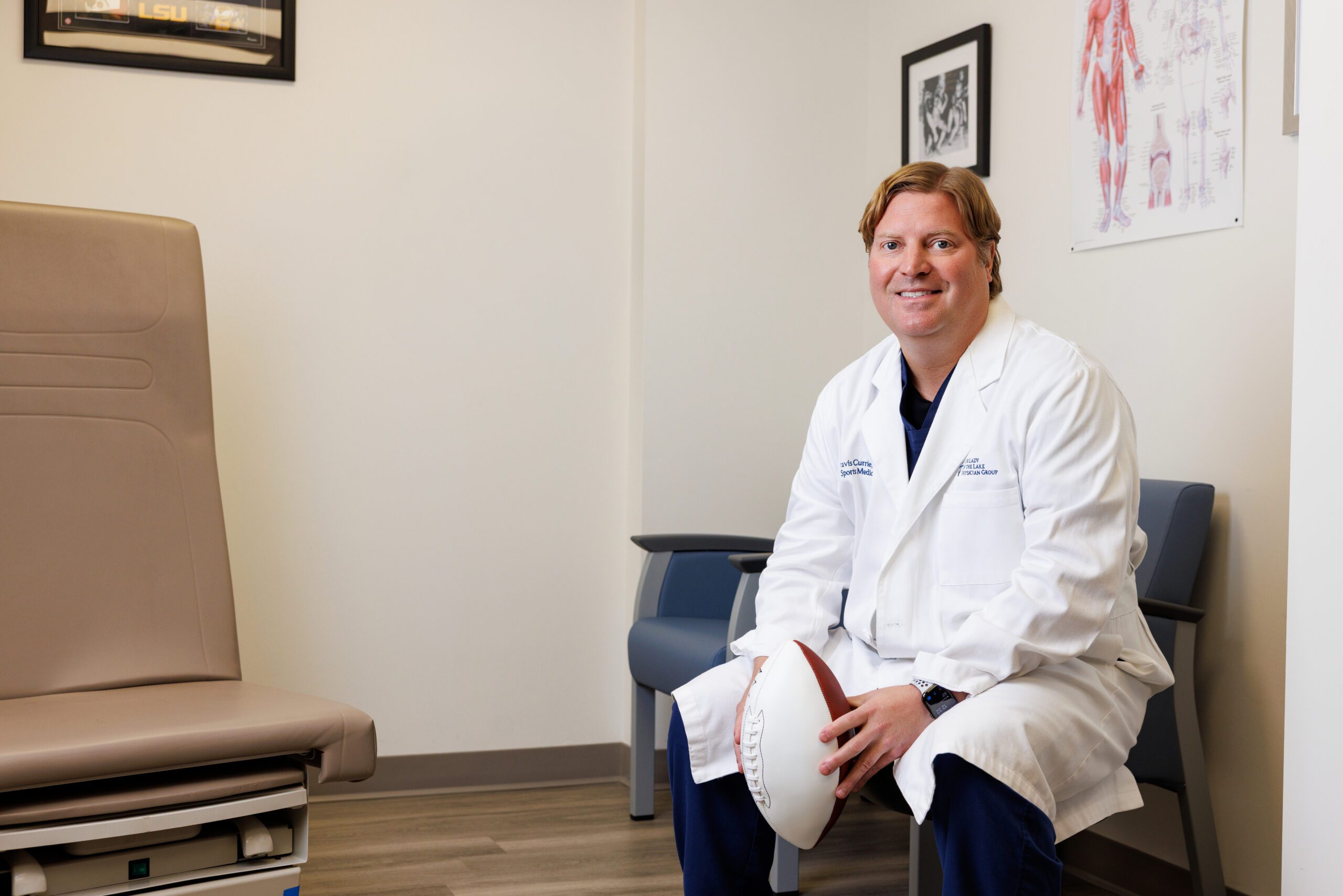
Dr. Travis Currie, the head team physician for Ascension Parish Schools and a researcher in Dr. Coehoorn’s study, explains that oral, underarm and ear thermometers are not reliable for on-the-field core temperature readings.
Accurate core temperatures can currently come from either a rectal thermometer, which is impractical for non-emergency situations, or an ingestible pill. While the pill provides consistent core temperature measurements for about six hours, it eventually passes through the gastrointestinal system, and it’s expensive, making it infeasible for every team member to receive a pill at every practice and game.
As an alternative, Coehoorn, Currie and two other researchers are studying a wristband that tracks several chemical signals, like blood pressure and blood flow, to determine core temperature and real-time heat risk alerts before symptoms appear.
“All the players could wear it,” Currie says, “and then, instead of being reactive to a bad situation, we’d be proactive in stopping it.”
In the study, 100 athletes from schools across the state will ingest GI thermometer pills and wear the model wristband. The pills will provide a proven core temperature, which will then be checked against the wristband’s readings to determine accuracy. To make the study possible, Our Lady of the Lake and the LSU System awarded the researchers a $210,022 grant.
While the wristband is some time away from mass production, the study is a huge step in the scientific measurement of heat illness and an important effort to keep athletes safe.
“We’ve had kids die because of this, and it’s devastating,” Currie says. “If we could save just one life, it would be worth it.”
This article was originally published in the October 2026 issue of 225 Magazine.