A hundred trees are back downtown thanks to this partnership
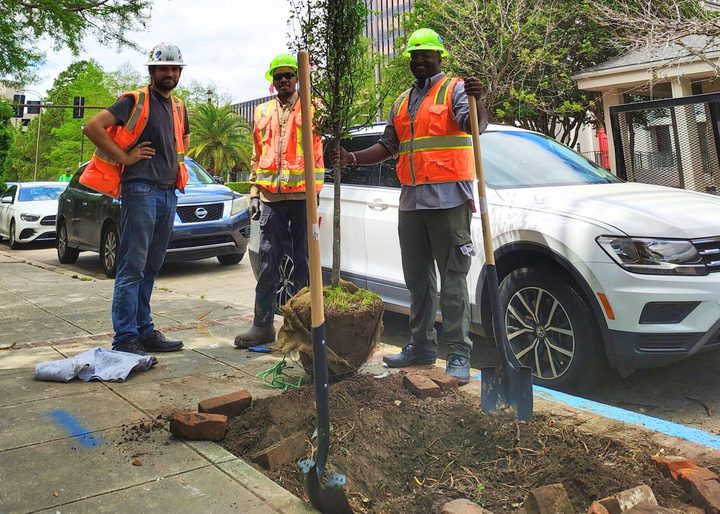
The DDD, Baton Rouge Green and the City of Baton Rouge have completed the first phase of infilling tree wells downtown🌳🌿
Formosa termite infestations and drought conditions haven’t been kind to the tree canopy in downtown Baton Rouge.
“Urban trees, especially 4-foot-by-4-foot trees, live in a harsh environment with the concrete and people walking all over them,” says Whitney Hoffman Sayal, executive director of the Downtown Development District.
But shady specimens are now growing in empty tree wells once again, thanks to a partnership between the DDD and the nonprofit Baton Rouge Green. Baton Rouge Green’s role as local advocate for the health and renewal of trees aligned with the DDD’s plan to rebuild the downtown tree canopy, so each entity funded $25,000 towards the initiative. The city added $20,000 to support the project.
Last year, Baton Rouge Green used ArcGIS, a global mapping platform, to inventory all 5,000 trees in the downtown area to ensure data was up to date. That’s how it was discovered that there were 150 empty tree wells. The survey also revealed that some trees were in better condition than others.
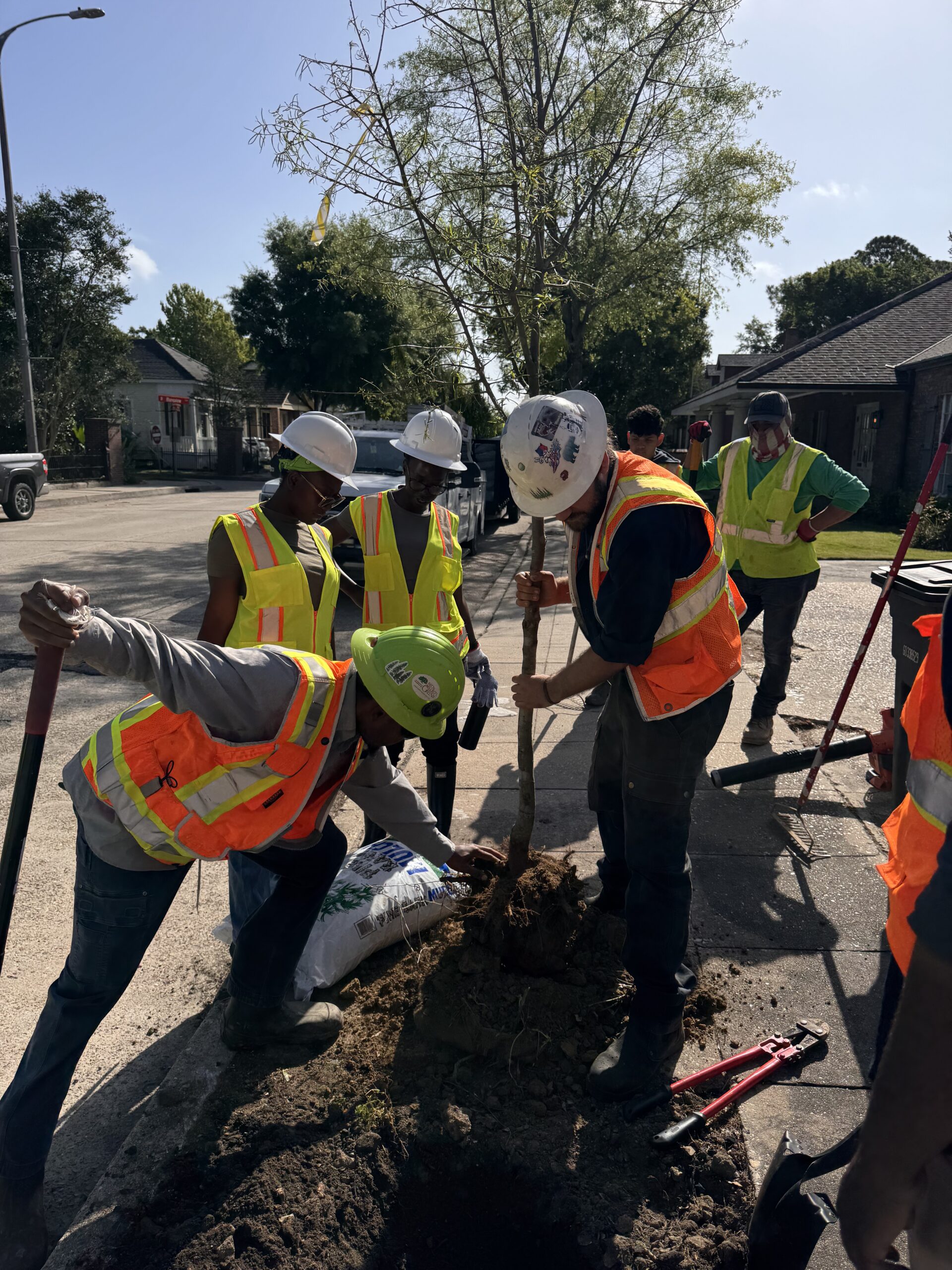
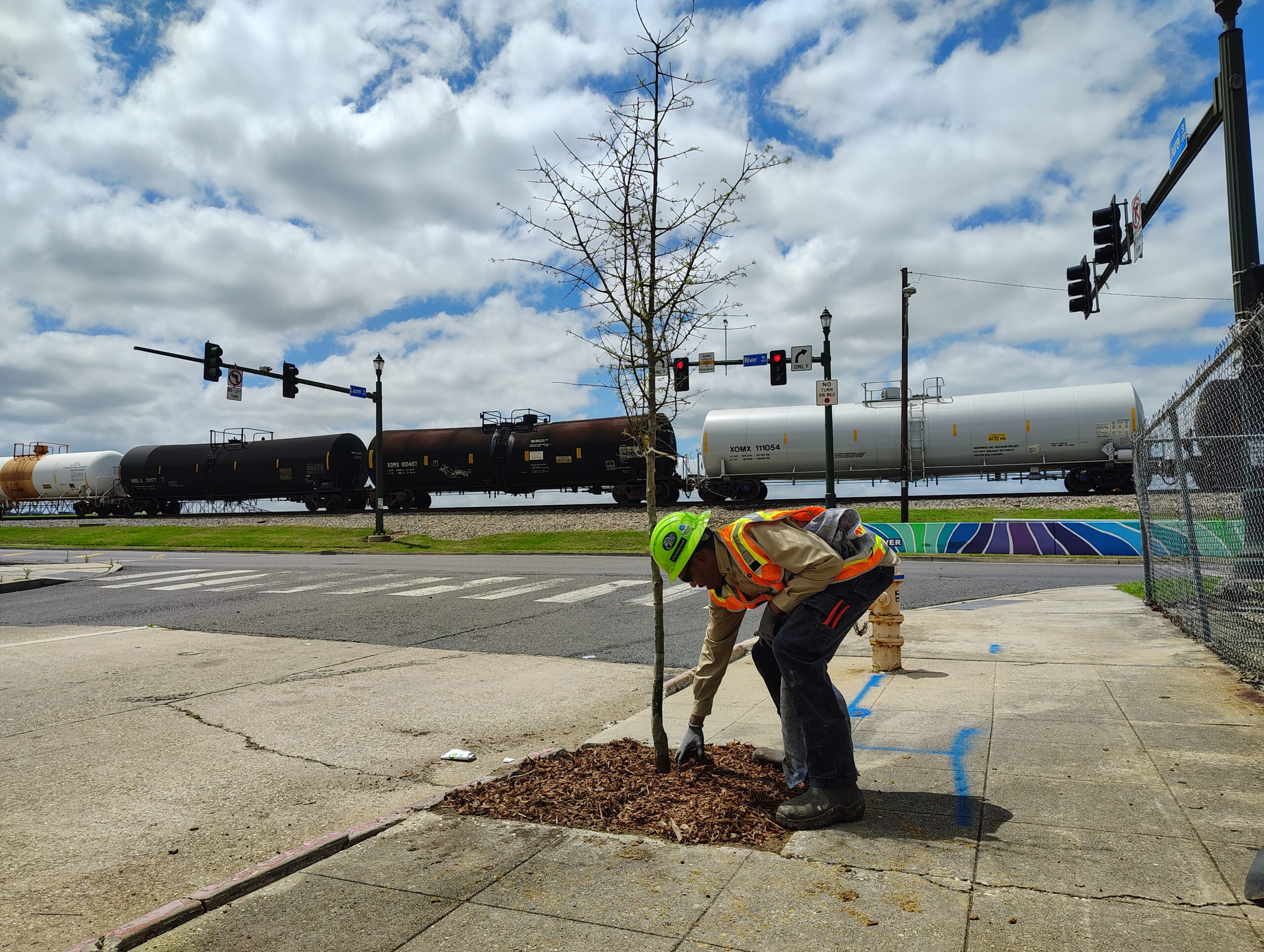
The price to plant and upkeep a tree is $1,500. In April, the DDD and Baton Rouge Green, along with the city’s maintenance and public works departments, planted trees in 100 of the 150 empty tree wells, beginning with streets that previously had signature trees, like the lacebark elms on Lafayette Street.
“There were a few streets [like Lafayette] where we continued to replant, because it was part of the brand of that street,” says Sage Roberts Foley, executive director of Baton Rouge Green. “But in other cases, we really wanted to diversify and add native species, because that provides stability.”
Foley says that tree diversity improves the ecology of downtown and prevents pests and pathogens that may attack one species of trees. “If all you have downtown is, for example, lacebark elms and you get Dutch elm disease, you lose your entire canopy of downtown in one fell swoop,” she says.
Using the data gathered from ArcGIS, Baton Rouge Green and its partners determine which roadside trees were problematic, such as water oaks that are prone to dropping limbs. In other ways, the data was able to verify which areas are environmentally underserved and need tree canopies.
Other systems, like i-Tree, detailed how much trees prevent water runoff during storms, the amount of carbon intake, and the pollution they remove from the air. This data supported Baton Rouge Green’s argument to plant more trees and to take care of the existing ones.
Fifteen different tree species were planted downtown, primarily in the central business district and in the DDD’s portion of the Downtown Greenway.
The second phase of the project requires more funding. Sayal hopes to leverage resources through partnerships to plant the remaining 50 tree wells. But the job doesn’t stop there. Teams need to review existing trees that are in poor condition and determine whether to maintain upkeep or replace them.
With Baton Rouge Green being a nonprofit, the organization relies on its partners to ensure that projects like these are carried out properly.
“We have to plant trees where people want and need them, so involving partners like DOTD, the DDD, State Legislature and State Office of Forestry [is crucial for us],” Foley says. “We never work solo. We have to work with partners and we love that.”
Sayal attests to the great work that happens when entities like these collaborate. “This isn’t the first time we’ve worked with these partners,” she says. “I think what has helped us reach this milestone is that we’re great working partners and really worked through our different resources and channels to figure out how to make it happen.”
Planting trees along roadsides is also beneficial to the downtown environment because it tackles the root of certain issues, from air pollution to heat island effects, Foley notes. Due to the concrete surface downtown, the area absorbs a substantial amount of heat. Although trees don’t thrive in this kind of environment, it’s essential to the lifestyle and well-being of downtown. “When you put them on roadsides where there’s infrastructure and heat, they’re working right where they need to be,” she says. “It’s a tough environment for trees. It’s like the worst environment for [them], but as far as workhorses for us, that’s where they need to be.”
Sayal says she hopes the tree canopy restoration encourages people who work in buildings downtown to get outside more and to contribute to the surrounding businesses. “[The trees] are really helpful with everything from air quality to the heat island effect to really economic development, which is things like getting people out there and contributing to the economy,” she says.
“Every single person who walks or drives by the trees benefits from an improved respiratory experience,” Foley adds. “They’re cleaning the air, and they’re obviously beautiful and good for your soul.”