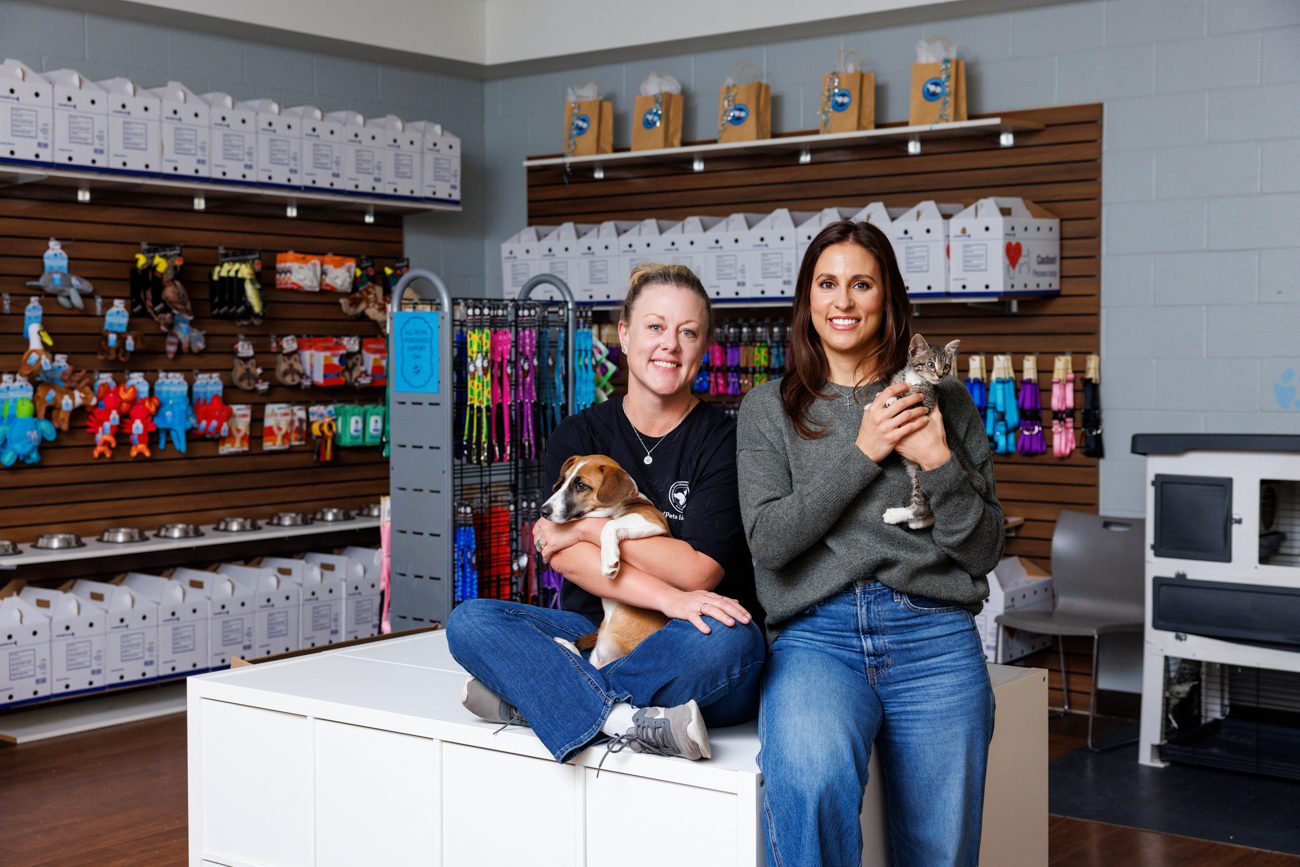
Fifteen years in, Companion Animal Alliance has served thousands of pets—and the humans who care for them
Ask your average Baton Rougean about Companion Animal Alliance, and you’ll likely hear a common refrain: It’s the place to go to adopt a pet.
And while adoption and fostering are essential parts of the nonprofit’s mission, its work and outreach have had a much broader impact as it has evolved to meet the needs of local animals and, in some cases, the humans who love them.
CAA was founded in 2010 and began operating as the official open-intake animal shelter for East Baton Rouge Parish the following year, splitting off from the city-parish animal control department in an effort to increase the save rate of animals in the community.
Though not technically a no-kill shelter, CAA has vastly improved outcomes for lost, surrendered, abandoned or stray animals in the parish. Before its launch, roughly 80% of the animals in the parish shelter were euthanized, with more than 8,000 “healthy, adoptable and treatable animals” put down each year, according a 2010 report published in The Advocate.
Today, those numbers have flipped, as CAA maintains an 80% save rate and cares for more than 9,000 cats, dogs, wildlife, livestock and exotic house pets annually.
But getting to that point wasn’t an easy road, says Paula Shaw, CAA’s access to care director, who’s been with the organization since its early days.
“The number of animals [in the beginning] was extreme,” Shaw says. “That was a challenge. And it was sort of like starting a brand-new organization, brand-new employees, brand-new volunteers. It was a lot.”
Eventually, with the right leadership, staff, volunteers and partners, CAA was able to grow the organization while also reducing the number of animals who entered the shelter in the first place.
“Persevering and building relationships and partnerships, not just in our community, but also with some of the national organizations, has really helped us stay progressive and on top of things,” CAA Executive Director J.T. Hackett says. “We work really hard to always look at new ways that we can improve.”
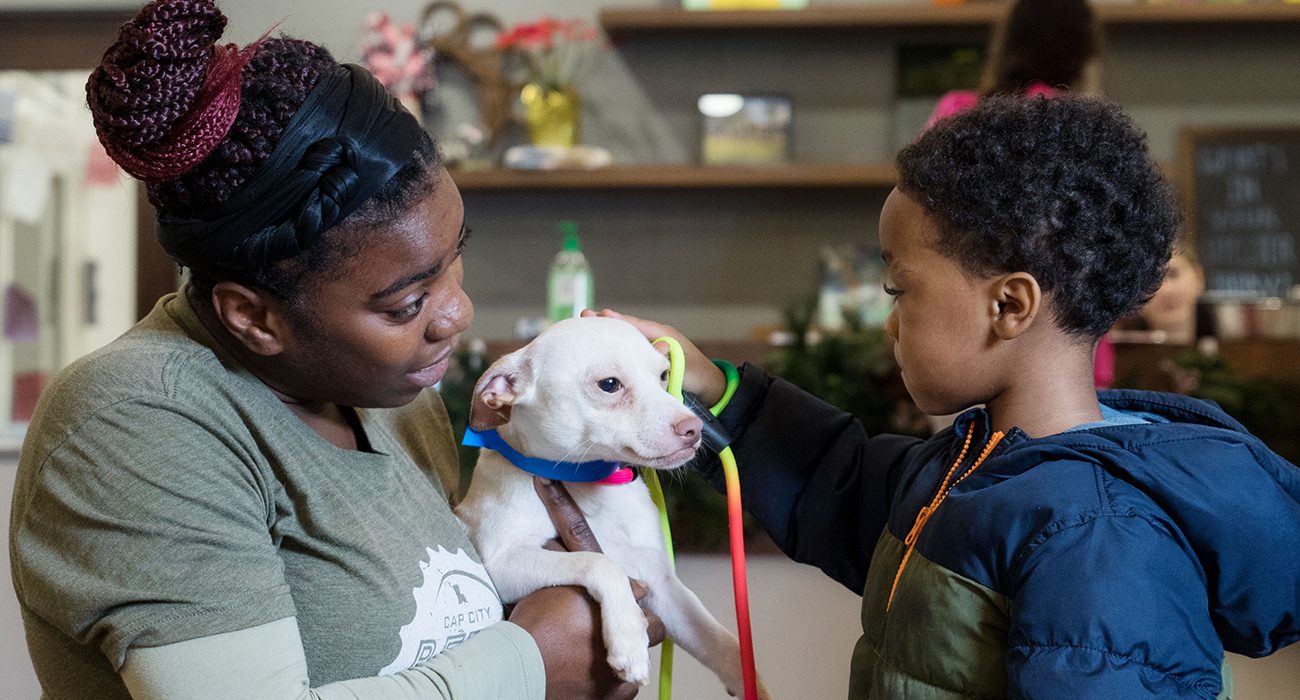
One way CAA has done that is through its Pets for Life program. Launched in 2017, Pets for Life helps underserved pet and pet-owner populations by providing basic needs, like pet food and spay and neutering services, that they might not be able to afford otherwise.
Since the launch of Pets for Life, Shaw says CAA has seen a 64% decrease in the number of pets surrendered to the shelter.
Another major milestone for CAA came in 2018, when the nonprofit moved the shelter from near the Baton Rouge Metro Airport to its current location on Gourrier Avenue, a stone’s throw from the LSU School of Veterinary Medicine.
The new $12 million facility traded low ceilings and chain-link kennels for larger animal spaces, outdoor play areas and surgical suites, as well as a welcoming reception area and space to interact with adoptable pets.
“We don’t want [people] to come because this is a sad place,” Shaw says. “We want them to come here because it’s a place where they can find an animal that they’ll love.”

In 2024, CAA helped 3,954 pets get adopted—its record to date.
Earlier this year, CAA also reached another high note. Working closely with Councilman Darryl Hurst, CAA was successful in changing a city ordinance that now allows the organization to provide veterinary care for pets outside of its shelter.
Previously, CAA could only offer services like spaying, neutering or medical care for pets that were impounded. Even animals in its Pets for Life program had to be brought to the shelter and impounded to receive care before being returned to their owners.
Now, CAA is in the process of rolling out a mobile veterinary unit to visit underserved communities, primarily in north Baton Rouge, about twice a month to offer free or low-cost care.
“The major barriers to pet care are all the same as the human issues of access … You can’t take Fluffy on the bus to go to the vet,” Shaw says. “A big thing we do is transport people’s pets. But now we’re able to actually bring the vet care to the community.”
Looking ahead, CAA wants to continue the momentum.
“We want to be able to grow our access to care and really get out into the community even more than we already are,” Hackett says.
Adds Shaw, “You can’t truly say you care about the animals if you don’t care about the people that love them.”
This article was originally published in the December 2025 issue of 225 Magazine.