At the West Baton Rouge Museum, exhibits form a web of connections
The museum is a hive of activity, with monthly live music, kid-friendly events and the 30th annual SugarFest on Oct. 5. 🖼️🎷
In a modest gallery at the West Baton Rouge Museum in Port Allen, a wall of mounted metalwork sculptures captures the joy of music.
Fashioned from bent and twisted wire, the pieces portray musicians playing a variety of roots music instruments. There’s a washboard, numerous horns, a bongo, a fiddle and a piano. Other figurines show subjects dancing. One eye-catching set features a couple mid-dip, the female partner’s back arched dramatically as her counterpart hovers above.
The works are by one of West Baton Rouge Parish’s best-known artists, Ronald Trahan, a native of the region and self-taught sculptor who began working with metal in his teens. South Louisiana’s rich music scene was his muse, informed by childhood trips to New Orleans with his mother. Years later, he would become a regular artist vendor at the New Orleans Jazz & Heritage Festival.
But taking in his work at the West Baton Rouge Museum is a singular experience, thanks to the institution’s dogged effort to connect the dots across its galleries and south Louisiana’s strange and fascinating history.
Trahan trained briefly with the late Frank Hayden, the nationally renowned sculptor and Southern University art professor who was mentored by lauded Louisiana sculptor Angela Gregory. A four-part exhibition on Gregory’s life and work is currently underway in the museum’s front gallery.
“They’re interconnected,” says Angelique Bergeron, West Baton Rouge Parish Museum executive director. “The artists in these galleries have an overlapping history.”
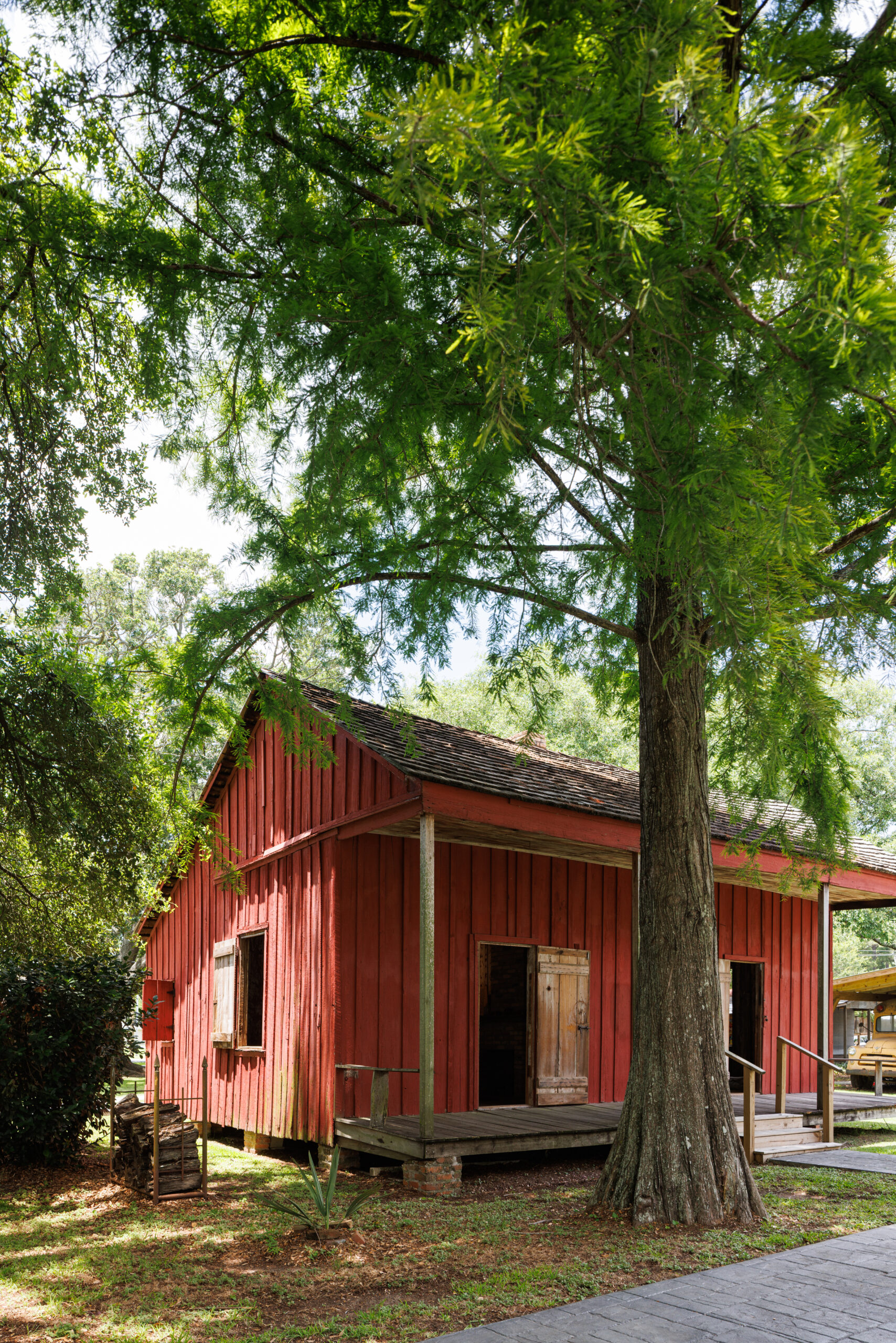
Minutes from downtown Baton Rouge and two blocks off La. Highway 1 in Port Allen, the West Baton Rouge Museum has been the keeper of west side history since it opened in 1968. While a small institution, it’s packed with exhibits inside its numerous buildings and across its live oak-strewn, 6-acre grounds.
The museum is a hive of activity, with monthly live music, Creole immersion camps and other kid-friendly events, and the 30th annual SugarFest on Oct. 5. Visitors can even learn blacksmith skills through a hands-on apprenticeship program set in its vintage barn.

Past lives
Another throughline at the museum adds further context to Trahan’s story, Bergeron says. Members of his family were slaves at Allendale Plantation, which the museum explores through its sugar production exhibit inside the main gallery and authentic slave cabins outside, one of which was brought from Allendale.
The story-within-a-story phenomenon continues here in “Rooting Metal – The Trahan Gallery.” Trahan’s great-grandfather Valery Trahan was the enslaved valet of the plantation’s owner and former Louisiana Gov. Henry Watkins Allen, for whom Port Allen is named.
In 1961, Gregory was commissioned to create a bronze likeness of Allen, which was completed the following year and now sits near the museum on the courthouse grounds.
The museum has become known for convening a wide variety of perspectives, Bergeron says. When protestors sought to remove the Allen monument in 2020, the institution saw an opportunity for a broader conversation.
Indeed, Allen had been a slaveholder and Confederate officer, but the bronze work had been created by Gregory, a pioneering female sculptor who sought to depict diverse subjects in honest repose, including Black people. Bergeron says the museum took the opportunity to listen to protestors, planning a multiyear, comprehensive exhibit on Gregory’s work and process.
The final installment of the Gregory exhibit, which focuses on various aspects of the Allen monument, opens Sept. 6. Paired with the museum’s many exhibits on racial struggle, Bergeron says it sets up a more complete historical picture.
“This is our role, to contextualize. We want to interpret and be a space for these conversations.”
—Executive Director Angelique Bergeron, on how the West Baton Rouge Parish Museum’s many exhibits aim to provide a complete historical picture“This is our role, to contextualize,” she adds. “We want to interpret and be a space for these conversations.”
Elsewhere in the museum, exhibits explore West Baton Rouge Parish’s long and complex history with sugar, a key commodity produced first with slave labor. The two authentic slave cabins that were relocated to the museum grounds, along with thoughtful interpretive material inside, give glimpses into slaves’ lives in Antebellum Louisiana. Modern sugar production is shown through a large model that was part of the 1904 St. Louis World’s Fair.
More of the museum’s intentionality appears here, too—visitors will learn about bagasse, the fibrous byproduct of sugar production. In the gallery next door, they’ll see it used in art.
House of blues
The best way to experience the museum, according to Bergeron, is to notice how its exhibits are related.
Trahan’s whimsical sculptures show how oppressed people found freedom in live blues and jazz. A life-size version of this exists in the museum’s Juke Joint, one of several ancillary buildings on its grounds.
Purposely left unairconditioned, the space replicates a Southern juke joint, complete with an upright piano, jukebox, guitars, a bar and memorabilia, much of which was donated by the Neal family, best known for blues musicians Raful Neal and Kenny Neal.
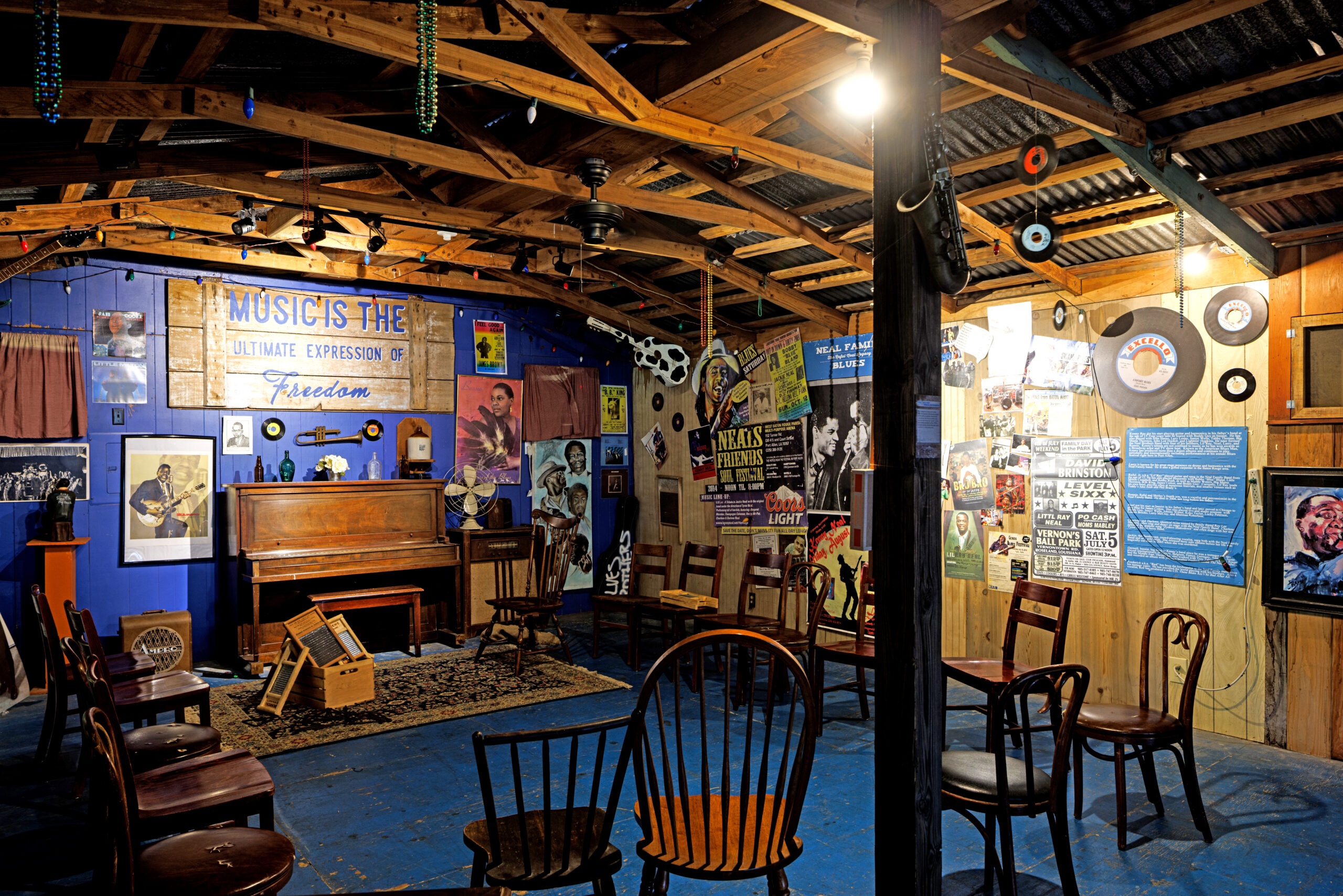
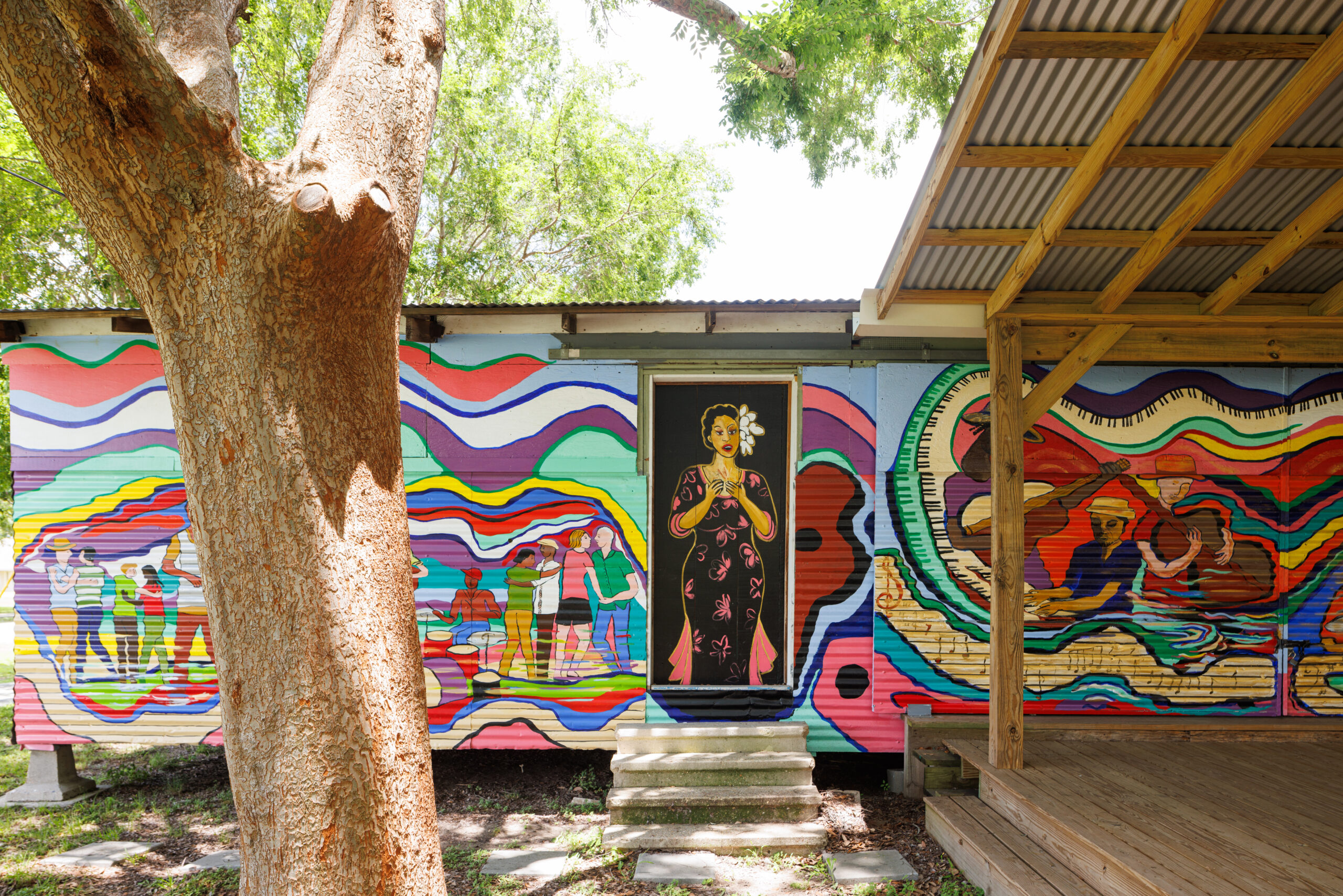
The exhibit is a community favorite. Live bands set up on the Juke Joint’s porch for the museum’s Historical Happy Hours on the third Friday of every month to play for assembled crowds. The Juke Joint’s colorful exterior wall mural, created by Louisiana artist Malaika Favorite, shows the Neals; native blues musicians Slim Harpo, Silas Hogan and Lazy Lester; and vocal legends Billie Holiday and Ella Fitzgerald; among others.
Inside, visitors spot more of Trahan’s metal sculptures, a breadcrumb trail leading back to his installation in the main building.
Love language
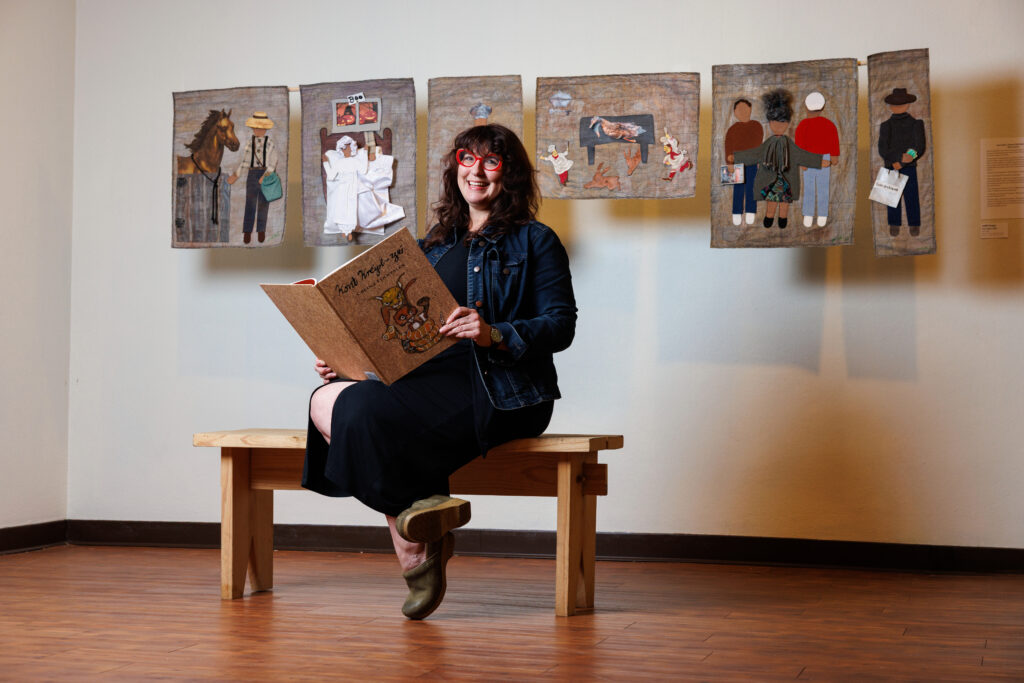
In another gallery, visitors pick up the thread of bagasse in the temporary exhibit Kont Kréyol-yé, or Creole Folktales, open through Oct. 12.
Louisiana artist and Creole language advocate Jonathan Mayers helped coordinate the exhibit with Bergeron, which features about two dozen pieces painted or drawn on paper that Mayers made from bagasse and dried banana leaves.
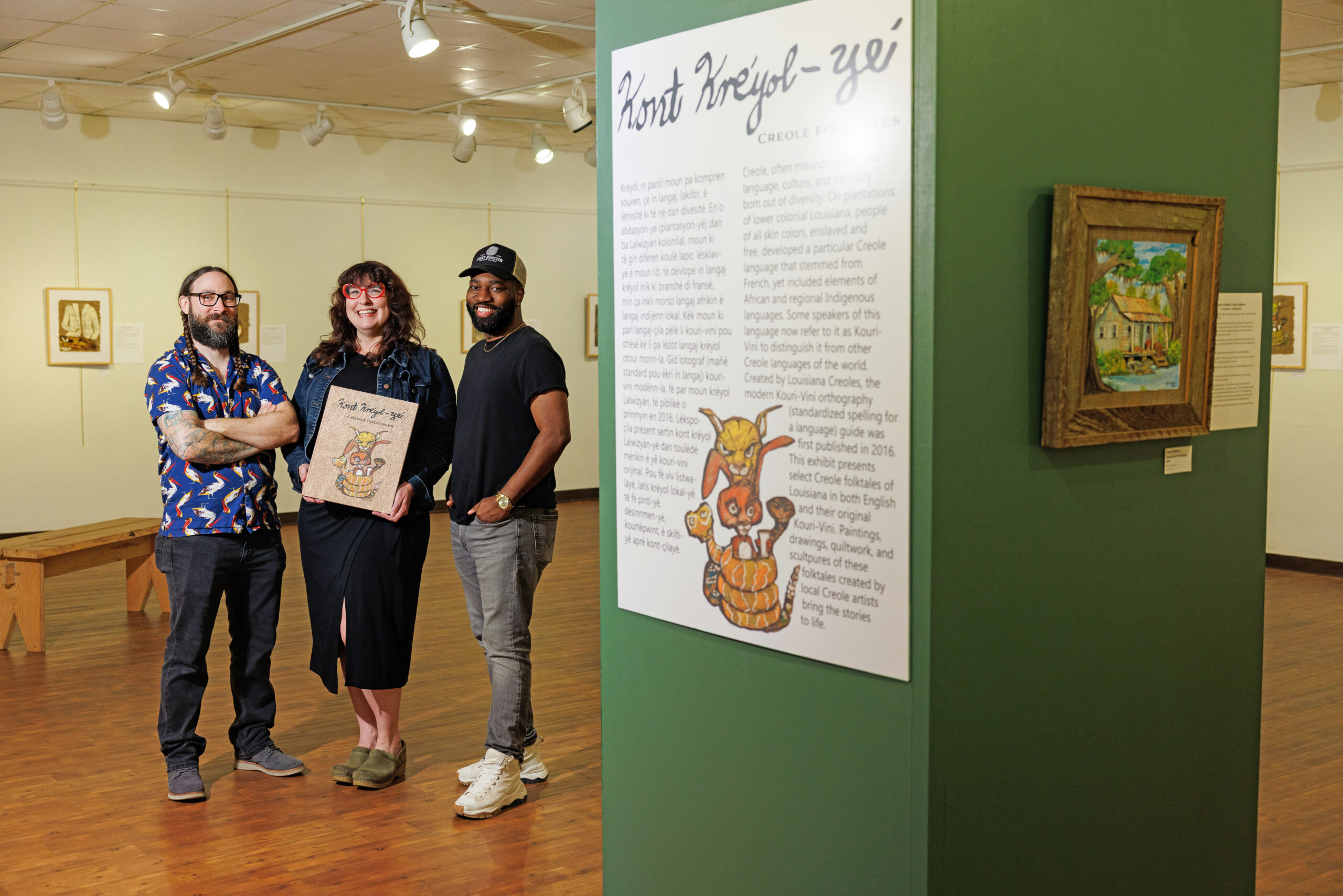
He and Bergeron invited regional Creole artists to illustrate historic folktales that had been formally recorded in Creole communities in West Baton Rouge and Pointe Coupee parishes in 1930.
Bergeron, a native Creole speaker who holds a doctoral degree in French, ensured the exhibit and its companion book used both English and Creole.
“I think it’s very important to hang on to our language,” she says. “If we lose it, we lose a big part of our culture and the way we express ourselves.”
VISIT THE MUSEUM
The West Baton Rouge Museum is at 845 N. Jefferson Ave. in Port Allen. Tours are available by request. westbatonrougemuseum.org
This article was originally published in the August 2025 issue of 225 Magazine.