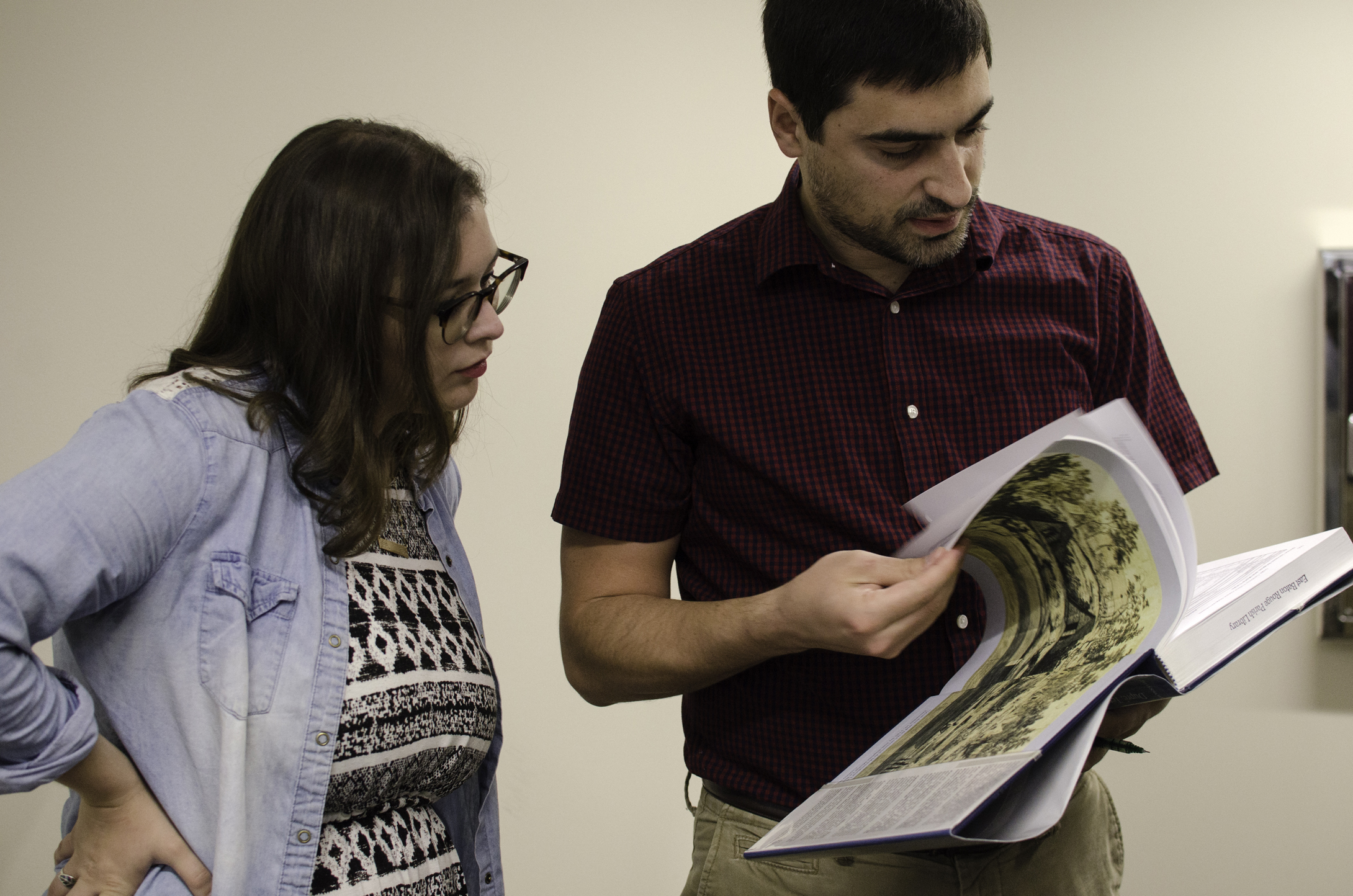
A writer reconnects with her heritage in the EBR Library’s Genealogy Department
Tracing my family tree isn’t exactly a linear process.
I come from two lines of people, the Acadians and the Amish, whose presence in official records is spotty at best. So when I asked Angelo Sideris at the East Baton Rouge Parish Library’s Genealogy Department to dig up what he could about my heritage, I wasn’t sure what to expect.
It’s a free service the library offers to any intrepid patron researching ancestry. Provide the genealogy department with as many names, birthdates and birthplaces as you can, and they’ll trace your tree back through centuries.
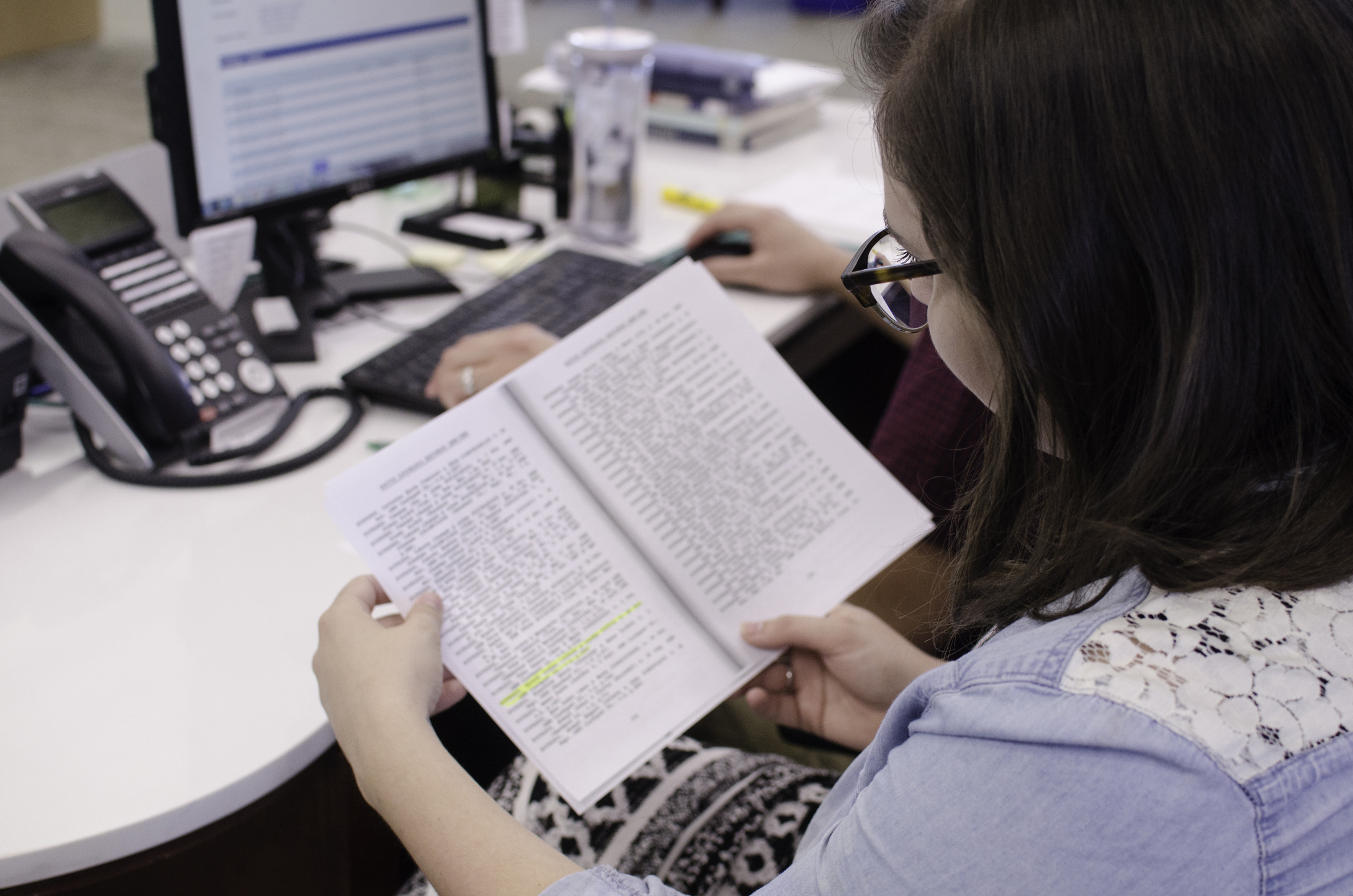
I meet with Sideris on a Friday morning. Seated behind his desk in Special Collections, he presents me with what he’s been able to find out about my lineage in a week of research: my great- and great-great-grandfathers’ draft cards, handwritten census records, weddings in the South Lafourche diocese and accounts of immigration.
Though the Yoders of my father’s side remain elusive, my mother’s side never strayed far from Bayou Lafourche or Catholic church records.
I expected most of the deep French roots, but it turns out my great-great-grandmother Oliviette Anselmi’s maiden name traces back to Italy. On the other hand, my great-great-great-grandmother Cecilia Pinto came off the boat from Portugal.
Alongside my great-great-grandparents’ names, there are always the same classic Cajun occupations: farmer, laborer, Lafourche Shrimp Co. employee.
Sideris takes me through the library’s stacks, where volumes range from Post Office records to death announcements to ship logs. Many books on local families look handmade, as if one person has dug up his or her entire family tree, bound it into a book and scrawled a title on the spine with a Sharpie.
Sideris points out a dozen different roads I can take from here: thick tomes on Swiss and German
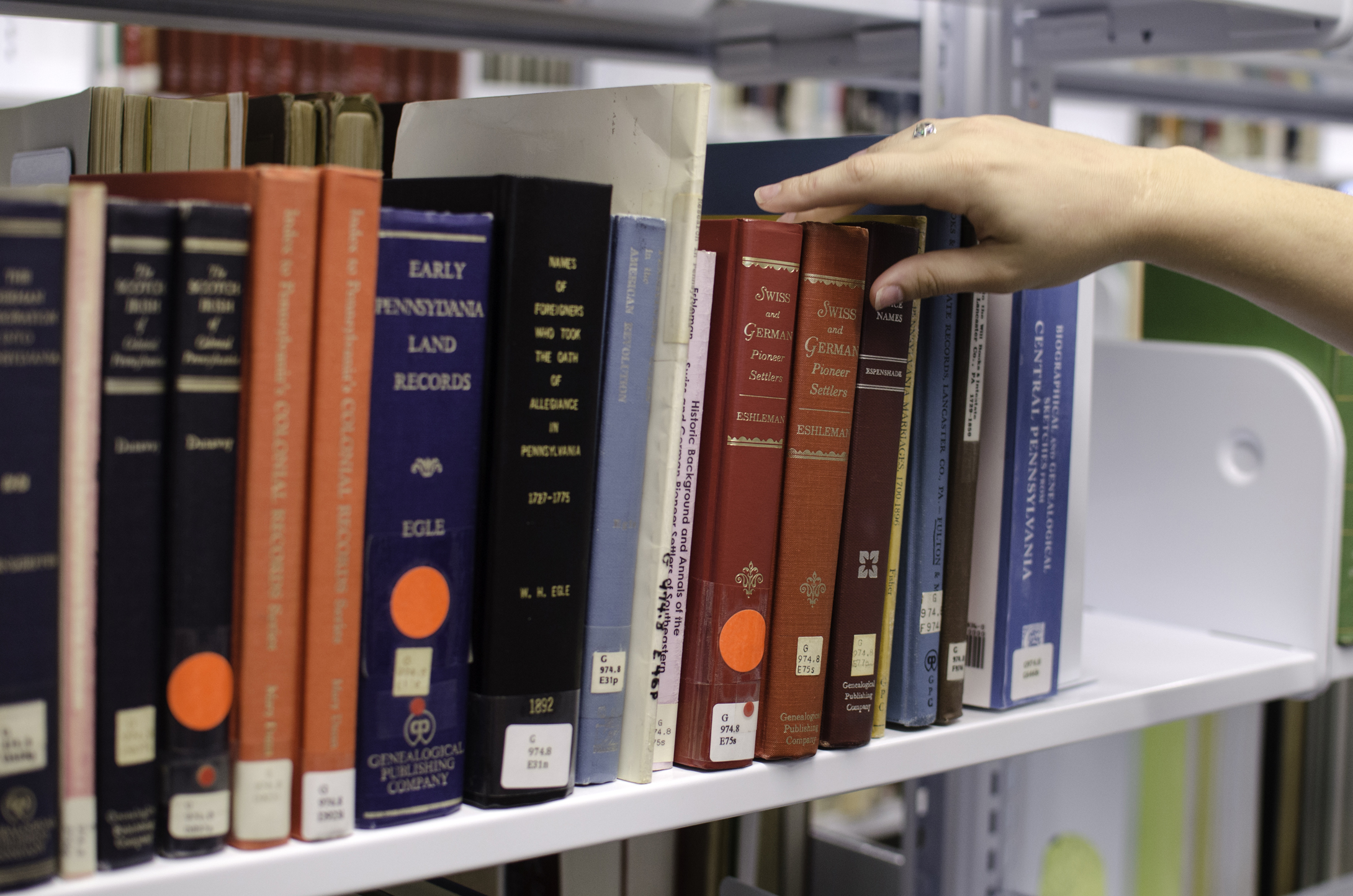
immigration into Pennsylvania, ledgers of trade deals in Larose, maps of the great Acadian exile.
An older woman settles into a chair at a nearby table covered in legal pads of handwritten notes and faded black-and-white photographs. She lends me her advice as an ancestry expert.
“Be careful with the Father Hebert books,” she says, referring to records compiled by Rev. Donald
Hebert starting in the ’70s—the backbone of the Special Collections’ information on Louisiana heritage. “Back then, nothing was written down the right way. You’ll see names spelled a hundred different ways.”
I do, in fact, see my mother’s maiden name—Dufrene—spelled plenty of different ways: Defresne, Dufremy, Dufrenay, Dufernet, Duferney, Dufresne, Dufresnay, Dufreyne. Most of the census records of my Cajun family are written in a slanting script that can’t possibly belong to any of my ancestors; I imagine each dictated his or her last name to a literate census taker who did his best to guess at the spelling.
Still, I quickly find myself lost in history, getting up from the little table I’ve claimed to pick up more and more books. I find the origin of the Bayou Lafourche Dufrenes: Pierre Dufrene Jr., who was shipped down from Canada in 1790. It’s a lead that takes me to Acadian Families in Exile, an account of the Acadians forcibly deported by the British from the eastern coast of Canada.
Acadian Families in Exile takes me to Acadian Exiles in Saint-Malo, and by now it’s a thrill to brush off my rusty Cajun French and track down old Pierre Sr. as a witness to a friend’s wedding in 1775. A return to the stacks scores me an 1850 census of Lafourche Parish, where I find Pierre Jr.’s son George, then a 45-year-old farmer married to his second wife, Melicie.

It’s a winding road that anybody could easily wander for hours, and suddenly I understand how the woman at the next table could care enough to be here at the library already studying records at 8 a.m.
By the time I return the books to the shelves, my head is caught up in Nova Scotia, France, Portugal, Italy and thousands of immigrants and lost Acadians crossing the swamps to find a new home.
In these old books and weaving rows of anthologies, there’s more history than anyone could ever pick through.
And there’s something else: a tangible sort of connection, a cord of history and blood stretching back centuries that I could actually touch here.
If somehow I could meet Pierre Dufrene Jr. today, I hope that connection would be worth all the searching. ebrpl.com


