Higher ed looks to a higher purpose with targeted wellness and mental health offerings
When Dr. ValaRay Irvin was a student at Southern University, the campus didn’t have a counseling center. In the late ’90s, she returned to her alma mater as a licensed psychologist and helped start one.
“I think most institutions now will acknowledge that mental health and well-being is a major player in terms of the students that they’re servicing,” Irvin says. “I think most of us are now seeing it as a must.”
Studies have shown a rise in stress and anxiety among young people. The Healthy Minds Study, a project by the University of Michigan, UCLA and other post-secondary institutions, annually surveys college students about mental health topics. In 2025, the study found that 37% of students reported moderate to severe depression and nearly one-third experienced moderate to severe anxiety. Furthermore, over half of the students surveyed had received some form of mental health counseling or therapy throughout their lifetime.
Mental health services come in many shapes and forms, from traditional types of counseling like therapy to holistic approaches like yoga to modern advances like apps and technologies.
Colleges and universities in Baton Rouge are approaching mental health services on all fronts and with all the resources they can derive.
Safe haven
Baton Rouge Community College’s Safe Space makes it possible for students to take a relaxing 10-minute trip to the beach without ever leaving campus.
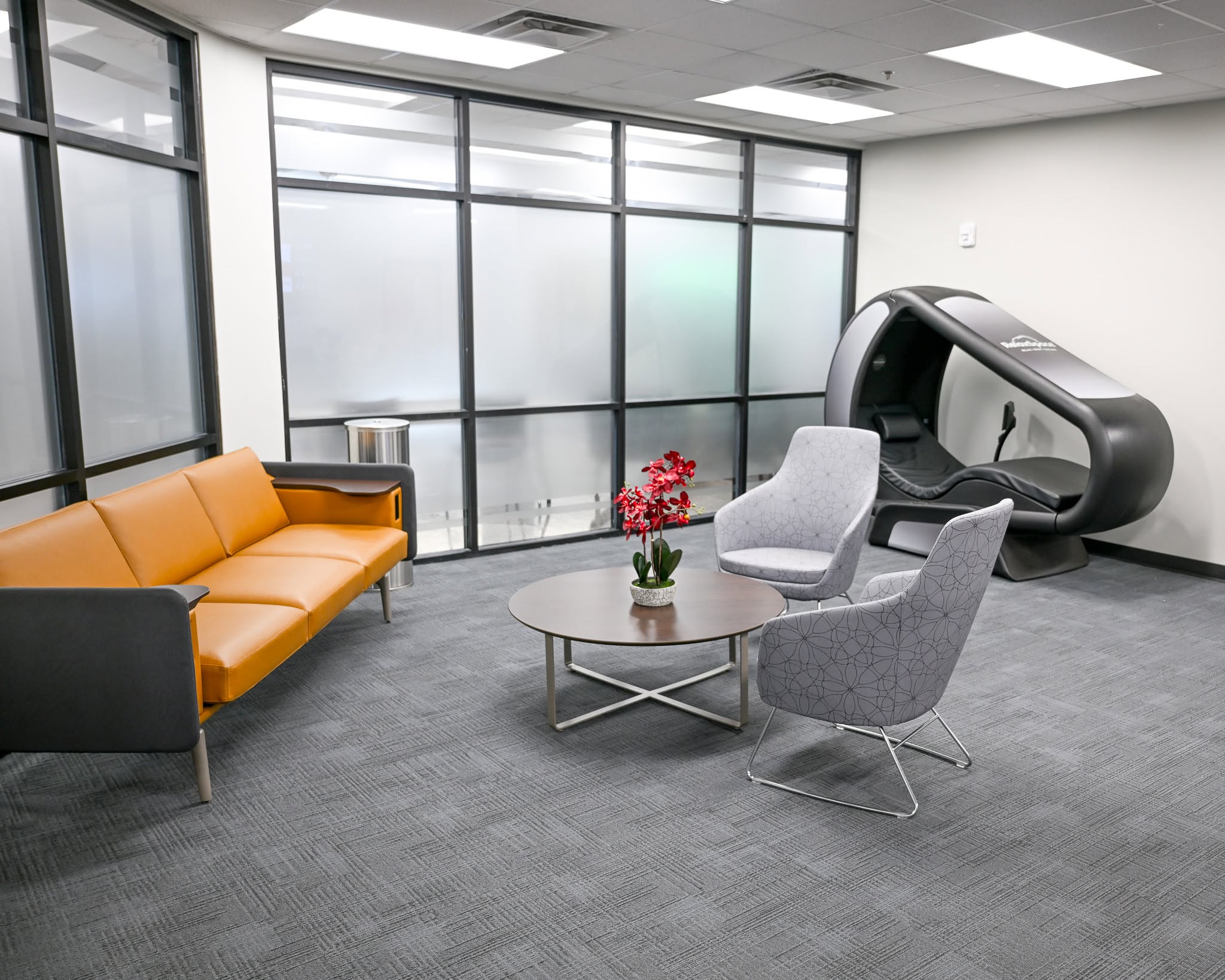
The Safe Space is part of BRCC’s newly renovated Counseling and Accessibility Center. It houses the college’s licensed counselors, a meditation room and a relaxation pod.
The relaxation pod, sometimes called a wellness pod, is an immersive technology designed to reduce stress and promote mindfulness. Students can recline inside the pod and customize its settings to fit their needs.
“Based off what you choose to do, you see it on this big screen,” Dr. LaCrystal Wilson-Johnson, a BRCC counselor who has been with the school for nearly a decade, describes the pod. “If I pick that I want to be on the beach, I can hear the ocean waves. I can smell the ocean.”
The pod has aromatherapy features, a heating pad and more. Wilson-Johnson has used the pod’s guided morning meditation sessions and says many students and faculty are repeat visitors.
The wellness pod is open to all students, regardless of other counseling or accessibility needs, and so is its anxiety-reducing counterpart, the meditation room.
The meditation room is perfect for moments when students may not have the time or desire for a full counseling session but still need a quiet space to decompress or study. The meditation room features a comfy couch and beanbag chair. Students can customize the brightness and color of the light fixtures and play music.
BRCC’s Safe Space is designed to welcome students from all backgrounds and demographics, whether newly turned 18-year-olds or nontraditional students returning to their studies. The area is a big step toward normalizing mental health services—and the counselors on campus, like Wilson-Johnson and Dr. Alexandra Lawless, are seeing its positive effects.
“I’ve noticed students are really happy to come, and they want to come back,” Lawless says. “It becomes a part of their fabric of being a college student.”
Talking Tigers
In a world where we’re technologically more linked than ever before, it can be difficult to create and maintain meaningful connections in real life.
It’s something Raime Thibodeaux, director of LSU’s Mental Health Service, has noticed. The “click and move on” culture of social media constantly pushes people to the next highlight reel, minimizing life’s in-between moments and inhibiting the attention needed to truly be present with others.
Groups and seminars at LSU’s Student Health Center offer students a safe environment to better connect with themselves and their peers.
“A big focus or advantage of groups is the idea of normalizing and validating the human experience and making it safe,” Thibodeaux says.
LSU offers two main types of group options: psycho-educational workshops and process groups. Psycho-educational workshops, or seminars, offer structured conversation with a set pace and educational component. Topics from previous semesters included anxiety management, emotional resilience and even friendship bracelet making, to quite literally craft connections with fellow students. Process groups, on the other hand, offer more freeform conversation that follows whatever the group members bring. Typically including five to 10 members, process groups create a face-to-face setting that encourages students to process their emotions and contribute their own thoughts and ideas.
As opposed to the one-on-one interaction of individual therapy, group therapy offers a variety of perspectives and feedback. Although it may be intimidating at first, Thibodeaux says that when students are brave enough to be vulnerable, they often find others who have experienced similar situations or struggles and better realize the common experiences in their community.
“I truly believe the way forward for us as humans is going to be to have that sense of deep presence and connection with other people,” Thibodeaux says.
Welcome to the Bluff
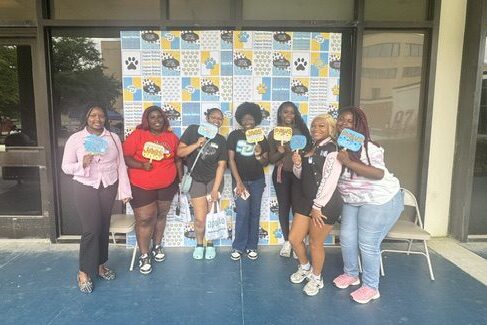
While some students seek out campus mental health services, others may never step foot into the university counseling center or even think to schedule an appointment. Campus outreach programs, like interactive wellness events, can give all students a touchpoint with university counseling.
Stephenne Calhoun, a licensed professional counselor and outreach coordinator at Southern University, strategically plans wellness events around the campus calendar.
It all kicks off on move-in day with the Campus Crawl. Staff from SU’s Counseling Center fill the dorm halls with hangtags and venture out to greet new freshmen and their parents.
Welcome events continue a couple weeks later with the Jaguar Mindfulness Mixer. This annual event connects SU’s campus with community partners, like Louisiana Healthcare Connections and Baton Rouge Bridge Center for Hope. Vendors set up booths, and the University Counseling Center hosts a DJ, hands out pizza and invites all to learn more about mental health.
“We want to always be meeting our students where they are,” Calhoun says. “We want to ease them into addressing these concerns in a more social and comfortable way.”
At the end of the semester, the Paws & Relax wellness event once again invites Jaguars to be mindful, as they stop and decompress before finals. Here, the University Counseling Center offers activities, like painting, yoga, sound bowl therapy and more. Students can concoct their own sugar scrub or create their own stress ball.
“Of course, we’re talking to them about self-care and the things that they can do, but it’s in a very relaxed setting. And that’s the point,” Calhoun says. “Hopefully, these activities are things that they can do with us, but that they can also do when they’re away.”
The key goal of these wellness events, and all college mental health services, is to help young people develop personal insights, coping strategies, problem-solving skills and emotional resilience so they can better achieve their goals in both the present and future.
“There is hope here,” Calhoun says. “We see that our students—even though they struggle with anxiety, depression—can actually go on to be great, successful individuals who are giving back to our country, who are giving back to our world.”
This article was originally published in the August 2026 issue of 225 Magazine.