Old TVs become unique art pieces in the Arts Council of Greater Baton Rouge’s new exhibit
These pieces are totally tube-ular 📺👁️
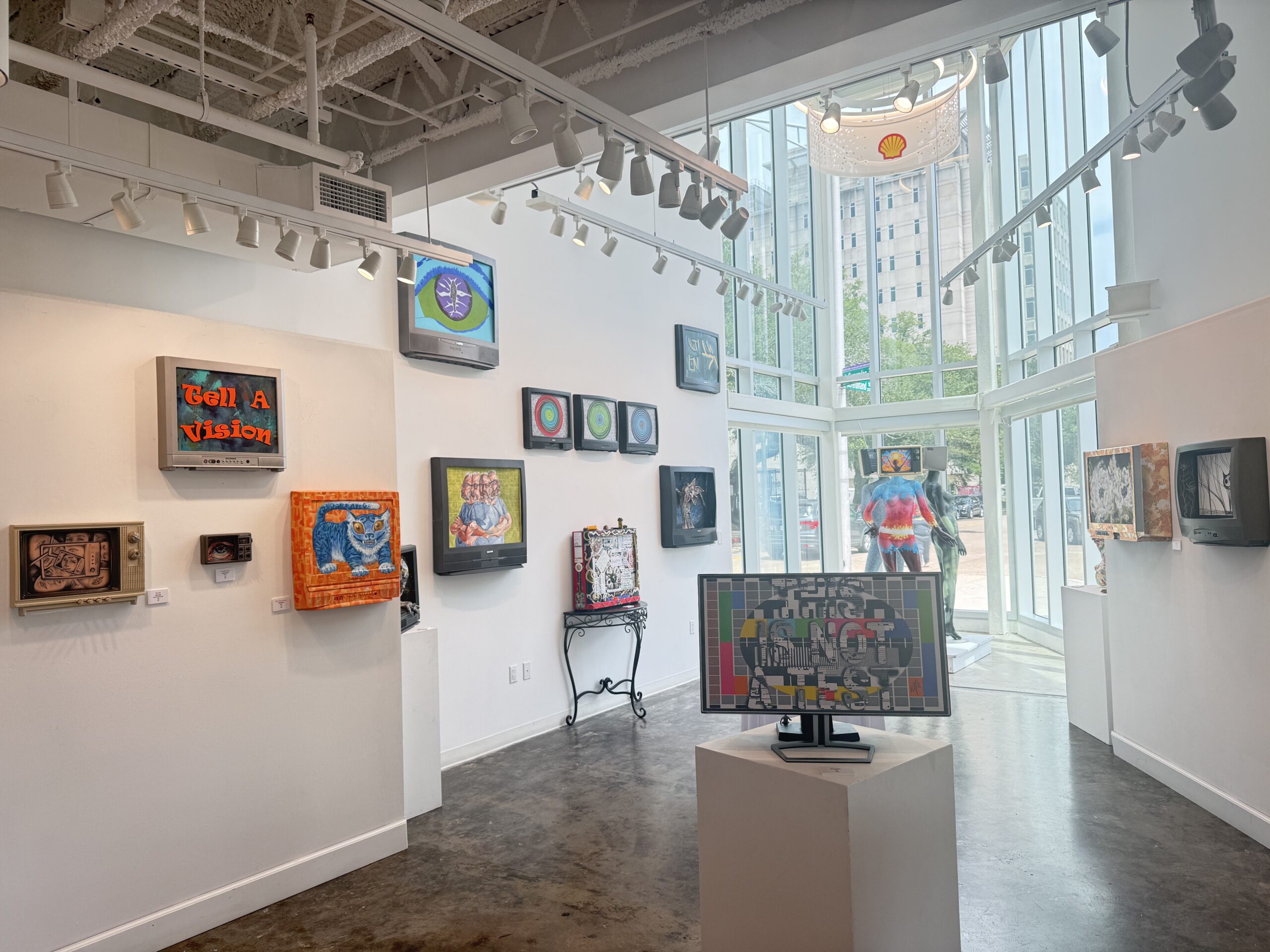
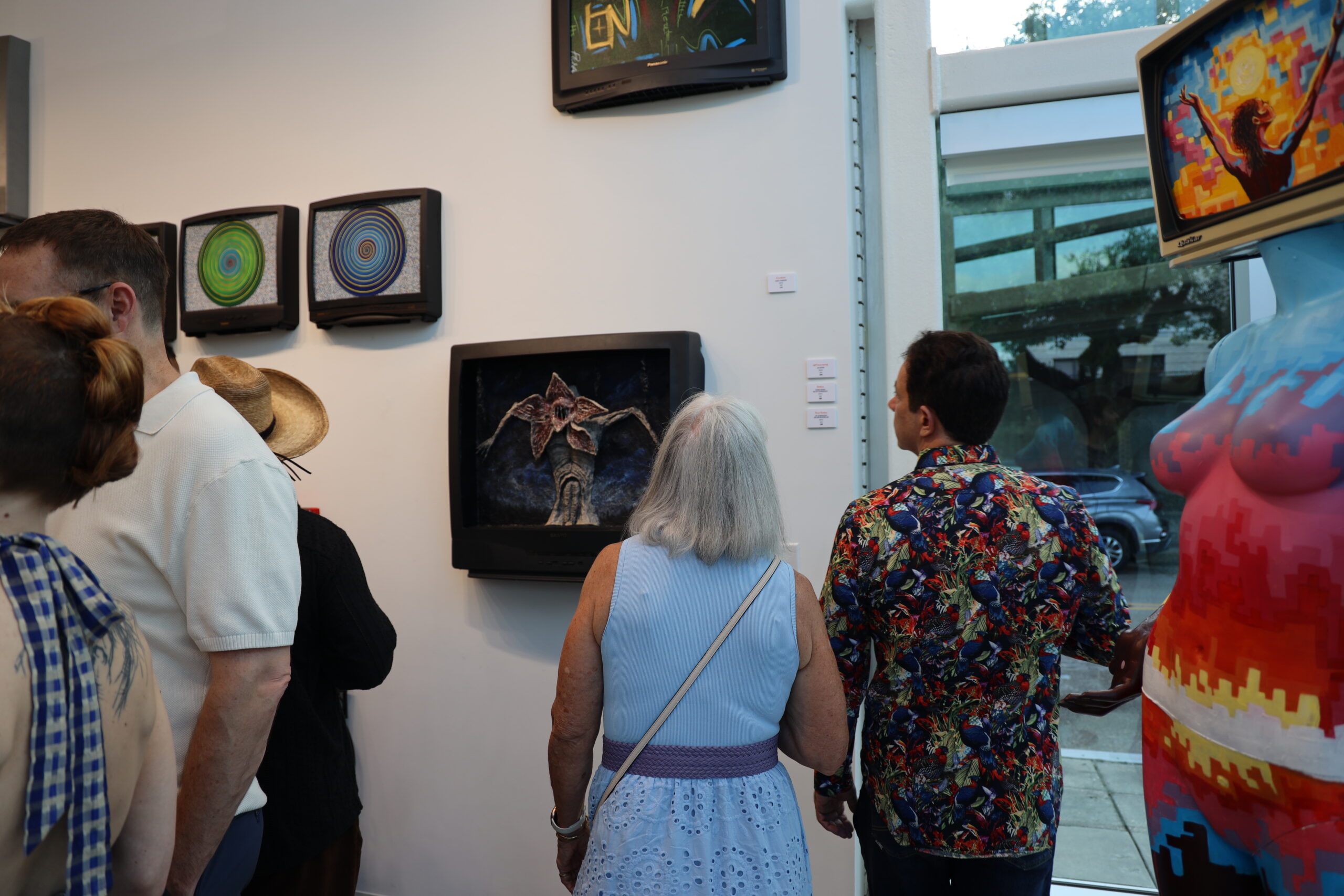
A sculpted giraffe’s head emerges from one television set, while a Stranger Things-style monster peeks out from another. Elsewhere, handmade Bigfoot silhouette pieces sit inside a hollowed-out TV, newly spruced up with segments of a woodsy garage sale painting.
Abandoned TVs of all shapes, ages and sizes have been reimagined by 21 artists in the new exhibit “Tell A Vision” at the Cary Saurage Community Arts Center‘s Shell Gallery. The show, curated by Jay Schwarzhoff, is free and open to the public and runs through August 14. The project stemmed from Schwarzhoff’s longtime interest in castoff television sets.
“I find them in ditches, dumpsters and railroad tracks,” Schwarzhoff says.
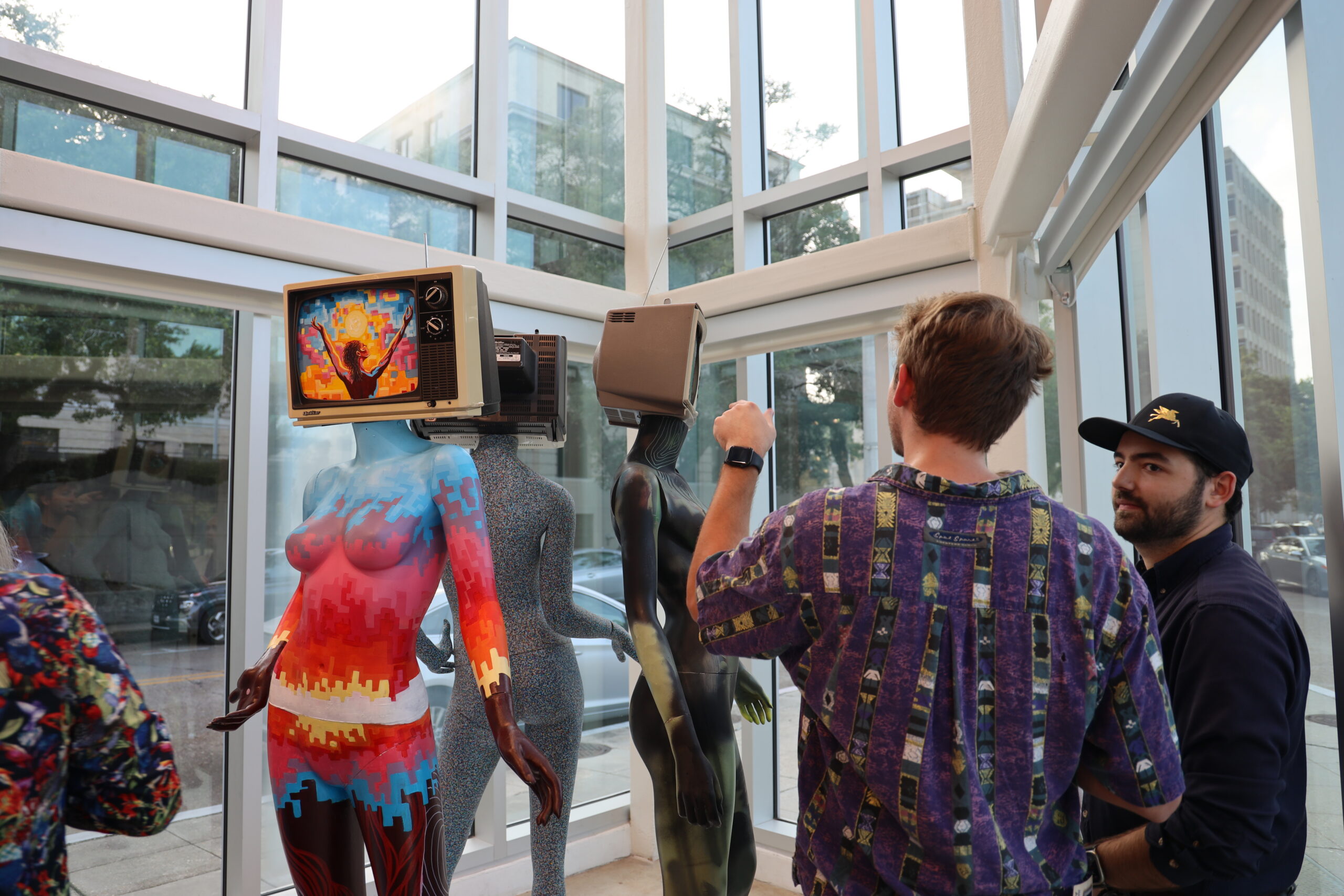
Pointing to one of the works, he adds, “I’m fairly certain that one up there was actually hit by a train.”
A retired ExxonMobil chemical engineer and Baton Rouge arts enthusiast, Schwarzhoff sees the old television sets as tethers to the past. Once reclaimed from the roadside, he takes the TVs back to his garage, removes their tubes and electronics, and uses them in creative projects. He’s framed pieces of art and even used one in a costume for the Baton Rouge Gallery’s zany dress-up ball, the Surreal Salon Soiree. Over the last couple of years, Schwarzhoff’s collection of old boob tubes grew to about 30.
That’s when he decided it was time to share.
Last fall, Schwarzhoff and his wife, Carolyn, invited friends and local artists to select a TV and use it as a prompt to create an original work. Some of those they contacted were fellow members of a social group that gathered regularly for “painting parties.” Others were artist friends.
As the creatives worked on their TV artworks, Schwarzhoff applied to show the completed collection in the Shell Gallery. Almost a year after the project started, Tell A Vision came to life with upcycled art that explodes with color and imagination.
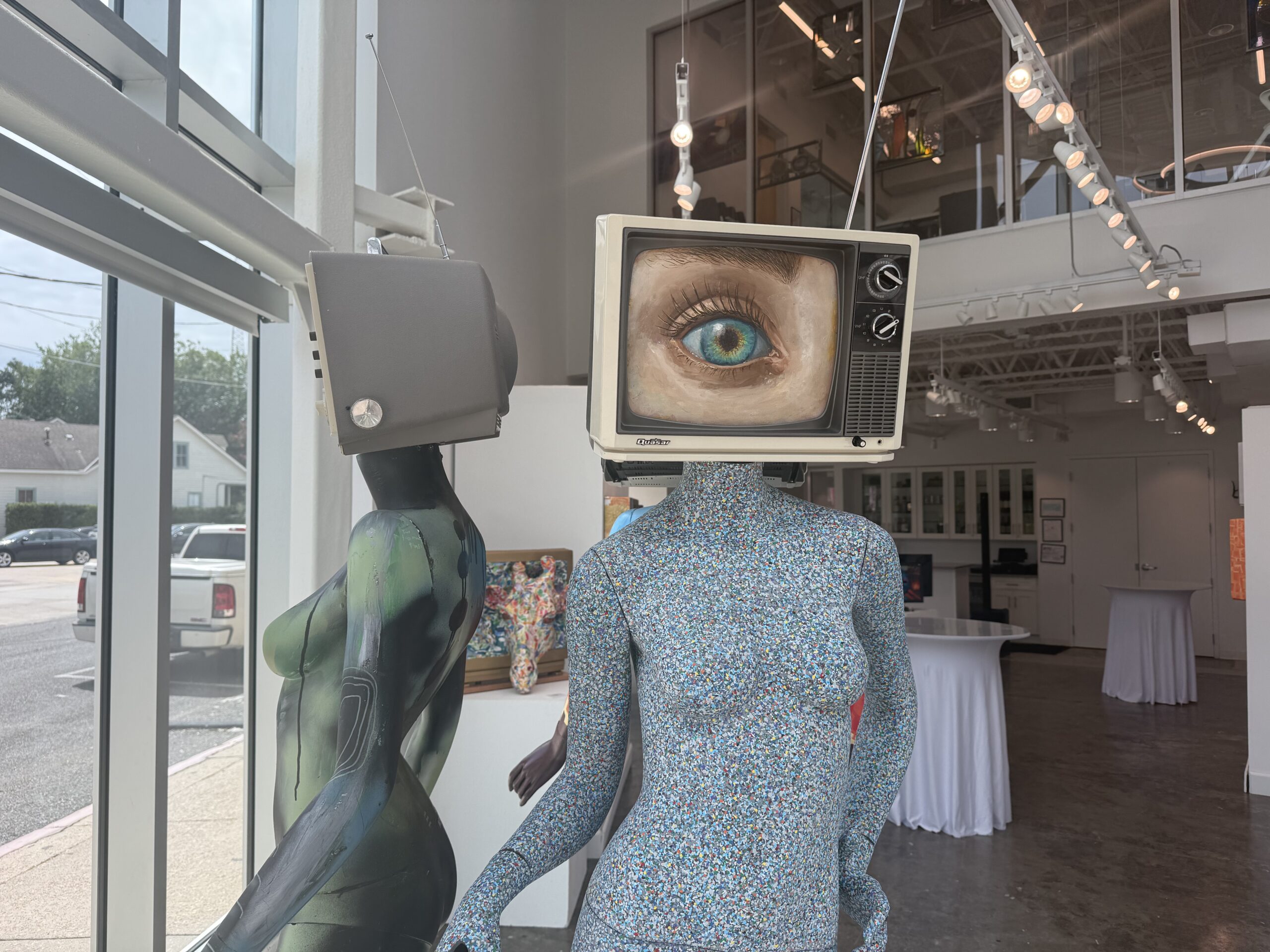
A trio of salvaged mannequins, intricately painted and wearing Quasar television “heads,” stands sentinel in the gallery’s front window like quirky muses. A handful of artists collaborated on these, including Schwarzhoff himself, who used the technique of stippling to mimic television static on one mannequin he named “Dottie.” Artist Jeanne Brandt rounded out Dottie’s television head with a painting of an all-seeing eye.
Schwarzhoff’s TV static motif is repeated throughout his group of nine sets that feature painted albums mounted on stippled backgrounds. Here, his junkyard commitment is thoroughly realized: To give each unplayable scratched album its own colorful swirl, Schwarzhoff spun it on a broken turntable while holding a suspended paintbrush.
Elsewhere, local artists used their chosen TVs to hold ephemera, three-dimensional figures or original drawings and paintings that express both personal and political themes.
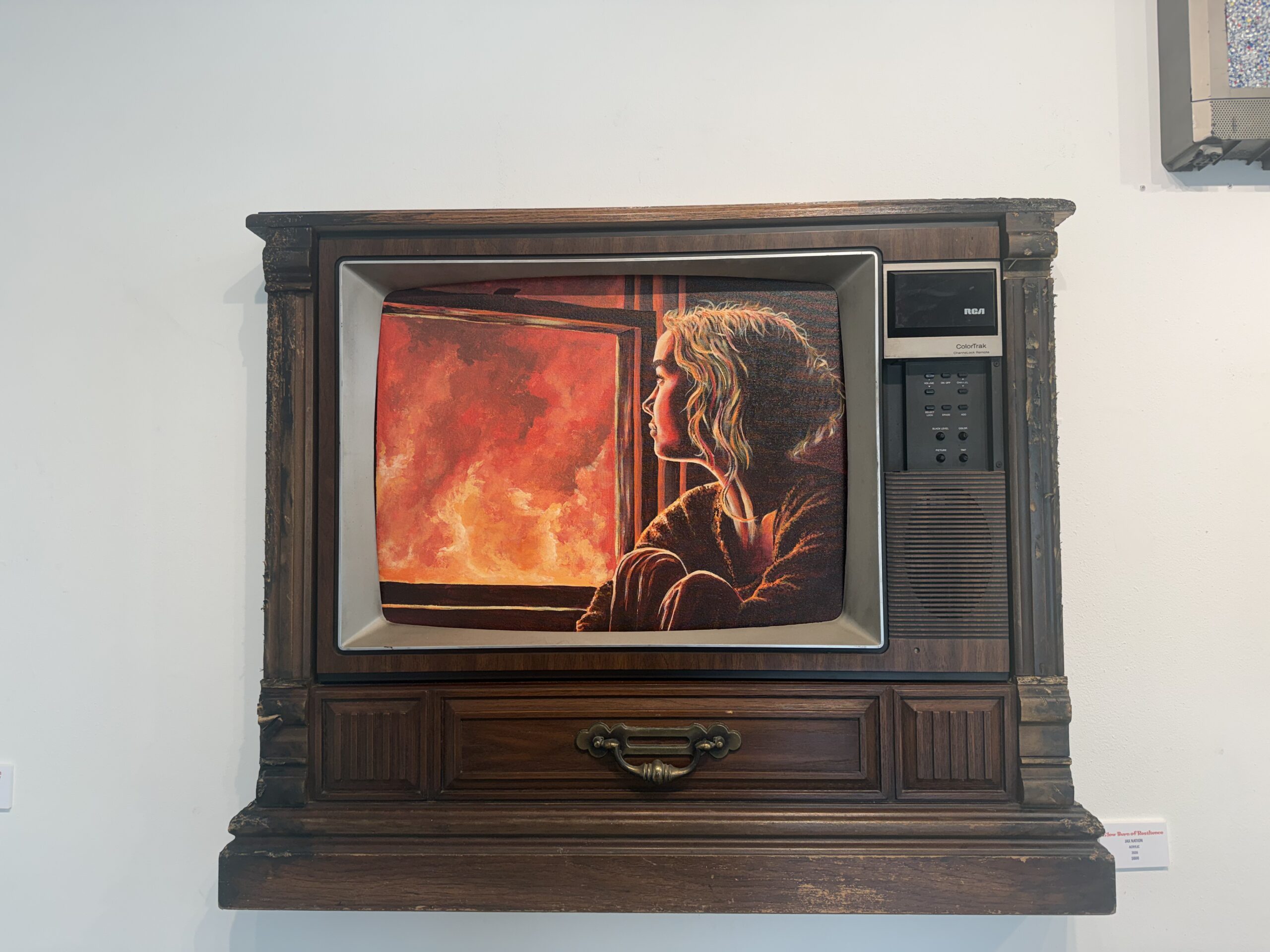
In his work “Slow Burn of Resilience,” artist Jax Nation used an outdated wood TV cabinet to frame an acrylic painting of a girl peering at a fire through a window. Nation burnished some of the frame’s edges to resemble the TV surviving a blaze.
Episcopal School art teacher and artist Veronica Hallock’s piece “Reclamation” uses a boxy Akai television to hold an underwater pond scene painting, complete with a swimming frog, lily pads and a dappled surface. Framed by sculpted waterlogged tree branches, it looks as though the TV itself was pulled from the depths.
“The TV frame has a certain ability to change the thing you’re framing,” Schwarzhoff says.
The project taps into two cultural phenomena: the current fascination with thrifted and repurposed items and the popularity of social gatherings that emphasize creativity. In their painting parties, the Schwarzhoffs saw themselves as art enthusiasts rather than artists, but this project has changed that.
“The painting parties gave me an opportunity to learn how to do more things,” Schwarzhoff says. “I love to watch these highly skilled painters do what they do, and learn little bits from them.”
Each television in the show hails from a specific time period, he says. Gen Xers respond when they see manual dials on the models from the 1970s. Millennials get a kick out of TVs from the 1990s that feature jacks for connecting video games.
“They can be a quick passage into someone’s childhood memory,” Schwarzhoff says. “The works really tap into that.”
Featured artists in the Tell A Vision exhibit include Jay Schwarzhoff, Veronica Hallock, Ravell Robinson, Loveday Funck, Carolyn Schwarzhoff, Lori Demand, Jess Landry, Jeanne Brandt, Jennifer Carwile, Jax Nation, Isadora Hayes, Anna Alamond, Alex Cook, Aaija Rennai Turner (A.R.T.), Lily Betancourt, Madi Zaine, Elle Mouton, Claudine Diamond, Kelsey Livingston, Kareem Griffen, John Guillory and Kelly “kjack” Jackson.
See the works at the Cary Saurage Community Arts Center’s Shell Gallery at 233 Saint Ferdinand St. until August 14. The center is open Monday through Friday from 8:30 a.m. to 4:30 p.m.