Knock Knock Children’s Museum fosters accessibility with new TheraPLAY program
This membership helps therapists engage with kids with special needs 🖍️🌈
Knock Knock Children’s Museum is making fun for everyone more accessible with its new TheraPLAY membership program.
TheraPLAY allows licensed and credentialed therapists to bring patients with special needs and their families to the museum at no cost to the family. The program is in its early stages, having just been soft launched this past April, but it was created in reaction to a trend the museum was already seeing.
“We had heard that [therapists] were bringing patients here, families were meeting their therapists here,” says Christina Melton, the executive director of the Knock Knock Children’s Museum. “We kept seeing that and hearing more about that, and we thought, ‘Well, what could we do to try to make that easier for therapists and families, and try to support children and the special needs community?’”
Therapists can apply for one of three different year-long membership tiers, including the Trio Membership, which allows for a therapist to bring two additional guests; the Five Membership, which allows for a therapist to bring four additional guests; and the Group Membership, which allows for up to four therapists to bring five additional guests each.
The museum received a grant from the Charles Lamar Family Foundation, which Melton says was instrumental in developing TheraPLAY. The team also conducted a series of surveys and listening sessions with physical, occupational, speech and behavioral therapists, as well as EarlySteps interventionists, to assess the specific needs the program would have to meet.
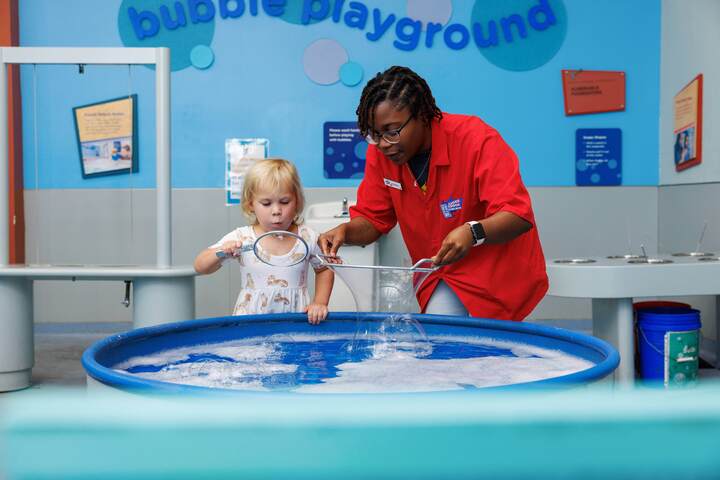
“We have the space and we have the materials,” Melton says, “we just want to make them more accessible to everybody.”
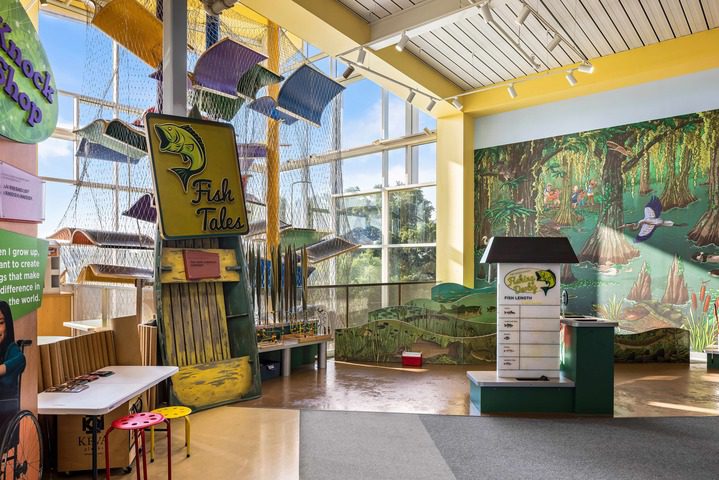
Knock Knock Children’s Museum features 18 interactive Learning Zones where children can develop their fine and gross motor skills, language skills and social skills with a variety of hands-on, multi-sensory exhibits.
“[The museum] serves the special needs community because it provides a beautiful, stimulating, educational setting for therapy for therapists who are working with children, and for families who have children with special needs,” Melton says.
Whether the children learn a Cajun line dance at B.R. Star Studio or test out their handiness at the Knock Knock Maker Shop, each station is specially designed to teach through play.
Knock Knock’s didactic intentionality is what draws so many therapists to use the space to hold therapy sessions. Already, the museum’s Access for All program is designed to lessen the financial burden of admission for families by offering reduced-price tickets for guests with an EBT card.
Knock Knock has also partnered with organizations like McMain Children’s Developmental Center, The Emerge Center, Louisiana School for the Deaf, Louisiana School for the Visually Impaired and Blind Grace to develop ability bags for the museum’s Play for All initiative. These bags are available to all guests and include tools like earphones and adaptable components for the exhibits, allowing children with mobility impairment or sensory issues to play alongside other children at the Learning Zones.
Now, the museum has expanded its inclusion of children with special needs with the new TherapPLAY membership program by easing the financial stress on families and providing a space and the resources for therapists to help their patients grow.
In addition to the physical and occupational therapy that the exhibits lend themselves to, the Learning Zones also provide opportunities for children with special needs to learn practical life skills in an environment with other children.
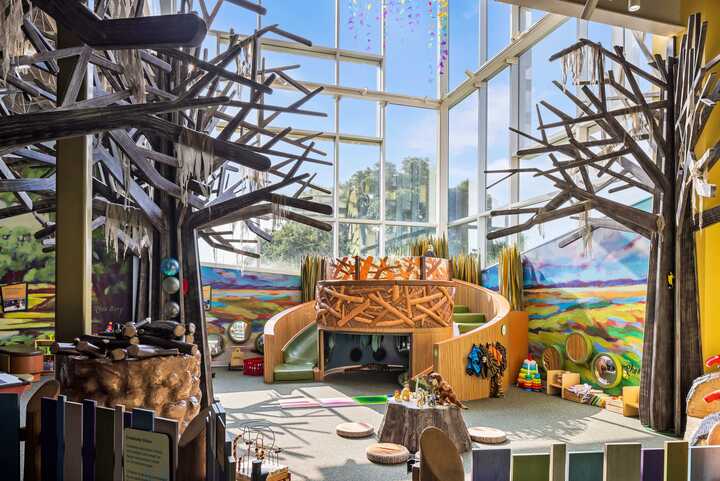
“One of the things that some therapists have expressed is that it’s really important to have children experience what it might be like to go to a restaurant or to a grocery store,” Melton says, “and so it’s an opportunity for them to sort of practice those skills in a playful environment that is not threatening and that is like a classroom setting.”
Therapists also have the option of signing up for time slots before and after the museum’s normal hours to support children who may need a calmer, low-stimulation setting.
Melton believes that the Knock Knock Children’s Museum is in a unique position to provide this service for therapists and their patients because the museum is already equipped with specially designed exhibits in a language-rich environment.
“We have the space,” Melton says. “We have the beautiful, intentionally designed setting that allows children to be them, their best selves, and to live out their potential, and to learn and be exposed to experiences that they would not get in a single setting anywhere else.”
Melton hopes that through this new membership program, children with special needs will be better able to learn and grow with the support of their families, therapists and community at Knock Knock.
“It’s magical when you see these children and families playing together as a family,” Melton says.
Knock Knock Children’s Museum is located at 1900 Dalrymple Dr. and is open from 10 a.m. to 4 p.m. every day. For more information about the TheraPLAY program, the different packages offered and how to apply for the membership, visit the Knock Knock Children’s Museum’s website.