Protein power: Go beyond the hype to find sources that best fuel your body
Protein-boosted, protein-powered, protein-packed. This food buzzword is now seen on every grocery store aisle and restaurant menu, not to mention all over your social media feed and in new federal government recommendations.
Once marketed mainly to athletes and fitness enthusiasts, the typical protein bars and powders have evolved into a vast array of snacks promoted to consumers of all ages and backgrounds. From protein chips to Pop-Tarts, almost every brand is editing labels and adding protein to its products to entice buyers.
The recent protein craze is something dietitians Jessica Rome and Megan Gianelloni have noticed in their day-to-day work. Rome and Gianelloni have both been dietitians for a little over a decade and recently opened 225 Dietitians, their own private practice in Baton Rouge, through which they offer nutrition counseling to help clients achieve realistic health goals. While the scientific research behind protein has remained fairly constant over time, Gianelloni says protein’s popularity with clients has been on the rise. Rome agrees, referencing other recent food trends; not long ago, gluten-free and organic labels reigned prominent, but now protein is having its moment.

“Social media does play a big part in the fad diets—the trendy stuff—but protein has been around for a long time. It’s not anything new,” Rome says. “We go through those phases. Protein is important. It has a bunch of benefits, but they’re the same benefits that it’s been having for the last 50 years.”
Protein is essential for health and nutrition. It’s good for immune function and beneficial for muscles, and it helps you feel energized and full. But not all proteins are created equal. Chicken, eggs, salmon, beans, nuts and peas are wholesome protein sources that people should aim to consume throughout the day, the dietitians say.
“Protein-added foods shouldn’t be your main source of protein,” Rome says. “Eating protein cookies or protein cereals—that’s your plan B. You should really be trying to get in those wholesome, real proteins.”
Diversifying protein sources from animal to plant based is also good practice. Rome explains that plant-based proteins include lots of fiber and no cholesterol and are easier for the body to digest than red or processed meats.
As the body uses the protein it needs as it’s received, Rome recommends intake every four to five hours. “We absolutely need to make sure that we have a protein at every meal and every snack,” Gianelloni adds. “Those should be real, lean, healthy.”
Recommended protein intake varies based on a range of factors, including gender, age, health conditions, activity level and more. For the most part, however, Gianelloni says the average person should strive for a daily intake of around 1 gram of protein per kilogram of body weight. Dietitians can help clients create personalized meal plans to ensure they’re meeting daily protein goals.
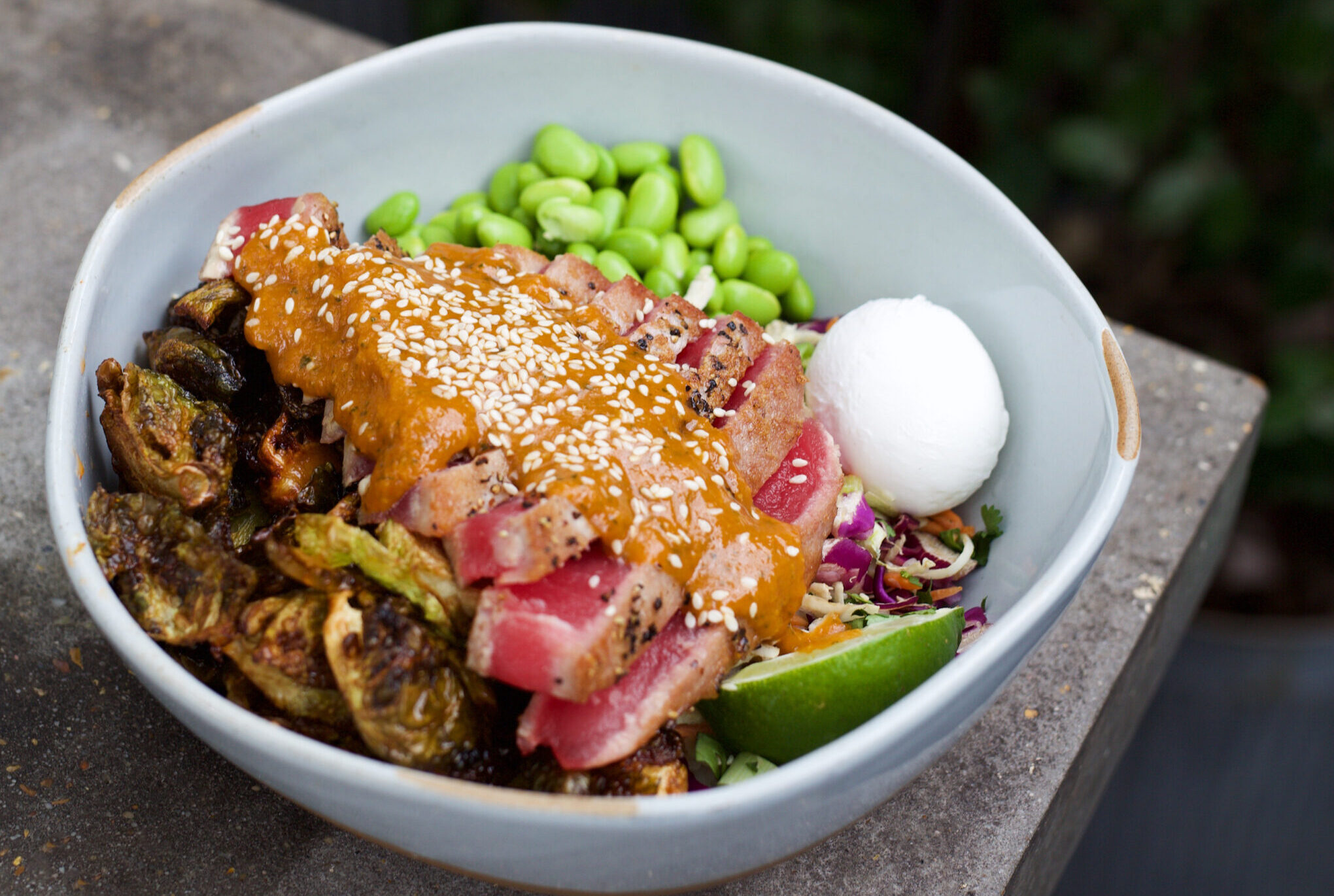
One of Gianelloni and Rome’s favorite ways to meet protein, veggie and carb goals is food bowls. Convenient and personalizable, bowls can be made with a variety of ingredients and flavor profiles, from açai bowls for breakfast to Mediterranean chicken bowls for lunch and burger bowls for dinner.
The popular Perkins Road Overpass District restaurant BLDG 5 has taken that concept and run with it, offering lunchtime bowls and shareable grazing boards. Brayden Buyas, brand manager at BLDG 5, says parts of the menu are purposefully left open-ended for patrons to design their meals based on preferences and needs.
When ordering a bowl or plate at BLDG 5, diners can substitute or add any number of proteins from chicken to shrimp to steak. Exclusively on the lunch menu, BLDG 5’s Power Bowls are protein-centered options designed to provide a full, satisfying meal to help energize guests through any afternoon slump. “By nature, when we’re making those dishes that we just think are really flavorful and tasty, they do often include a protein; they include some sort of fat element; they include some sort of carb element,” Buyas says. “We’ve always got a little veggie and a little green something. Having a little bit of everything is always really nice and nourishing.”
This article was originally published in the June 2026 issue of 225 Magazine.