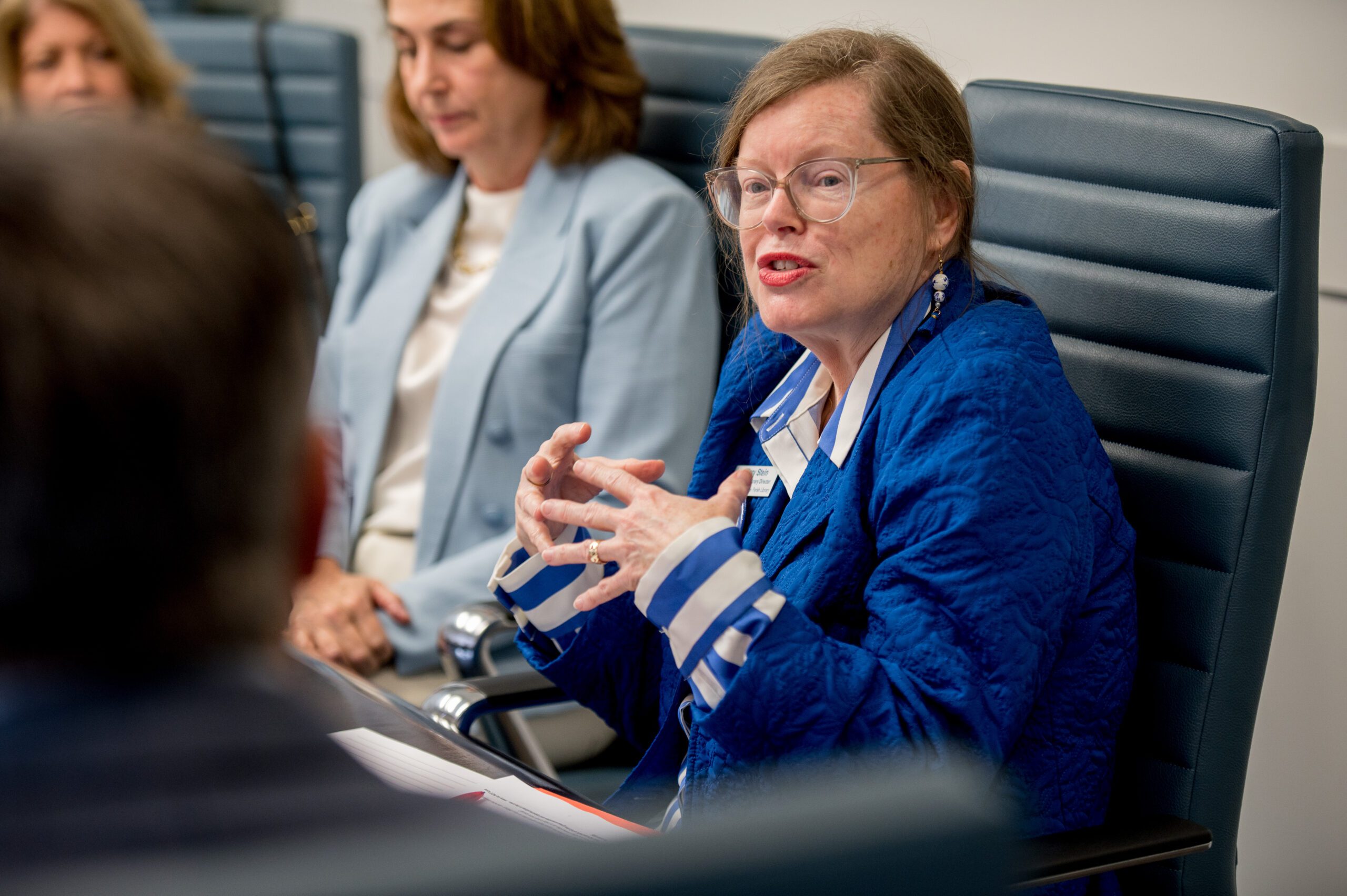
Parenting Roundtable: Mary Stein
How do parents navigate that gray area between the opportunity and risk associated with children’s access to technology?
Modeling the behavior is key—turn it off! Don’t just give a child a book—read with them. That reconnects what you lose when technology babysits your child. Digital literacy is key, but schools can only do so much. We’re all struggling with, “How do I tell what’s real?” The first thing is, don’t let the phone go into the bedroom. Use it at the kitchen table where we’re all together. Ask what they’re doing. Be cautious. Be intentional. The more technology we have, the more we need people. Keep gathering spaces alive—family activities, human interaction.
What makes the Capital Region a great place to raise children – and what can Baton Rouge and the surrounding communities do to make it even more special?
It’s a big small town with endless opportunities, many of which don’t cost money. We just have to open our eyes. There’s still an intergenerational connection here. That connection is really important. We have such a robust faith community. You can find a tribe in sports, music, theater, arts. Many things allow us to be participatory. We need to be our community’s staunchest advocates. That starts with citizens whose eyes are open to what Baton Rouge has to offer. Word of mouth matters. When your neighbor says, “I’m going to this thing in the park or at the library,” you realize the opportunities are here.
What are some common-sense ways parents can protect their children’s emotional and physical health in our increasingly fast-paced world?
We see children morning, noon, and night—many not getting enough sleep. They may be getting screen time, but they’re not getting sleep. There are ways to slow things down so they can fall asleep at a reasonable time. We also see hungry kids. When kids are not “hangry,” there are more positive interactions than negative interactions. We also provide resources for parents—short videos on what you can do about cyberbullying, how to help your child self-regulate at different ages. We’re partnering with local health and wellness agencies and social workers—because our kids are struggling.
Economic volatility is affecting every level of society in some way. How do parents help their children prepare for a future that seems so uncertain?
Career exploration doesn’t just start when you’re in high school. Kids can try to be many things and that doesn’t have to mean a college degree. Trades are noble and we need them. It starts with parents—sharing why they made a decision, why they bought this instead of that. Little children love to play store, play cooking. That builds numeracy and confidence. Don’t hide decisions. Children need to know you are investing for your future and for their future. Little things add up. Talk about the value of different jobs. Buy an experience, not a toy. That shared time is valuable.
How is your organization stepping up to support parents and their kids during these historically challenging times?
We’re out in the community—daycares, learning centers, health fairs, back-to-school fairs—bringing books and resources to children and caregivers. We teach parents so they can participate with their kids. We offer story times, STEM programs, free homework help till midnight—safe, vetted, monitored. We’re also redesigning spaces for interactive play where parents are involved. One of our main missions is to connect the helpers. Baton Rouge is filled with wonderful helpers, and we use our space, resources, and services to bring them together. It’s not just the books—it’s giving families opportunities to spend time together.
To read more parenting insights from local community leaders, see The Parenting Roundtable: Raising Children in an Age of Uncertainty.