What will it take for the Capital City to find its rhythm again with touring acts?
The Red Stick has all the right notes. It just needs to hit them 🎫🎤
Editor’s note: The planned Post Malone and Jelly Roll concert at Tiger Stadium was cancelled after this story was originally published.
There’s no denying that Baton Rouge has got the beat. It’s home to a talented group of musicians, charming venues and music-focused fests.
But when major acts announce tours, Baton Rouge rarely makes the list.
Much to the chagrin of local music lovers, southern stops usually cap at a handful of shows in places like Atlanta, Dallas and the occasional New Orleans.
New projects are trying to change that tune, with plans in place to make Baton Rouge more attractive to promoters. Experts say getting back into the rhythm with a consistent schedule of live entertainment would positively impact the local economy, introduce fans to acts they may not have heard of, and help retain locals with concerts right in their backyards.
With a rich history as a town that has hosted some of the biggest names in music, the Red Stick has all the right notes. It just needs to hit them.
But how can it establish itself in a market where it seems to have lost its foothold?
Something’s happening here, what it is ain’t exactly clear
If you’ve tuned into local entertainment news, you may have heard about the Death Valley Live concert series or the new LSU arena project set to be completed in 2029. Both initiatives aim to pull Baton Rouge out of its sad spot of 11th lowest in the country for large concerts per capita, as ranked in a study by SeatGeek.
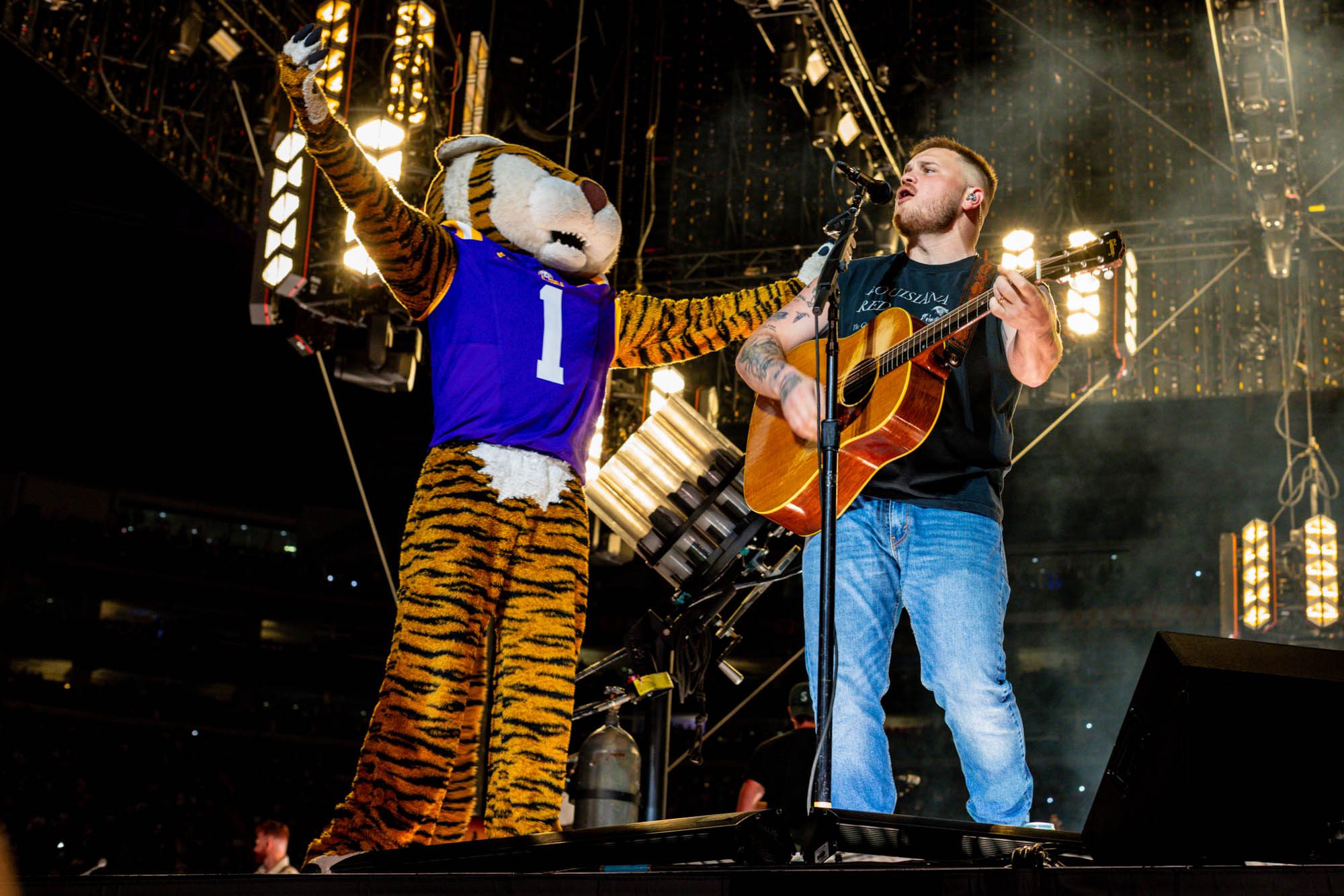
In March of this year, Death Valley Live kicked off with a concert from Zach Bryan. This month, it will continue with a joint show from Post Malone and Jelly Roll. Announced in November 2025, the series formed from a partnership between LSU Athletics, Baton Rouge Area Foundation, the Greater Baton Rouge Economic Partnership and Visit Baton Rouge to bring “world-class entertainment and special events to one of the most iconic venues in America.”
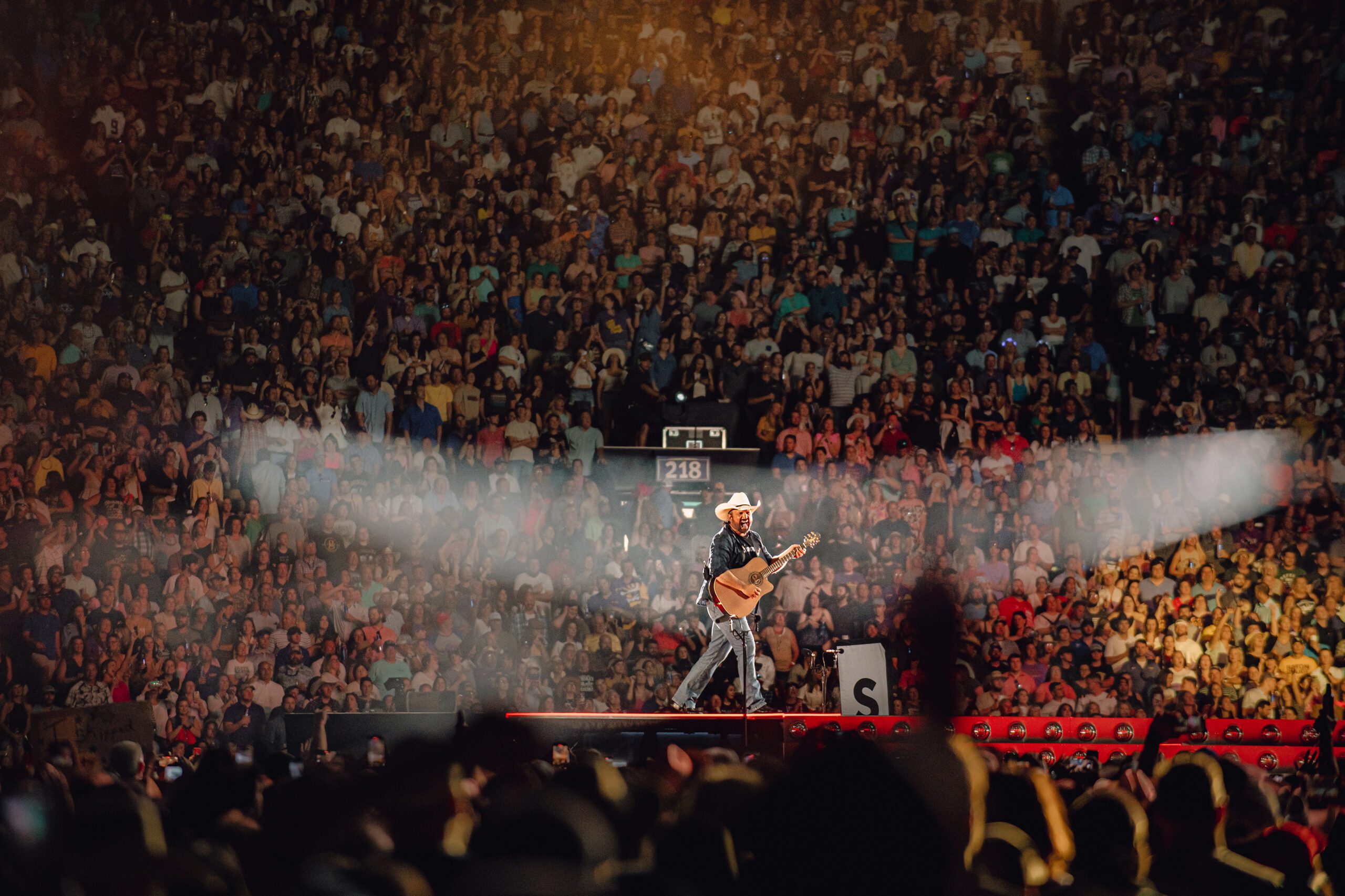
The initiative utilizes Tiger Stadium during the LSU football team’s off-season. The stadium has proven to be a successful and suitable venue for live music in the past–who could forget Bayou Country Superfest, or when Garth Brooks’ stadium show registered as an earthquake?
“I do think we are positioned very well to take advantage of what’s coming and become a music destination again,” Visit Baton Rouge president and CEO Jill Kidder says. “We saw that with the Garth Brooks concert several years ago in Tiger Stadium. … I think that so many people were excited about that concert, and we saw the advantages in our community. People came in, they spent the weekend with us, they ate in our restaurants, they bought gas in our gas stations, they shopped in our shops, and it was just a huge economic impact.”
Zach Bryan’s concert proved to be a strong start. At press time, Visit Baton Rouge senior vice president of marketing and communications Laura Cating shared that the show had an expected 70,000 attendees and $25.1 million in economic impact for the city. Bryan shopped in local stores while in town, and mascot Mike the Tiger even joined the singer on stage for a rendition of his hit “Revival.”
LSU Athletics’ deputy athletics director and chief revenue officer Clay Harris says future bookings rely on several factors and that fans should expect only a few big concerts a year, paired with other potential events like monster truck rallies or traveling sports shows.
“It’s a great revenue initiative for the city of Baton Rouge and LSU,” Harris says. “We have a beautiful stadium that’s only open really seven to eight times a year for major events, for football games, and we want to try to open those doors more and create more moments and experiences for our people.”
Then there’s the new $428 million arena project that aims to phase out the PMAC with a new multiuse, 15,000-capacity facility that can accommodate sports games and live entertainment, along with other university and community-wide events, draws similar to when the PMAC first opened back in 1972.
The arena project, backed by many local officials and notable names including LSU alumnus Shaquille O’Neal, has had its share of controversy. Last July, the CEO of Oak View Group, the firm chosen to develop the facility, was indicted. Since then, there haven’t been many updates on the project.
Reminisce about the days of old with that old time rock ‘n’ roll
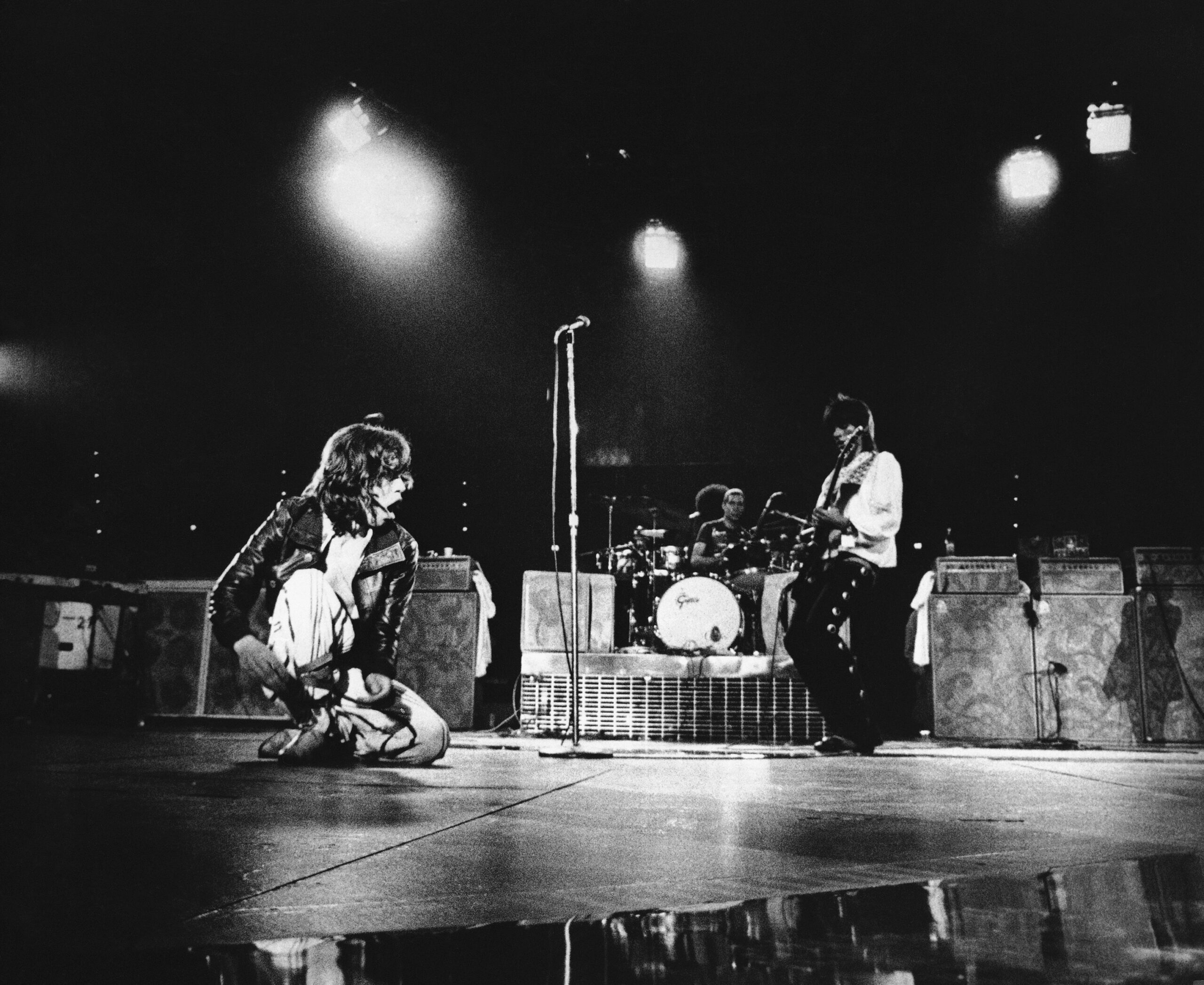
Baton Rouge was once known as a must-stop destination for most touring routes through the South. This meant that popular music artists were repeat visitors, pleasing crowds composed of crammed-in college students and other
eager fans.
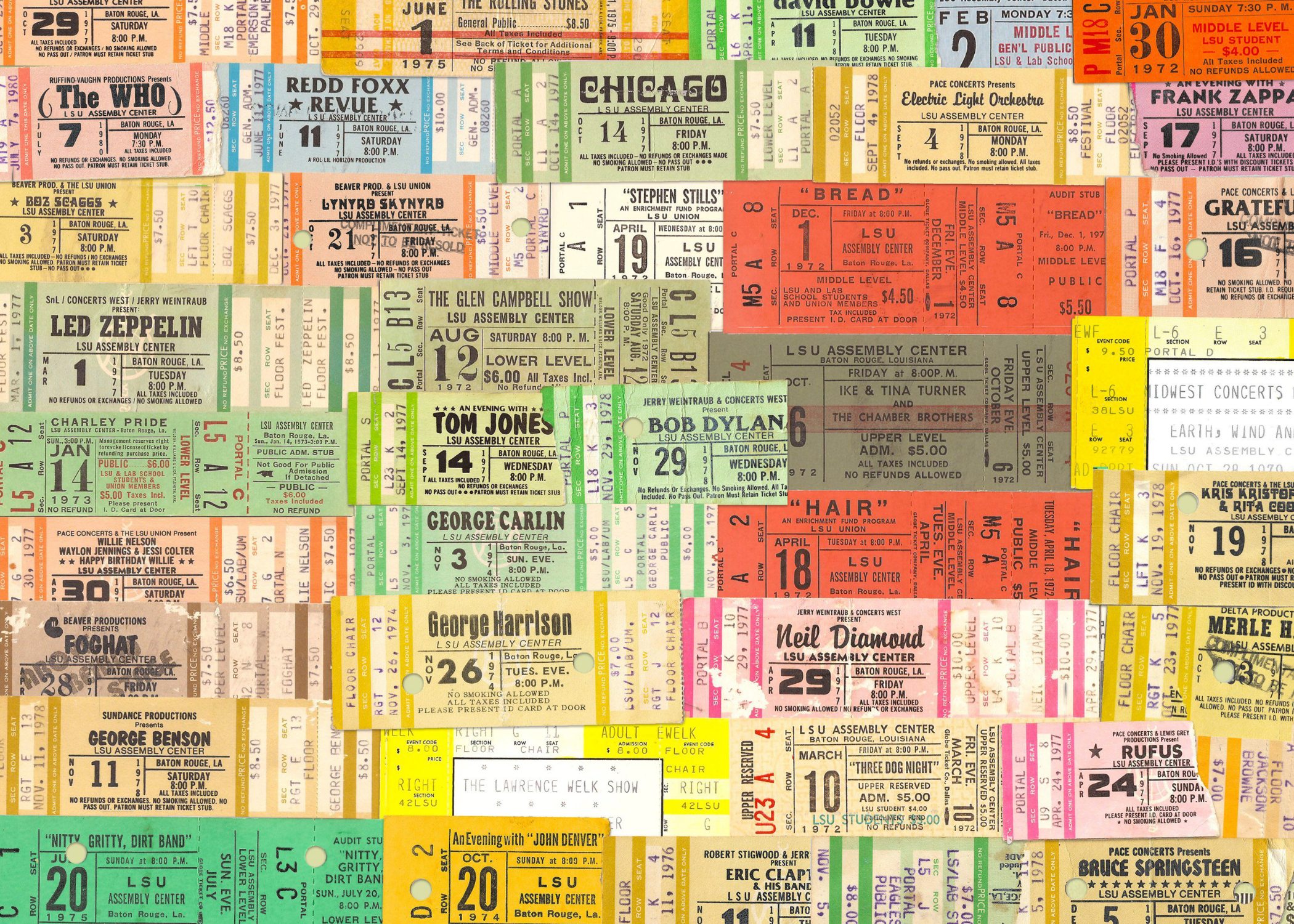
Looking back at lineups from venues like the PMAC, formerly known as the LSU Assembly Center, feels much like thumbing through your dad’s old record crates. Elvis, the Rolling Stones, the Eagles, Elton John and the Doobie Brothers once performed on LSU’s campus, cementing it as a mecca for music.
LSU archivist Zach Tompkins shares that old Gumbo yearbooks in the university’s Special Collections contain page after page of student photography depicting rock legends, giving these publications a similar feel to flipping through a copy of Rolling Stone.
“[Baton Rouge] is a great stop between Houston and New Orleans, and you’ve got a baked-in contingency; LSU has, in population, exploded since the 1950s,” Tompkins says about the city’s past as a music destination. “We had a few thousand students to tens of thousands. So all of these people could buy tickets to see Cat Stevens or whoever. … It kind of just seemed to me like lightning in a bottle.”
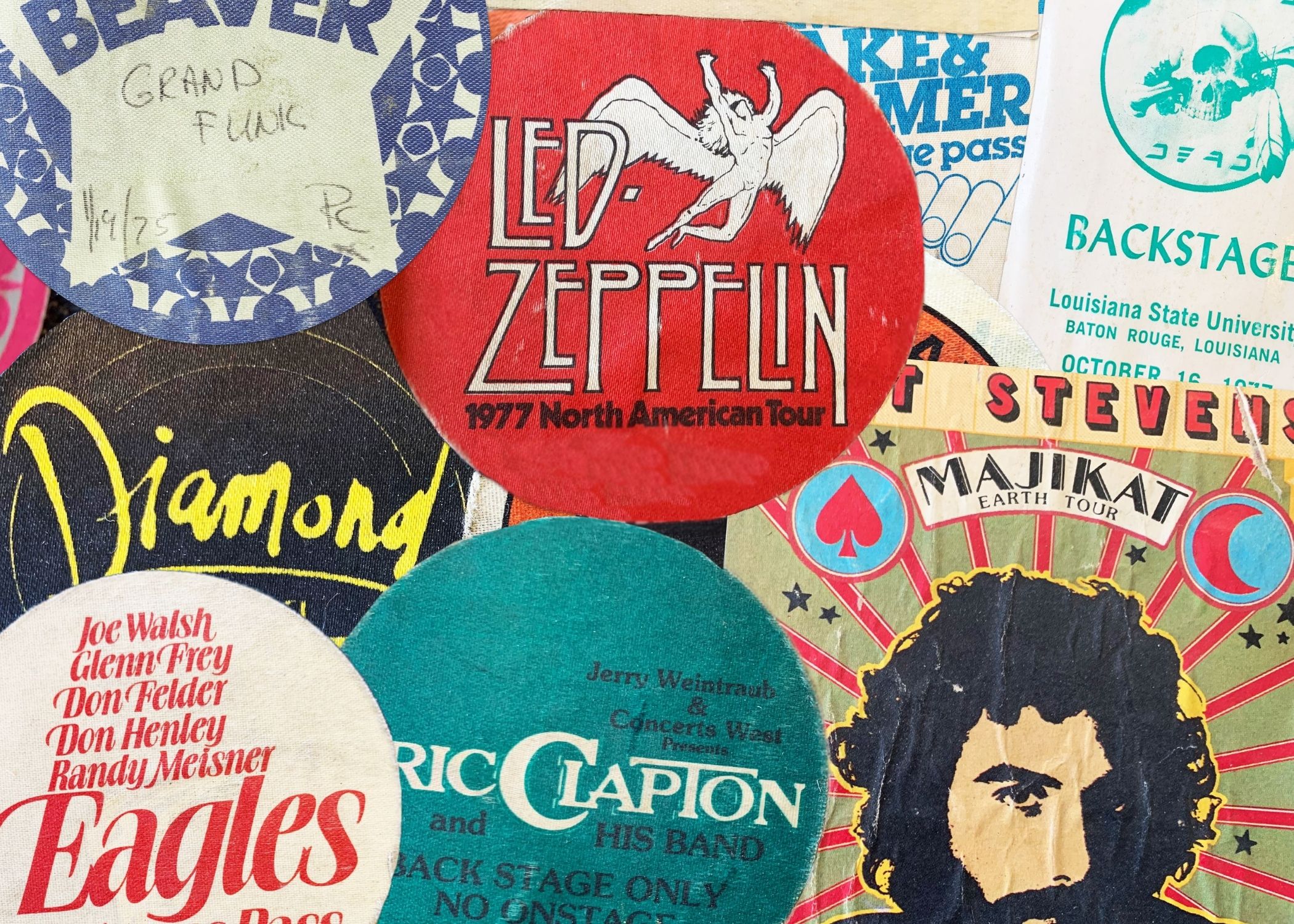
Behind much of the madness was the late Dr. William “Bill” Bankhead, who served as the Assembly Center’s director from 1971 to 1982. During those years, he booked rock greats, shook their hands and made sure their packed shows went off without a hitch.
Seeing legends in their element gave Bankhead countless stories–so many that, with the urging of his family, including son John Bankhead, he penned a book about the experience titled The Greatest Shows on Earth. Inside, Bankhead told his best stories and enlisted others to share their memories, like son John and Del Moon, an LSU alumnus who headed LSU’s Union Pop Entertainment Committee, a student organization that helped Bankhead keep a pulse on who was cool to book and aided with pre- and post-show happenings.
“The Assembly Center was very instrumental in launching bands, pushing bands’ careers, and also just making it so that people had a central location to go through that area of the United States, whether it was a stop or a rehearsal or both,” John Bankhead says.
“I think being on the campus and having the core of those students in there for every show, and that time with that attitude that they had towards music, it was just electric,” Moon adds. “Every show. Always electric. It’s not quite the same today. … The people were tuned in. And the tickets were only five bucks!”
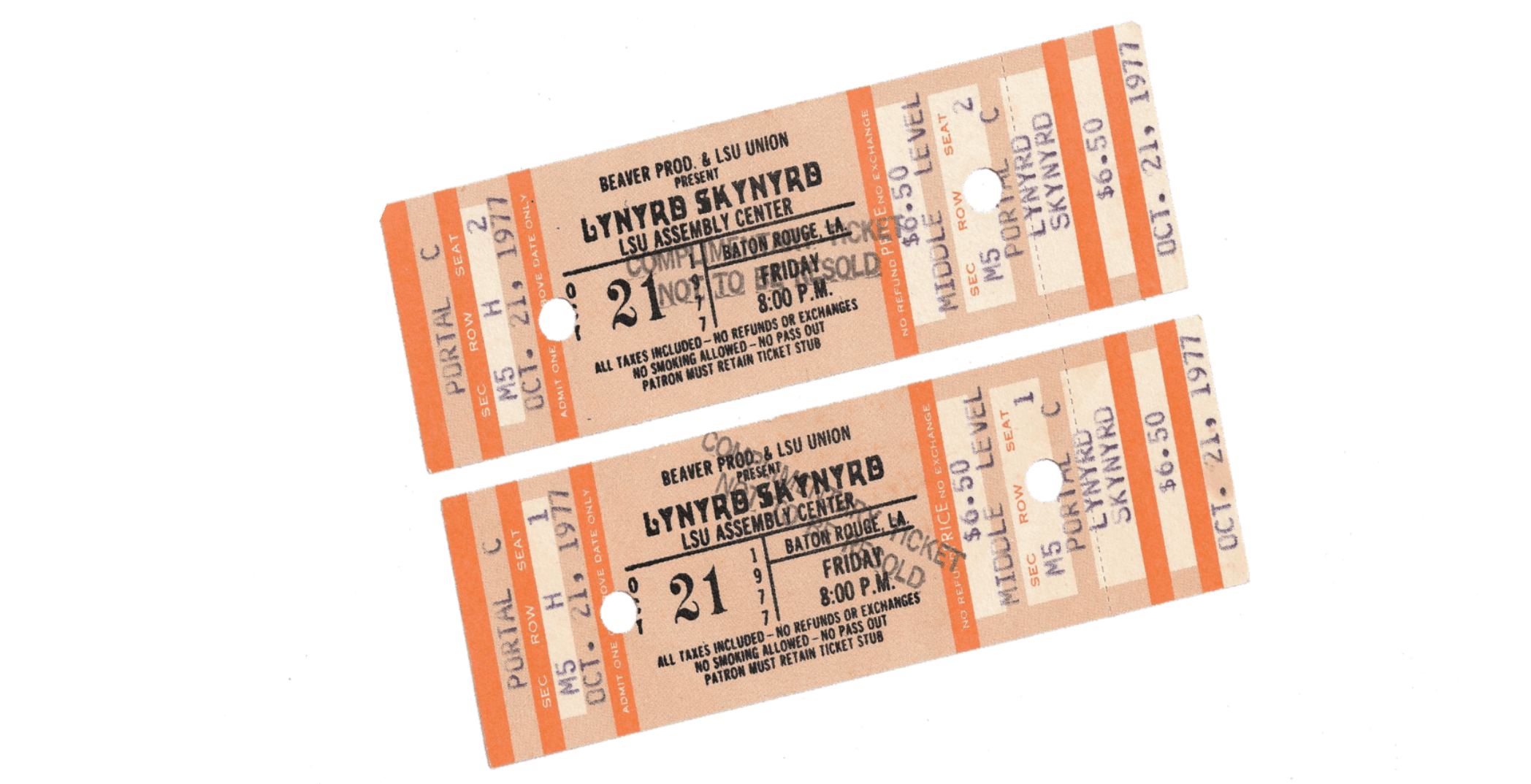
Fast forward to the late ’80s through the ’90s, and the scene changed. The pace of shows at the Assembly Center began to slow, and the Riverside Centroplex, now the Raising Cane’s River Center, started to compete for talent.
Other LSU-adjacent venues like the recently shuttered Varsity Theatre used to pack the house with alternative acts like 311, No Doubt, Blind Melon and Gin Blossoms and later secured artists like Tyler Childers, Haim and Arctic Monkeys in the 2010s. Oh, if those checkered floors could talk.
So why did artists start bypassing BR? There’s no one reason, really. John Bankhead and Tompkins cite that the LSU Assembly Center’s success was due in part to it being the right place at the right time. Moon agrees and adds that the music meant more at the time, with songs doubling as anthems for his generation. He also credits disco as a killer of concerts, with venues favoring a dancefloor controlled by DJ-led sets.
And while times, tunes and venues have changed, they all agree that Baton Rouge shouldn’t be counted out as a music town, especially with its star-studded history as an entertainment hub.
“We’re in a very new age of music, and it’s constantly evolving,” John Bankhead says. “And one thing that I do love is that with all that’s going on, it just makes it more important for live entertainment. And I think you’re seeing that in society, where they can’t get enough of live bands and live entertainment. I love it.”
Stairway to Heaven
So when can we expect Baton Rouge to once again be a prime destination for promoters? It’s hard to say. But it is clear that we’re moving—or rather grooving—forward. At least local leaders are having more conversations regarding Baton Rouge’s presence in the live entertainment scene and are forming partnerships to get things going.
As for an encore of happenin’ musical lineups like those of yesteryear, we probably won’t get back to the one show every eight days like Moon says the LSU Assembly Center used to average while he was in school. Because Bob Dylan said it best, “The times, they are a-changin’.”
With other venues in the state, Baton Rouge really has to sell itself as a must-stop for artists. Alysia Guin, director of marketing and partnerships at Raising Cane’s River Center, shares that it’s not as easy as calling promoters up and working out a quick deal. And if they’ve already booked the Smoothie King Center in New Orleans or the Cajundome in Lafayette, Baton Rouge is most likely out of the question due to its hour-drive proximity to these spots.
“We’re basically trying to make promoters’ lives easier, and saying, ‘Hey, this routing would really, really work well for y’all,’” Guin says. “We just have to fight for our spot because if not, we’re gonna keep losing out to Lafayette and New Orleans. Then, some tours just go from Houston straight to New Orleans, or skip over Louisiana completely. So it’s a constant battle for sure.”
Guin cites the River Center’s smaller capacity compared to the Cajundome and lack of suite levels as other factors that cause promoters to pass. The venue’s arena has not undergone major renovations since its opening in the ’70s. She also says that acts have more elaborate setups than they did in the ’90s and 2000s, which requires some intense rigging for the venue to accommodate.
Harris shares a similar complexity for booking shows for the Death Valley Live series. Critical factors include audience interest, LSU Athletics’ schedule, how the booking can draw economically for the city and the university, and how potential artists have performed in similar markets. Kidder adds that the city’s need periods are also important, highlighting times that Baton Rouge could use a tourism boost or when concerts might compete with other events. Post Malone and Jelly Roll’s show during Memorial Day weekend is expected to be a big win for the city since the holiday is usually slow for local businesses and hotels.
And while seeing the big names and collecting ticket stubs for shows in the Capital City is enticing, there’s more to creating a well-rounded music scene here. Cating and John Bankhead agree that having a more mid-size venue for artists can help, and Moon points out that Baton Rouge should look to genres it knows locals will love, like blues, country and the occasional rock and roll.

So the next time you see your favorite band skip out on the Red Stick, don’t get discouraged. A live entertainment resurgence could be in BR’s future, and established venues are doing their best to book enticing names and cool up-and-coming acts.
The future of Baton Rouge’s touring music scene may be cloudy, but it’s not bleak. So start saving your ticket money.
 Best seats in the house
Local venues by capacity
Tiger Stadium 102,321
A.W. Mumford Stadium 25,500
Pete Maravich Assembly Center 13,215
Raising Cane’s River Center Arena 10,000
Texas Club About 1,000
Chelsea’s Live 600
Manship Theatre 325
This article was originally published in the May 2026 issue of 225 Magazine.