
Locals make it their mission to address an important issue for Black women’s health
As a third-grade teacher and mother of two young children, Felicia Stevens is no stranger to the stress of the on-the-go lifestyle that many young women adopt. What she didn’t expect was how her busy routine was impacting her health.
Stevens was diagnosed with hypertension after the birth of her daughter and son at 33 years old. At first, the stigma surrounding heart health for women nearly stopped her from receiving the health care she needed. It took her years to accept the help and lifestyle changes she needed to make.
A few years into her health journey, Stevens was introduced to Go Red for Women, an organization dedicated to raising awareness about women’s heart health. Attending the group’s 2025 luncheon in Baton Rouge broadened Stevens’ perspective on how many women are affected by heart disease.
“I thought heart disease and heart attacks were for older people, and then I’m meeting a girl that’s 21 who just had open heart surgery. It was just really touching,” Stevens says.
Immediately after the event, Stevens knew she wanted to get more involved. Her advocacy began within her own family, when she learned that her mother and all of her aunts had struggled with hypertension.
“I’m finding more and more African American women suffer from high blood pressure, and it’s treated like the norm. And it’s not okay,” Stevens says.
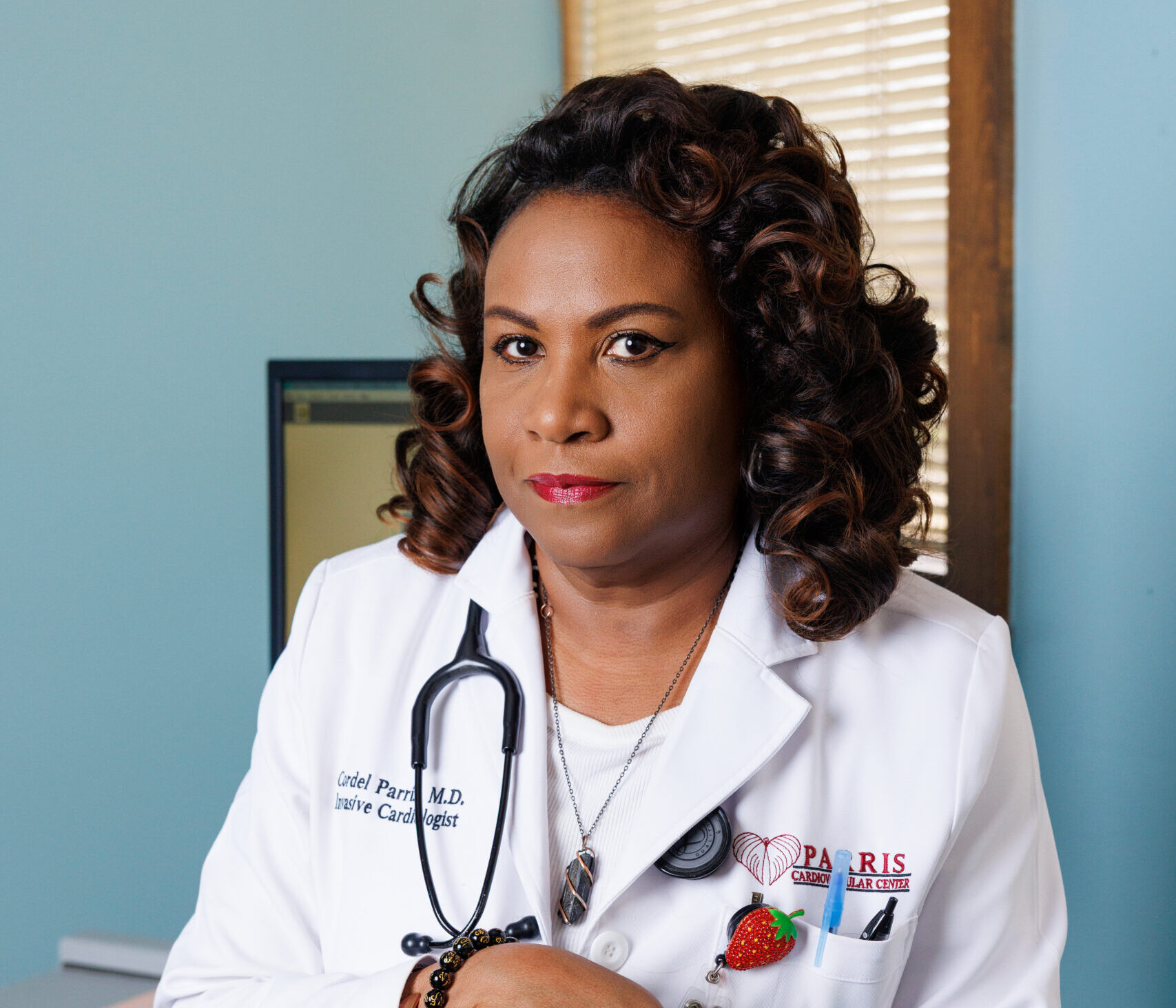
Stories like Stevens’ are not uncommon, according to Dr. Cordel Parris, who as a Black female cardiologist has seen firsthand how disparities in health care affect African American women.
When she began her practice in Baton Rouge in 2004, Parris says many people were not accustomed to seeing a Black woman in a cardiology role. Over time, her patient population grew as more people sought care from someone who made them feel comfortable and understood.
Louisiana presents unique challenges for heart health, including limited access to health care, inadequate insurance coverage and a cultural diet of unhealthy foods. For African American women, these risks are often compounded by family history and the way symptoms are perceived in medical settings.
“I would say for African Americans, the number one risk is family history. And with females, doctors can assume some of the symptoms, and they don’t take them seriously,” Parris says.
She also notes that challenges in diagnosis can disproportionately affect African American women. “The second thing I noticed is that, particularly in African American females, when you have large breast tissue and you look at an EKG, it always looks like there’s a heart attack. So we cannot tell if it’s a true heart attack, and it’s ignored.”
Alongside maintaining a healthy diet, exercising regularly and attending routine checkups, Parris encourages patients to stay engaged and to advocate for themselves during medical appointments. That message resonates strongly with Stevens.
“I really feel like with women, we don’t take care of ourselves. We put the husbands, the kids, our job or our friends first. And heart health starts with you. You have to take care of yourself,” she says.
This year, Stevens is serving as chair of the Go Red for Women Luncheon, taking place Feb. 6 at L’Auberge’s Event Center. The focus of this event is maternal heart health, and Stevens hopes it will encourage more young women to prioritize their heart health before a crisis occurs.

Go with the flow
Dr. Cordel Parris shares five practical ways to improve heart health starting right now:
Get a move on.
Exercise for 45 minutes a day, a few times a week, “just to increase the flow of blood to the coronaries, the legs, the brain, the kidneys,” Parris says.
Balance the scales.
Parris recommends aiming to keep within the normal range for body mass index (BMI), as obesity increases the risk of diabetes, and diabetes increases the risk of cardiovascular disease.
Know your numbers.
Keep track of your cholesterol and blood pressure. “When you have hypertension, it causes damage within the lining of the cell wall…” Parris says. “That’s what causes rupture. It causes breakages in the brain and in the kidneys, and it’s the same for cardiovascular disease.”
Eat to live.
Cut down on fats, fried foods and simple carbohydrates. “We love fried foods,” Parris says, but eating them often can increase the risk of both type 2 diabetes and high cholesterol.
Make the call.
If you’re over 50, add a heart checkup to your annual appointments. “Women will do breast scans, cancer screenings, and they won’t come to do heart screenings. I don’t know why,” Parris says.