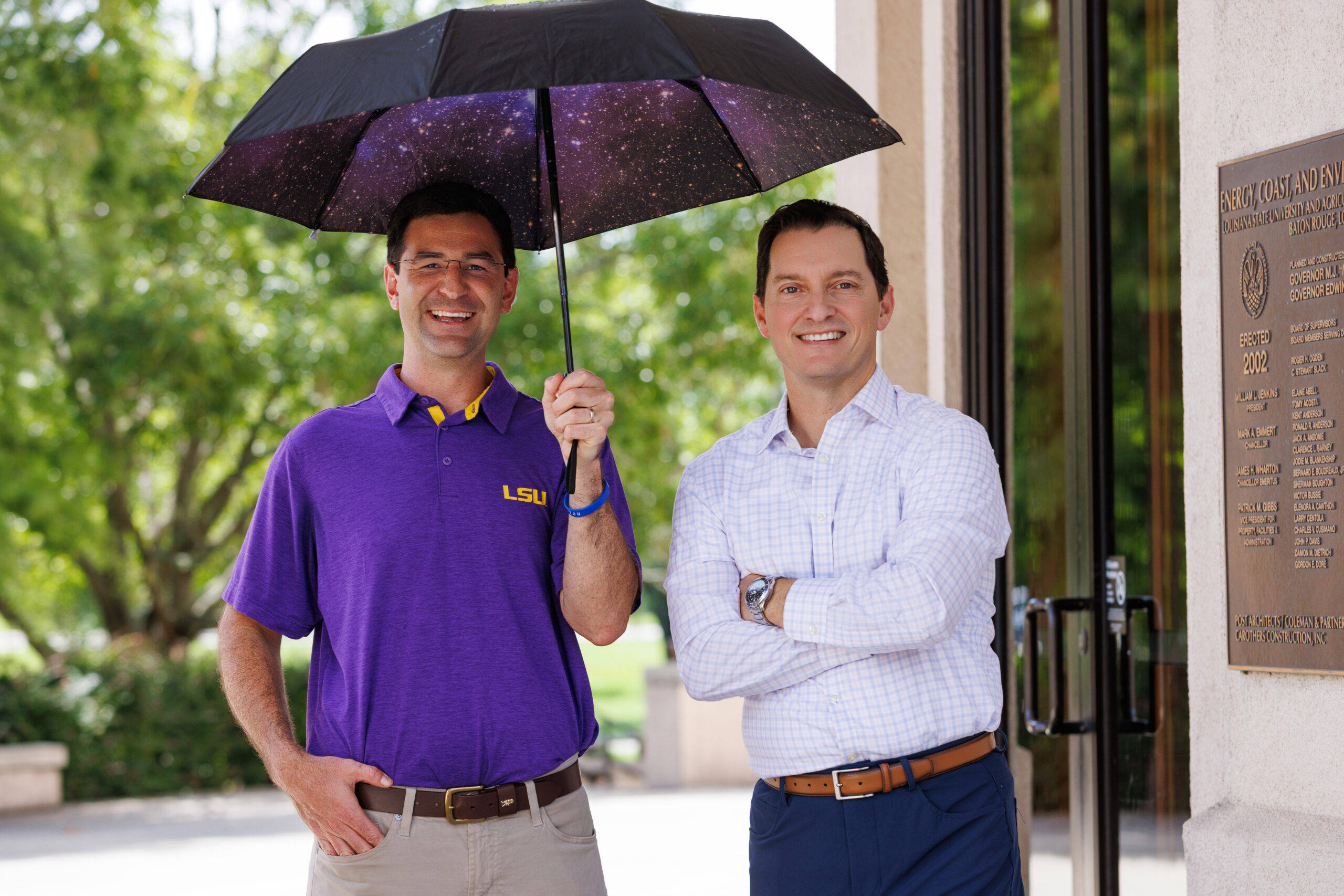
A new LSU degree program is preparing the next wave of coastal meteorologists
LSU’s College of the Coast & Environment debuted its new Bachelor of Science in coastal meteorology for the 2025-26 school year 🌧️📚
Growing up in the New Orleans area, Steve Caparotta was interested in the hurricanes, floods and other weather events he witnessed in and around his hometown. His elementary school P.E. teacher would even ask him for forecasts to determine if class could be held outdoors.
When it came time for Caparotta to think about higher education, there weren’t many options close to home for the hopeful meteorologist. Caparotta landed at the University of South Alabama before starting his career back in the Boot. He joined Baton Rouge’s WAFB in 2003 and has covered major weather events like hurricanes Katrina, Ivan and Rita for the station.
Now, Caparotta is using his 20-plus years of on-air experience to help lead classes of aspiring meteorologists and weather professionals in LSU’s new coastal meteorology bachelor’s degree program. He says this program may be the first of its kind, offering students the opportunity to study the subject in one of the settings it impacts the most: coastal Louisiana. The new major in the College of the Coast & Environment debuted for the 2025-26 school year.
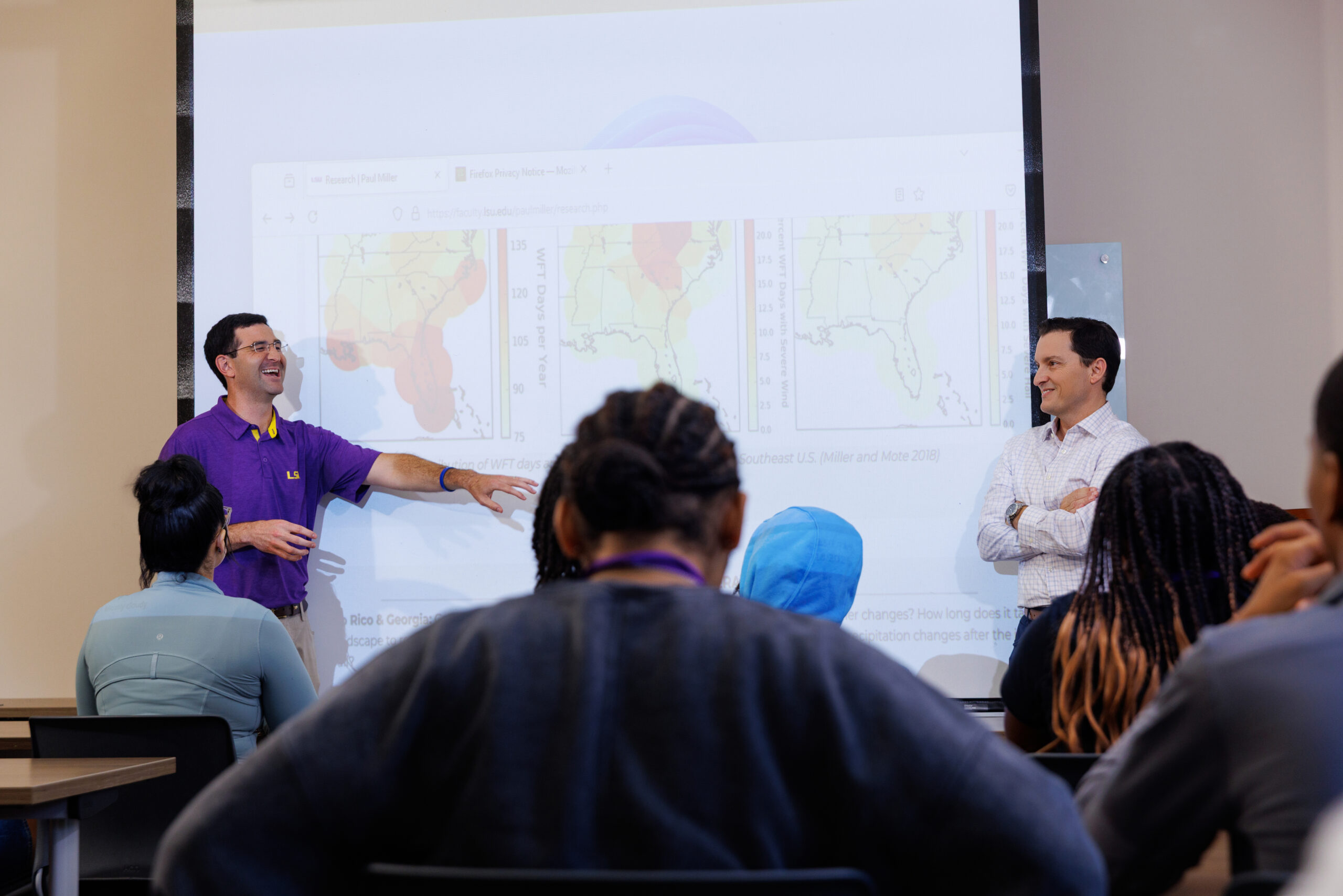
“Given where we are in south Louisiana, the coast is life for us. It’s our lifeblood. It’s so important,” Caparotta says. “So the ability now to have a program that focuses in on coastal meteorology here in south Louisiana, it’s unique, but it’s something that’s really important to our part of the world.”
Caparotta started as an instructor at LSU in 2023. This year, he’ll teach courses like Atmospheric Science for the Coast to students on track to earn a Bachelor of Science in coastal meteorology.
“Steve’s very talented. He’s well known around town. He’s excellent at what he does. He’s a great influence on students. So he was kind of just a no-brainer to have involved,” says Paul Miller, meteorologist and associate professor in LSU’s Oceanography and Coastal Sciences Department. “We want our students, especially in this early stage of a program, to be hearing different voices of meteorology.”
The new weather program has been in the works for years, according to Miller. While coastal meteorology classes and a coastal meteorology concentration have long been offered at LSU, providing expertise and an overview of subjects, they have not satisfied federal requirements that would qualify students to apply for meteorologist jobs upon graduating.
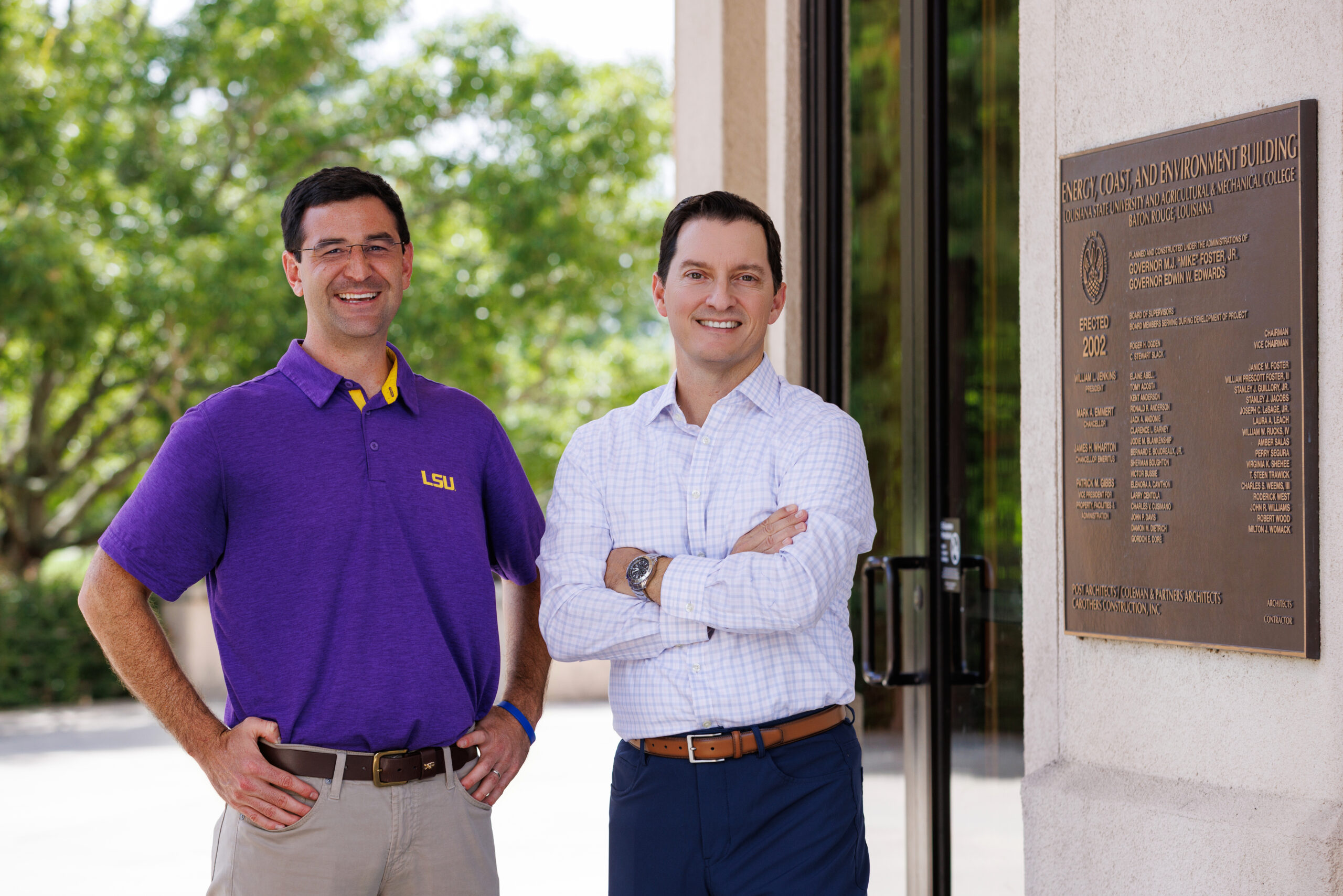
The new major will meet those standards and offer classes covering various topics—not just coastal weather. Students can expect to learn math, physics, chemistry, mesoscale meteorology, atmospheric dynamics, oceanography and more over eight semesters.
Both Miller and Caparotta hope that offering this new degree attracts future meteorologists or helps keep local students who are passionate about weather in the state.
“I get contacted all the time by high school students and sometimes even younger, asking, ‘I’m really interested in weather. Where can I go to learn about it?’ And up until now, I would have to refer them to other places,” Caparotta says. “Now we can tell them there’s something here at home. ”
While the program is in its infancy, Miller says he’s already seen interest from existing students and expects to rope in more as the school year kicks off.
“I would love for people in Baton Rouge and New Orleans to be able to flip on TV and be watching an LSU alum to get the evening weather forecast. I would love an LSU alum to be issuing the tornado warnings and the hurricane warnings for coastal Louisiana,” Miller says. “I just think there’s value in that local, homegrown person.”

Weather in the workplace
LSU’s College of the Coast & Environment students will now be able to earn credentials that qualify them for traditional meteorologist jobs, thanks to the new degree program. But the college has been preparing students for other weather-related roles for years. In the college’s COastal METeorology (COMET) Lab, students conduct research on topics ranging from south Louisiana’s water resources to Saharan dust transport. LSU senior Jonathan Russell says his time in the COMET Lab helped him land an internship and potentially a job using his meteorological knowledge for the insurance industry. “Every fellow peer I have interacted with in this program has been presented with incredible opportunities outside of the typical career path of meteorologist,” he says.
This article was originally published in the September 2025 issue of 225 magazine.