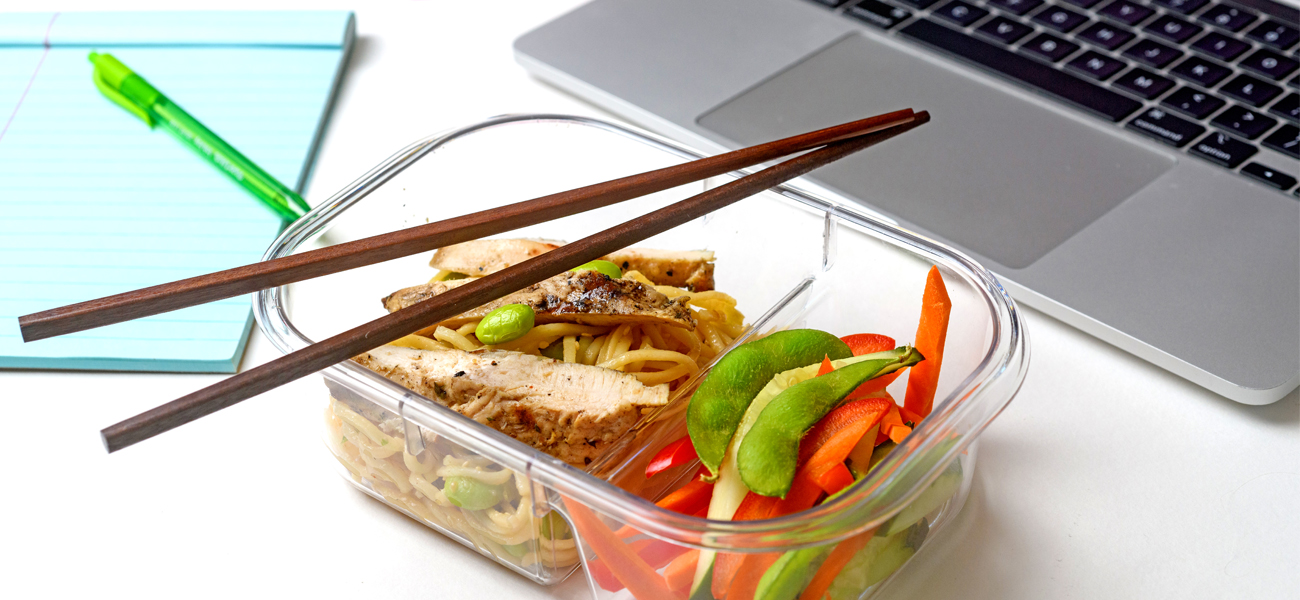
Cold Sesame Noodles
I love the versatility of sesame noodles. They can be served hot, cold or at room temperature, and as a main dish or side. And you can add protein, like grilled chicken or shrimp, to bulk them up. When making Cold Sesame Noodles, I also cut up a variety of fresh veggies to have on the side, like carrots, cucumbers and peppers. Bring it all together, and there are dozens of ways to customize this lunch to each eater’s own liking.
Serves 6

1 pound Asian noodles or spaghetti
½ cup vegetable oil
2 cloves minced garlic
1 teaspoon fresh grated ginger or ginger paste
1 tablespoon creamy peanut butter
½ teaspoon crushed red pepper flakes
2 tablespoons oyster sauce
5 tablespoons rice vinegar
2 tablespoons toasted sesame oil
1 cup steamed shelled edamame
¼ cup toasted sesame seeds
1/3 cup chopped scallions
3 cups cooked protein (chicken, shrimp, tuna or tofu)
1 cup carrots, julienned
1 cup English cucumber, julienned
- Cook the noodles according to the package directions. Drain them well and toss them with a couple tablespoons of vegetable oil to prevent them from sticking. Allow to cool completely. Chill in an airtight container until you are ready to assemble.
- In a small mixing bowl, whisk together the garlic, ginger, peanut butter, crushed red pepper flakes, oyster sauce, rice vinegar, sesame oil and remaining vegetable oil. Cover and chill the dressing until you are ready to toss over the noodles.
- Before assembling the lunch boxes, place the cooked noodles into a large bowl. Add in the steamed edamame, toasted sesame seeds and chopped scallions. Toss everything with the dressing and place one serving of the noodles into the larger compartment in the divided lunch boxes. Cover the remaining noodles and return them to the fridge for later meals.
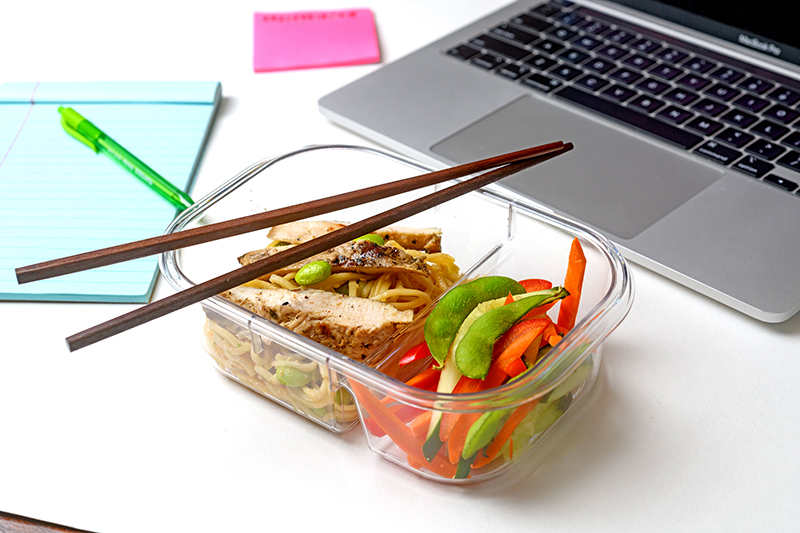
- Top the noodles with 3 to 4 ounces of your desired protein (recipe for marinade follows). In the remaining compartments place some of the julienned carrots and cucumbers. Keeping the cucumbers and carrots separate will help to keep them nice and crispy when it’s time to eat.
This article was originally published in the October 2023 issue of 225 magazine.