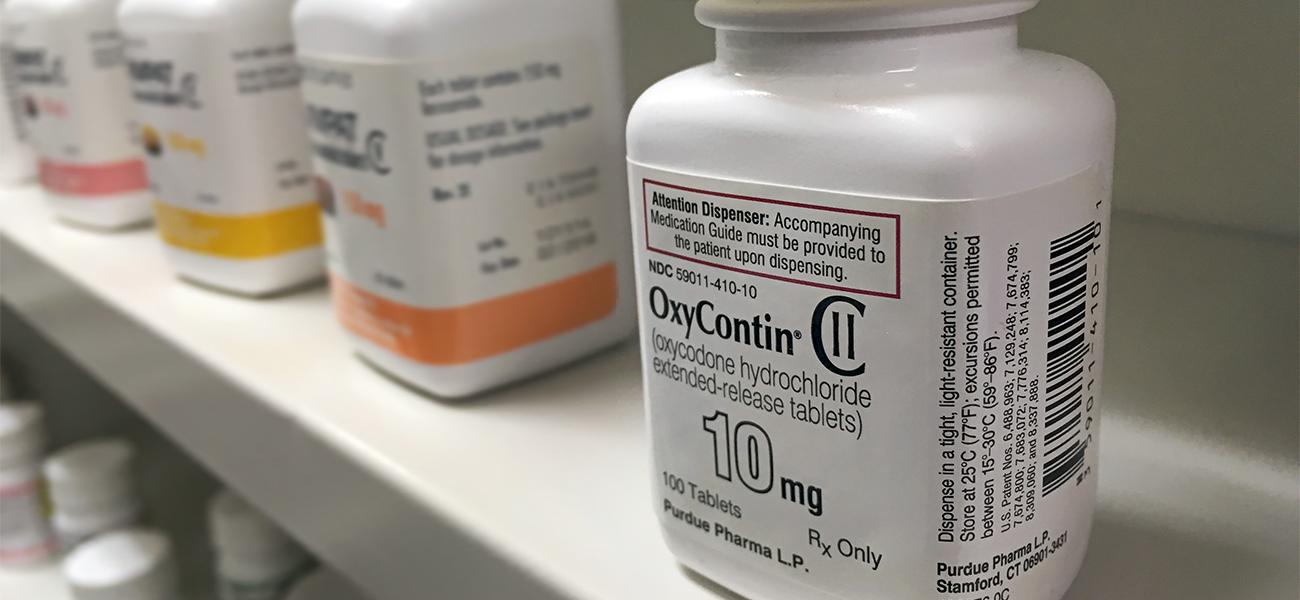
The rise of Oxycontin: A potent drug has replaced as the go-to for prescription abusers
While alcohol and marijuana reign supreme as addicts’ intoxicants of choice, the abuse of prescription drugs has skyrocketed.
“Approximately 85% of people treated at Set Free Indeed are using prescription meds, usually in combination with alcohol and other substances,” says director and founder Tonja Myles. “We have people who are into OxyContin, Lortab, Xanax and even Ritalin.”
In the last decade, Americans’ appetite for painkillers has become insatiable. In 2006, the World Health Organization reported the United States, home to just 4% of the world’s population, consumed 99% of the global supply of hydrocodone. Louisiana ranked fourth in national sales.
“DEA estimated there was enough (sold) to give every man, woman and child in the state 30 Lortab,” says Malcolm Broussard, executive director of the Louisiana Board of Pharmacy. “That would suggest it wasn’t all legitimate.”
Since 2006, the trend in painkillers has shifted from hydrocodone to OxyContin, which lacks the Tylenol component that causes fatal liver damage in large doses.
Ironically, opiates’ effectiveness are their greatest detriment. “In one sense, these are absolutely wonderful medications,” explains Seth Kunen, a clinical psychologist and director of research and grants at the Louisiana Department of Health and Hospital’s Office for Addictive Disorders. “They do exactly what they’re intended to: alleviate pain and suffering. (That’s why) this class of drugs is one of the most frequently prescribed medications.
“(But) this family of drugs is highly addicting,” Kunen continues. “They create a strong euphoria, and (addicts) learn how to manipulate the method by which they take the drugs.” For example, to quickly release a high dose, addicts chew a 12-hour tablet or crush and apply it to their skin that has been scraped to bring blood to the surface.
While the names, composition and potency vary from opium and morphine and OxyContin, the ravages of poppy plant derivatives have been well documented since Thomas De Quincey published an account of his life as a laudanum fiend in Confessions of an English Opium Eater in 1821. That knowledge hasn’t protected any generation from losing its icons and artists—Samuel Taylor Coleridge, Billie Holliday, Lenny Bruce, Elvis, Janis Joplin and Kurt Cobain, among others—to opiates. And even though the latest illicit opium elixir has already killed Pimp C, Lil Wayne and other rappers literally sing the praises of purple drank, a concoction of prescription-strength codeine cough syrup, Jolly Ranchers and Sprite typically sipped from Styrofoam cups.
“The mechanism for death associated with all the opiates is respiratory suppression,” explains local neurosurgeon Dr. Allen S. Joseph. “They recover completely if they don’t have respiratory suppression or make some mistake as a consequence (of) an impairment of higher cognitive function while driving, walking on a roof or performing a task that requires judgment. Ordinarily, they live to overdose again just like alcoholics.”
Unfortunately, history has proven there are only two ways to end opiate addiction: intervention and recovery, or death from experimentation with excessive dosages and lethal drug combinations. So it’s no surprise the 2009 National Prescription Drug Threat Assessment reported U.S. opiate deaths in 2005 from prescription medication more than doubled to 8,541 from just four years earlier.
FROM GOOD MEDICINE TO BAD DRUGS
As abusers’ desire for the medication blooms, so does the market for illicit prescription medication. “It’s scary to hear a person who weighs maybe 100 pounds (say) they use 30 pills a day,” says Tonja Myles of Set Free Indeed.
Yet, acquiring illegal pharmaceuticals has never been easier. While marijuana, crack and cocaine addicts troll city streets for drug dealers, prescription drug abusers shop in sterile doctors’ offices, brightly lit pharmacies and even the comfort of their own homes.
That development outrages Baton Rouge Police Department Detective Ricky Arnett. “Unlike methamphetamine, you can’t go into your bathroom and throw some chemicals together and come out with (prescription medication),” he explains. “From the distributor (a pharmaceutical company) to the addict, we seem to be losing a degree of responsibility.”
Only a small percentage of street stock comes from thefts such as the August 2009 armed robbery of Watson’s Live Oak Pharmacy, which netted two young women and a male accomplice several bottles of OxyContin and a couple of arrests. Besides stealing valuables to pawn for drug money, some savvy addicts use identity theft techniques to access health care policy cards or account numbers to pay for drugs.
Even spoils of successful heists don’t yield enough product to constitute a public threat. The highest volume of pharmaceuticals diverted from their intended, legitimate purpose comes from patient dealers, “pill mill” clinics, doctor shoppers and Internet sales—all of which exploit a glitch in modern medicine.
The days of family doctors and neighborhood pharmacists managing generations of patients from cradle to grave has gone the way of the mercury bulb thermometer. Now, every time patients seek a specialist, change jobs or an employer changes insurance plans, they forge a new relationship with a different provider. Patients’ transience and the disintegration of doctor- or pharmacist-patient relationships present enormous opportunity for loopholes.
Oftentimes, dishonest patients research ailments treated with a particular medication, mimic the symptoms and reinvent their medical histories to receive prescriptions. “If somebody stubs a toe and is still having terrible pain a week later, you wonder if there’s something more going on,” says Joseph. “You’re only going to be able to put that together if you are familiar with that patient. A doctor who sees them once and never expects to see them again, he’s not going to be able to put that together. (Patients) are extremely clever at coming up with believable stories.”