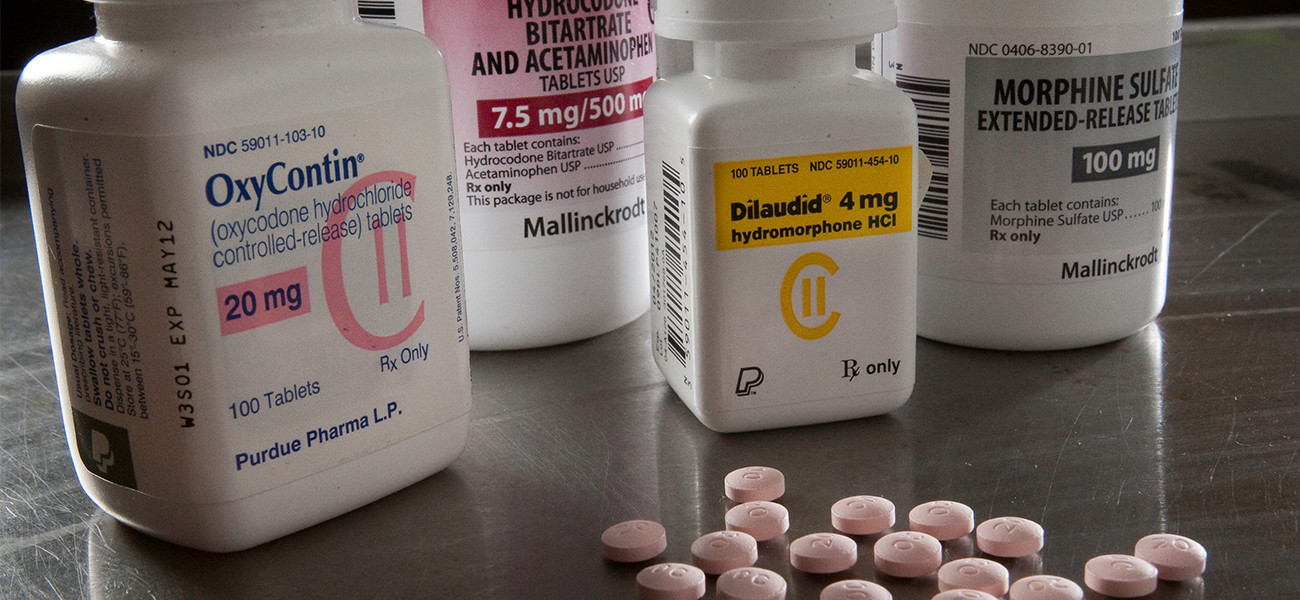
Deadly Doses: How a happy boy with a bright future died too young
Even before Jeremy Joseph Traylor was identified as a piano prodigy at age 4, his parents Keith and Melissa believed their son was extraordinary.
Bright and athletic, he was a popular child, whose parents celebrated his successes in academics, on the football field and even on the set of an HBO independent film in which he’d won a part.
They also supported his choices in life—especially when he landed in the principal’s office for slugging a junior-high classmate who terrorized a weaker boy.
Even after his death from drug abuse at age 18, Jeremy’s parents remain proud of their son. Jeremy’s mydeathspace page proclaims, “His most significant accomplishments were becoming sober and graduating high school after a tough battle with drug addiction.”
Accidental overdose of prescription medication has claimed the lives of celebrities from L.A. to New York. Michael Jackson. Heath Ledger. Brittany Murphy. Anna Nicole Smith. DJ AM.
Even its distance from big cities hasn’t isolate Baton Rouge from the elements that caused these celebrity deaths. The insidious epidemic of prescription drug abuse has crept into the Capitol City. The same drugs that ended those talented lives are tearing apart local families, taking lives and threatening public safety.
Every day, spouses, children, grandparents and coworkers secretly and desperately relinquish their lives to powerful prescription drugs. School administrators, medical professionals, substance abuse counselors, prosecutors and police officers deal daily with the devastation illicit drug addictions wreak. Yet, many times, the habit remains hidden from family and friends until the dependency creates a financial, legal or medical crisis.
Although the Traylors tried to do all the right things, in the end they could not overcome their son’s addiction, the maddening red tape of health insurance and the silence of Jeremy’s friends who knew he’d relapsed into taking drugs, but said nothing.
A SEASON OF DISCONTENT
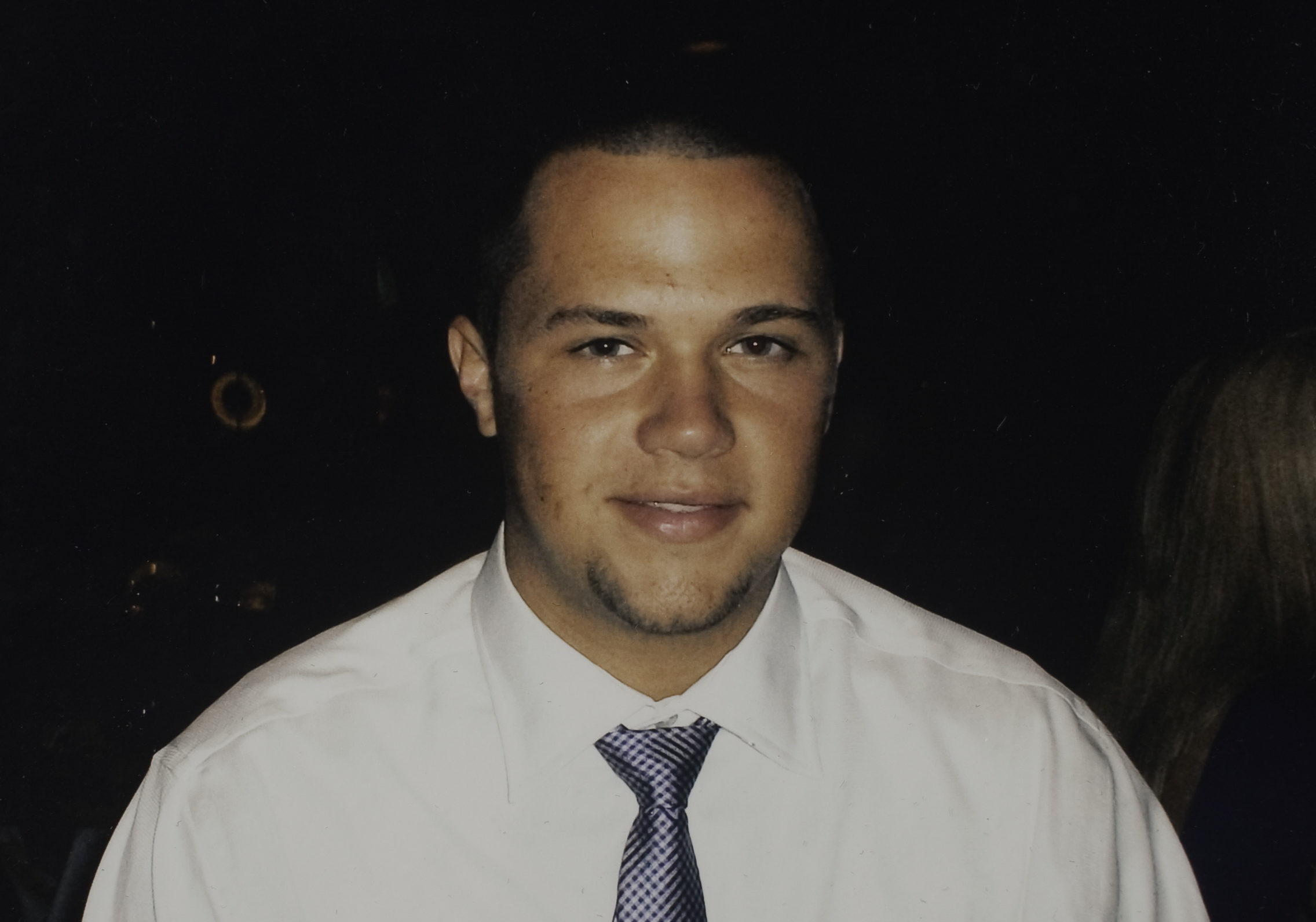
For 14 years, Jeremy Traylor led a stable—if charmed—existence in the New Orleans suburb of Slidell. After completing summer football camp, Jeremy had just begun his freshman year at Slidell High School.
“He was at the height of his childhood,” his father Keith says. “Then, Katrina happened and he lost his whole world. He lost his friends. He lost his home.” With school closed indefinitely and their home damaged beyond repair, the Traylors moved to Ascension Parish.
When the star Slidell athlete started playing football at Dutchtown High School, he spent most of the season on the sideline due to the program’s sheer enormity and the fact he had to learn a new system.
“That was the beginning of his discouragement, but he hung in there,” his dad says. Jeremy’s losses were further compounded as the family’s financial security and his parents’ marriage also became casualties of the 2005 hurricane season.
In his freshman year, Jeremy gravitated toward an intelligent, hardworking, college-bound crowd. But his circle of friends shifted in his sophomore year, and he grew distant from his best friend—his dad. In the post-Katrina turmoil, Keith didn’t know whether to attribute the changes to the move, the recent divorce, adolescent moodiness or something else.
Once Jeremy received a driver’s license, his parents knew even less about the inner workings of his mind and contented themselves just to know his whereabouts. In a common coming-of-age rite for many Southern teenagers, Jeremy spent his weekends drinking alcohol at parties and at friends’ homes—often with the host parents’ knowledge.
Older siblings or upperclassmen often encouraged drunk teens like Jeremy to try marijuana and other drugs. “A smart kid—and even a not-so-smart kid—always thinks they can outsmart drugs or whatever they are taking,” says Keith. “They think they can’t die. They’re invincible.”
BATTLING MORE THAN ADDICTION
As his parents worked long hours trying to rebuild their lives and regain their financial footing, Jeremy’s grades and school attendance never faltered. By the middle of Jeremy’s junior year, his chronic exhaustion and indifference led Melissa to suspect her son of more than drinking. In fact, he was smoking marijuana before and after school.
“We tried to get him help. Our insurance wouldn’t cover it,” Keith recalls. “There was a waiting list for months to get him into a state health clinic. And, unfortunately, they don’t look at marijuana as a serious drug.”
One counselor advised the Traylors not to worry unless things became more serious. They soon did, though, as Jeremy experimented with Vicodin, Lortab and the street drug Ecstasy to boost marijuana highs. When Melissa ambushed Jeremy with an over-the-counter home drug test, the results came back positive for cocaine.
The Traylors immediately sought inpatient rehab, but no beds were available statewide. They finally located space at a Texas treatment center, which was filled by the time they arrived. A bad reaction soon drove Jeremy to swear off cocaine, but his problem with other substances persisted.
Throughout the ordeal, the Traylors battled their son’s addiction, the dearth of treatment facilities and their insurance company. Before paying for inpatient treatment, the policy dictated patients attempt counseling and extensive outpatient treatment—each calendar year.
“When a parent gets rejected by insurance and the program that’s there to help them, you feel like your last hope is to constantly talk to your child, to constantly watch him,” Keith says. “He learned to master hiding and lying.”
Counseling, Alcoholics Anonymous and Narcotics Anonymous did not quell Jeremy’s cravings, which did not impede his ability to maintain his grades and even a job. During his senior year, Jeremy received TOPS and scholarships to several colleges. About the time his acceptance letters arrived in the fall of 2008, a wealthy friend offered Jeremy OxyContin tablets.
“(In rehab) Jeremy said he refused several times because he did have a little fear,” Keith explains. “(But) when you’re intoxicated (and) smoking marijuana, your resistance and your faculty is not 100%. If Jeremy was sober, I know he would have rejected it.
“Jeremy said he felt like, ‘If I try it one time, what’s it going to hurt me?’ But, if you take a bullet, take a gun to your head and pull the trigger, what’s that going to do one time? That one time try was it. Jeremy was hooked.”
At first, his friend provided pills from the family medicine chest. Then, as Jeremy’s habit grew to two 80-milligram pills crushed and snorted every three days, he quickly located local dealers and texted orders.
Soon his grades began to slip. Still, Melissa says, “He was real good at schmoozing. He was following the rules, calling in, not staying out all night. As naïve parents, we want to think our kid is telling us the truth. So you minimize, or you look the other way a little bit.”
The deception continued until Melissa received a midnight text message from another of Jeremy’s friends disclosing the OxyContin usage and detailing frightening behavior—blackouts, thoughts of IV injection for a faster, greater high and drug dealing. During the family’s subsequent intervention, a girlfriend’s threat to abandon him finally convinced Jeremy to seek help.
“He dabbled into something he totally could not get out of by himself—or even with my help,” says Keith. “None of us knew the power of OxyContin. When you think of a painkiller, you don’t think it’s as bad as heroin. People have told me it’s worse than cocaine because it’s a drug you can get away with—and you can.”
Willpower alone is no match for opiate withdrawal. Addicts who try to wean themselves without medical supervision experience cramps, vomiting and convulsions severe enough to revert to the drug. Again, the Traylors began an exhaustive search for an open bed, which they finally found at the state-run Louisiana Health and Rehabilitation Options in Baton Rouge.
DETOX, DR. JEKYLL AND MR. HYDE
After 11 days in detox in March of Jeremy’s senior year, two psychiatrists and Jeremy himself agreed inpatient treatment was the best course of care. Since the calendar year had changed, however, insurance demanded Jeremy begin the counseling-extensive, outpatient-inpatient cycle all over again.
“(The insurance company) said if he fails intensive outpatient treatment, he could go to inpatient,” Melissa recalls. “Keith and I said, ‘If he fails that, he could die.’”
“It’s a middle-class or lower-income family’s nightmare,” Keith says. “We felt helpless. You know your son is drowning. You throw him every bit of lifeline you can. Each lifeline gets pulled away from him. We did everything we possibly could, but we kept getting rejected, rejected, rejected.”
Keith’s extensive research into insurance-approved programs led to Set Free Indeed in Baton Rouge, Louisiana’s first faith-based treatment center. Clients receive three hours of counseling each day for six to 12 months; health insurance usually covers the cost of care. After an initial assessment, each client participates in random drug screens and a combination of individual, group and family counseling supervised by licensed therapists who specialize in addiction and destructive behaviors.
As high school graduation neared, Jeremy achieved 80 days of sobriety. “He had stopped talking about drugs and drinking. We were starting to see glimpses of the real Jeremy again, and that was awesome,” Melissa explains. “He had gotten a job, and he was able to keep money in his wallet. He was so proud of himself.”
Though the scholarships had since been rescinded, Jeremy seemed excited about receiving his Dutchtown diploma, purchasing a car with his savings and enrolling in Baton Rouge Community College.
That spring, “He’d always reassure me that he was working on it (the addiction). But he struggled too,” Keith recalls. “You just don’t know when they go over the edge. When you find out, it’s just too late. It’s Dr. Jekyll and Mr. Hyde. You get confused as a parent. Do you trust him? Now, I have to say: As much as it pains you, you can’t trust them. That’s how powerful this drug is. It’s not them. It’s the drug. Always keep your guard up. Forever. With that drug.”
Even with his success in recovery, Jeremy contemplated failure. “I told him I’d be disappointed and I’d cry,” Melissa says. “But we’d start over, and it would be OK. I never thought he’d die from it—maybe have setbacks. You hear so many success stories, people going to rehab and living again. Complacency sets in real fast when you’re in rehab and feeling well. That’s a big mistake right there.”
Ultimately, high school graduation proved to be Jeremy’s undoing. “For him to do what he did in outpatient was remarkable,” says Keith. “He really should have been an inpatient. That he graduated was amazing. He pulled Fs up to Bs and As. What we didn’t count on was when he graduated he got excited. He thought, ‘I’m going to be all right. I graduated high school. I’m going to make it.’”
JUST TO SAVE ONE LIFE
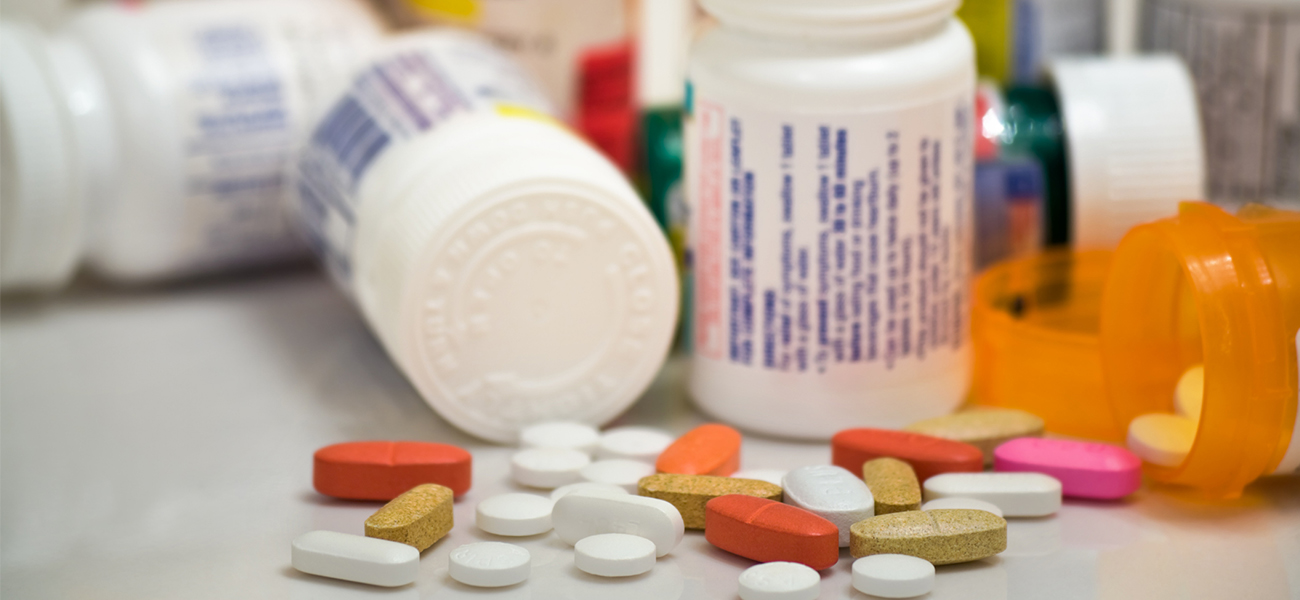
Keith believes Jeremy had his first drink since detox at a graduation night party. A few days later, he smoked marijuana with coworkers and soon reconnected with old friends. A week after graduation, Jeremy and a friend pulled into a gas station on Old Perkins Road at 1 a.m. Earlier in the day, Jeremy had withdrawn money from his bank account, and phone records indicate he called a drug dealer.
“I knew he had died that Tuesday night,” Melissa recalls. “I felt it. I had started (working) at night, so I could be home (to take Jeremy to rehab). My stomach told me to go home and wait for Jeremy. I went to his room, and he wasn’t there. So, I just sat on the couch. I knew he wasn’t going to come home. Then the police showed up. I knew he was dead and that it was Oxy.”
With money Jeremy had saved from a job he had during rehab, he was in the process of buying a car and was scheduled to pick it up on May 20. That morning, Keith planned to drive to Melissa’s house, pick up Jeremy and retrieve the car. But while he was on his way there, Melissa called Keith to tell him the police were looking for him, and that it was about Jeremy.
“I knew instantly,” Keith recalls. “If he was in jail, he would have called. If he was in the hospital, they would have said, ‘You need to get down to the hospital.’ I knew instantly my son was dead.”
After an autopsy, the East Baton Rouge Parish Coroner’s Office ruled tachycardic arrhythmia, an abnormally fast heartbeat, as the cause of death. The heart’s inability to correct the irregular rhythm may have resulted from damage caused by OxyContin or its withdrawal. The friend who had first given Jeremy OxyContin drove him to the gas station and called 9-1-1, the Traylors said. The East Baton Rouge Sheriff’s Department has not substantiated any criminal wrongdoing, although the investigation remains open pending analysis of evidence by the Louisiana State Police Crime Lab.
At Jeremy’s funeral, Melissa’s sadness turned to rage as she looked out over 300 mourners, many of whom knew about her son’s drug use long before she did. She lashed out at the captive audience: “I know nobody wanted to be a tattletale or a snitch. They don’t want their friend to get punished. But would you have preferred him being on lock down than sitting here with Jeremy dead?
“That’s something we need to not be afraid of. Because, see, I would have just gotten him help. When you see your friends going down a path that is dangerous, that is deadly. Stop being scared. Tell somebody—your parents, their parents—just to save one life.”
Beside the loss of their son’s life, the loss of Jeremy’s potential haunts his parents. “I wonder what it would have been like if Jeremy were not on drugs, how many more lives he might have touched, because Jeremy was so great as a friend,” Melissa says. “People listened to him. He was a great kid. I guess God let us have him for a few more weeks to start seeing the real him before he was gone.
“I know that had he had been allowed to live that night, it would have scared him straight. I know that with all my heart and soul.”
KNOW YOUR SCHEDULES
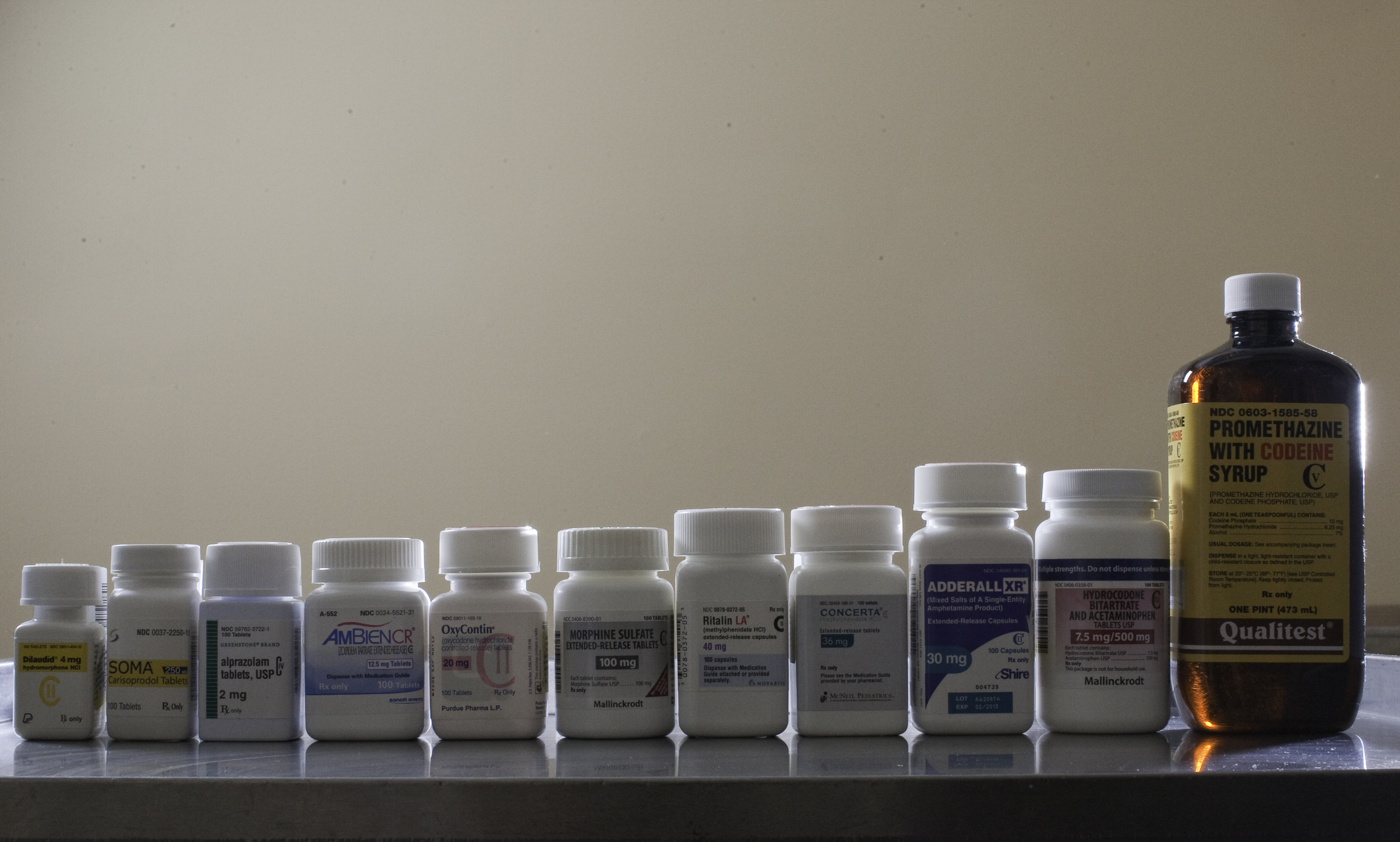
The U.S. Drug Enforcement Administration classifies drugs in its schedule of controlled dangerous substances according to a scale based on potential for abuse. Schedule I drugs have the highest potential for abuse, explains Malcolm J. Broussard, executive director of the Louisiana Board of Pharmacy. Here’s a summary, including penalties for basic possession:
Schedule I
Illicit drugs such as heroin, cocaine, LSD, mescaline and marijuana.
Schedule II
Potent painkillers such as Percocet, Dilaudid and OxyContin. Strong stimulants such as Ritalin, Adderall and Concerta.
Schedule III
Anabolic steroids, barbiturates and the painkiller hydrocodone, an opiate that’s mixed with acetaminophen.
Schedule IV
Sedatives such as Xanax, Valium and Ambien.
Schedule V
Pseudoephedrine (an ingredient used to make methamphetamine), promethazine with codeine syrup (above) and Cheratussin DAC.
The Penalties
Generally, possession of Schedule I and II drugs (felony grade) carries a penalty of up to 5 years in prison and up to a $5,000 fine. Distribution or possession with intent to distribute the same carries a penalty of 5 to 30 years, and up to a $50,000 fine.
First-offense possession of marijuana in small amounts with no evidence of intention to distribute is a misdemeanor. Conversely, unlawful possession of one pill of hydrocodone is a felony.