Write on: Sands of time

I’ll never forget the shells.
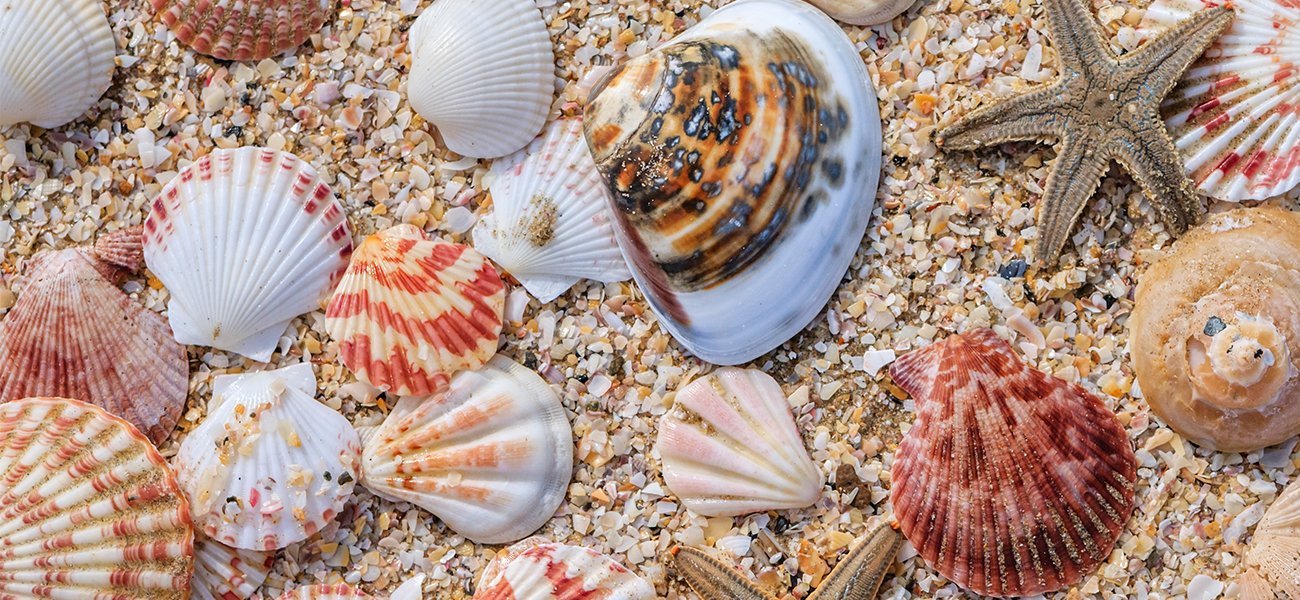
There was hardly any sand on Florida’s Sanibel Island after Hurricane Irma. Only shells. Thousands of them blanketed the ground, clustered in mounds taller than antpiles. They crunched beneath my feet as I walked.
Most were half-moon shaped and tinier than my toes. Some were sharp and broken, but many were perfect, with smooth pink, white and peach ridges.
There were conch shells, too, and sand dollars. I’d never seen so many.
Sanibel has always touted itself as the seashell capital, but this was on another level. They’d been washed ashore by the violent storm, and I was stunned by how many remained nearly two weeks after its landfall.
I scooped them up by the handful, cradling them in my swim cover-up as a makeshift basket.
My family and I almost canceled that trip. It was September 2017, less than two weeks after the Category 4 storm’s eye passed over the surrounding area.
Our itinerary had been planned for months—a long weekend getaway to spend time together on the beach eating fish tacos. But in light of the storm, we wanted to be respectful.
I ended up flying out of Louisiana anyway. But we ventured to Florida’s southwest coast cautiously, ready for a lowkey trip because many restaurants and businesses were still closed.
Baton Rouge’s August 2016 flood was still fresh in my mind, so I wasn’t sure what to expect when we arrived. The island was eerily deserted, and some places still didn’t have power.
But while I did see plenty of split trees, half-sunken boats and water lines on houses, I remember feeling relieved that the damage didn’t seem to be as bad as I’d feared. The coast would recover, as it always has.
So it was those shells that really struck me. They were a strangely beautiful reminder of nature’s power. I wondered how many miles of ocean the storm had dragged them over. I thought about how many mollusks and sea creatures were lost to the hurricane.
And I couldn’t help but think back to all the trips I’d taken to the island as a child. I grew up a three-hour drive from Florida’s west coast, so Sanibel was my family’s go-to easy, affordable trip.
As an elementary schooler, I walked the shores in wonder, a bucket in hand as I tried to collect as many treasures as I could.
Once, when I was around 5, I ran along the edge of the water chasing a shell as the currents pulled it away from me. I got so caught up in the chase, I got separated from my parents.
I remember running along the beach in tears, terrified I’d never see my family again. Some nice teenagers found me, and I sat sniffling with them until my dad appeared on the horizon.
But as I got older, the shells lost their allure. By the time I entered my 20s, I was tired of the beach. I’d entered that anywhere-but-here phase in my life.
But there was something about that 2017 trip that felt special—returning to this place from my childhood for the first time as an adult, only this time spending the time with my parents talking about grown-up things. And then to see this place I knew like the back of my hand suddenly in its most vulnerable, damaged state—it made me realize how I’d taken it for granted.
I took so many shells back to Baton Rouge from that trip—shells in all shapes, sizes and colors, as many as I could stuff into a Mason jar stowed in my suitcase.
When Hurricane Barry threatened Louisiana last month, it brought back all my storm memories. Like anyone who grew up in the coastal South, I have many.
But this time, I pulled out my shell jar and sifted through its contents. I thought back to that Sanibel trip, watching kids play in the sunset and how full circle it felt—as if I were watching my own childhood replay as they danced around the waves.
And just like when I was a kid, I put one of the shells to my ear to hear its comforting song. Hey, it seemed to say, it’s all going to be OK.
This article was originally published in the August 2019 issue of 225 Magazine.