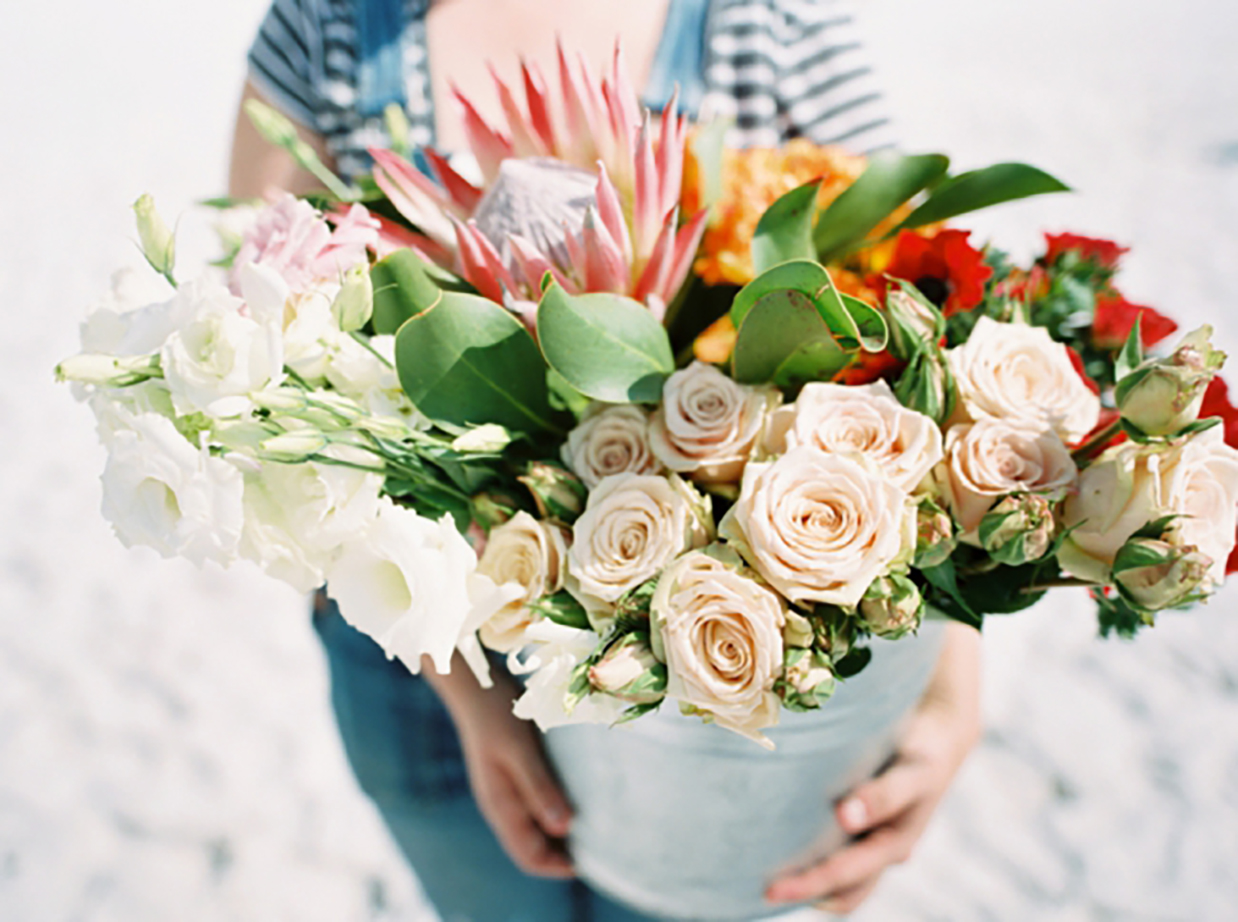
DIY a summer floral arrangement with tips from local florist Mary Johnston
Mary Johnston has been known to pull over on the side of the road for a good flower.
She keeps clippers in her car’s console and a bucket in her backseat, so she’s always ready to forage if she spots something interesting.
“My mom’s like, ‘You do what on the interstate?’” she says with a laugh.
But it’s perhaps this daring sense of adventure that makes Johnston’s bouquets so special. When she creates arrangements for weddings and events through her business Merry Floral, she always keeps her recipients’ styles in mind.
The resulting bouquets are full of texture and personality—from tall, skinny greenery arrangements with one or two flowers poking upward to wide, show-stealing setups with yellow roses, pink peonies and orange lilies bursting out the sides.
During one of her recent pop-up flower design workshops, she advised attendees to embrace the fact that no two flowers are alike.
“Don’t worry about droopy flowers,” she says. “Appreciate its shape instead.”
Here are some of her secrets. Follow @merryfloral on Instagram for more.
FLORAL ARRANGEMENT TIPS
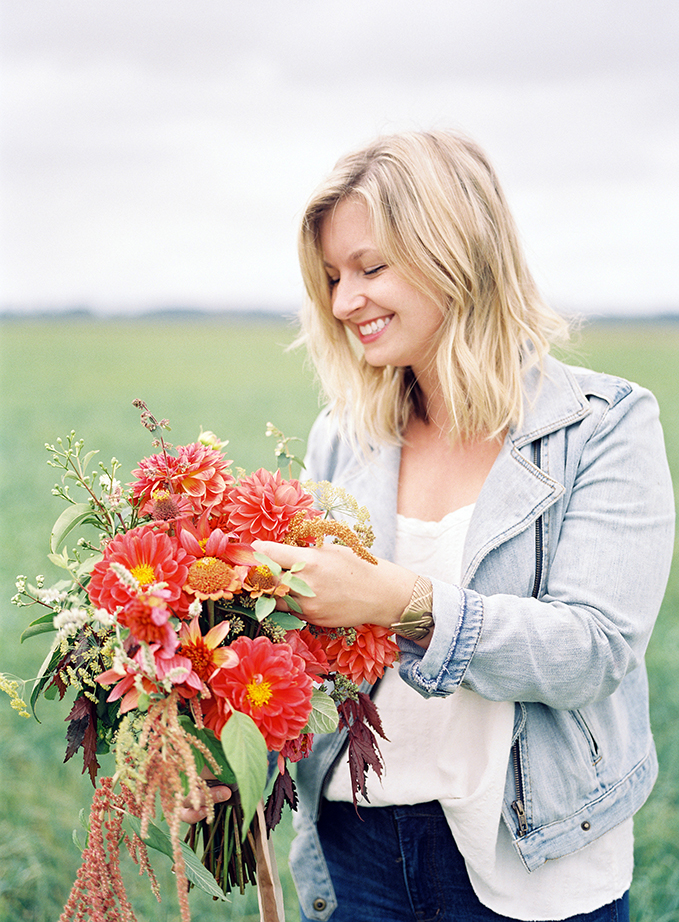
1. Flowers don’t have to be expensive. Cheap grocery store and farmers market picks work just as well as bouquets from high-end floral shops. “I love to get flowers at Trader Joe’s or Robért Fresh Market on Highland while I do my grocery shopping,” Johnston says.
2. Choose a vessel that fits the style you are going for. She finds quirky vintage vases at antique shops and modern, rustic pots at craft stores.
3. Fill the vessel with water and chicken wire. To hold the arrangement in place inside the vase, some florists poke flowers through foam. Johnston prefers placing chicken wire above the water line. You can mold, bend and cut the wire to fit the vase.
Wire offers more flexibility for rearranging the design as you work
to get it just right.
4. Add greenery and filler flowers first. She likes to design in a triangle shape, adding berries, Queen Anne’s lace and ivies at different heights while leaving spaces for flowers.
5. Fill in the holes with flowers until you can’t see the chicken wire anymore. For a fuller arrangement, mix flowers of all sizes, shapes and colors. Don’t just use magenta and white—the contrast is too extreme, she says. Mix oranges and yellows in for balance.
6. Take care of the water. As you’re working, use a clipper to remove any leaves at water level. Cut the stems at an angle, which allows them to drink more water.
7. Design at eye level. If the arrangement is too high, you won’t be able to see over it. Johnston uses a Lazy Susan to rotate her arrangement so she can also see what it looks like from all sides.
“It should always look like it’s finished on every side,” she says.
8. Ta-da! You’re done. Admire your finished product, and water accordingly.
This article was originally published in the August 2017 issue of 225 Magazine.