Grape Crush: Bold wines for May
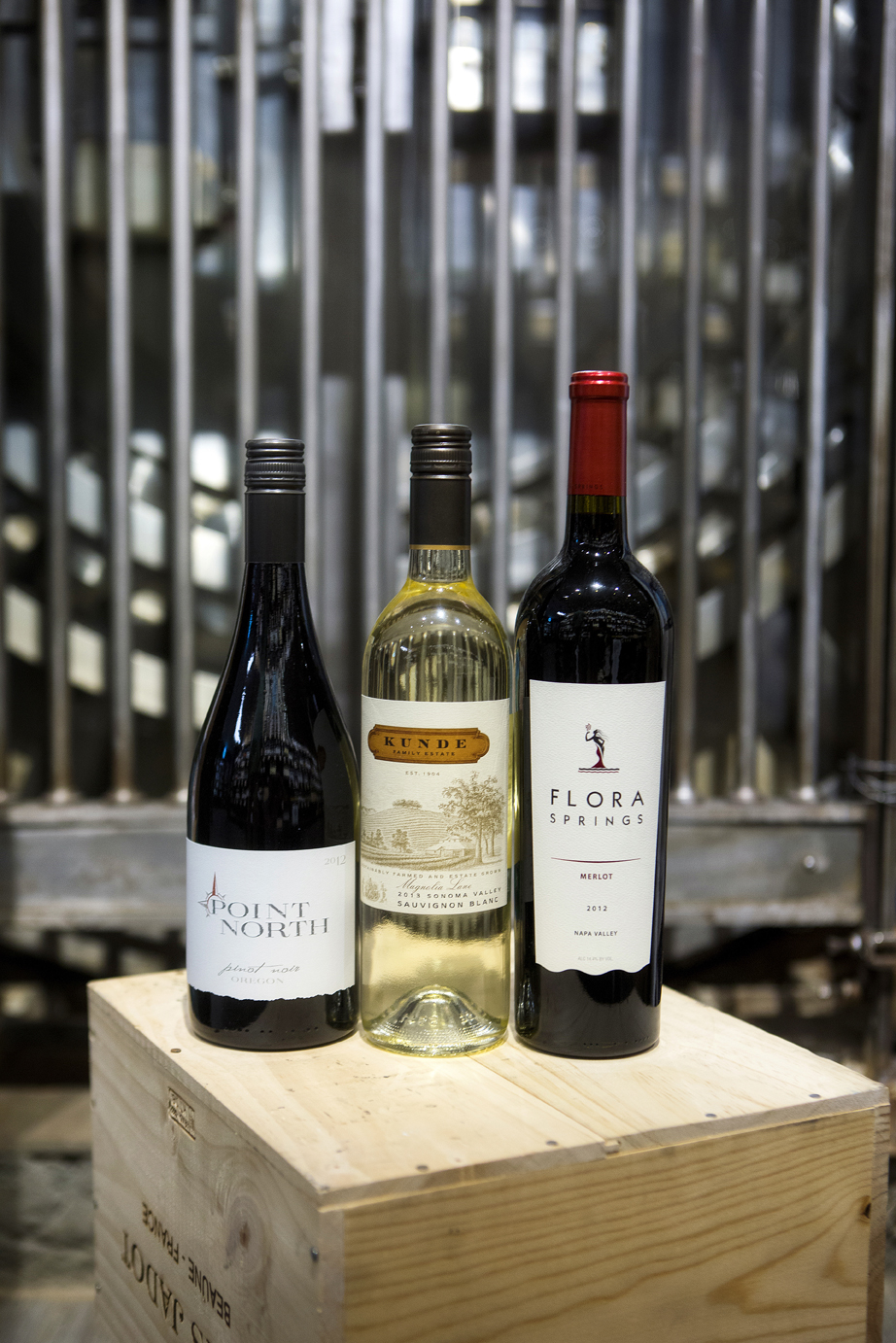
Three boldly flavored wines found at the new Matherne’s Market downtown. The wine cellar is housed in the building’s old bank vault. Photo by Collin Richie
This month, we rely on a few practical tenets: It’s hard to beat sauvignon blanc for general food friendliness. The right pinot noir is like a reliable best friend. And some merlots are consistently good and never should have gone out of style, no matter what the movie Sideways advised.
Matherne’s Supermarket General Manager Bill Hounshell gave us a hand in selecting this month’s picks. Hounshell helped develop and expand the wine program at the Highland Road Matherne’s, which holds vast selections and hosts monthly wine dinners.
Hounshell has been stationed at the new Matherne’s Market downtown since it opened in January. The bustling urban grocery has a smaller but focused wine selection. These wines are available at both stores.
Kunde
Magnolia Lane • 2013
Sauvignon blanc, Sonoma Valley • $13.99
Crisp and dry, Kunde’s Magnolia Lane is a versatile sauvignon blanc with notes of melon, lemon and lime.
“This is always a favorite of mine,” Hounshell says. “You can really enjoy the brightness of citrus on the nose and melon on the palate. It’s a great warm-weather white.”
Pair it with: shellfish, including fried softshell crab, grilled shrimp with garlicky gremolata or a cheese plate
Point North
Pinot noir • 2012
Oregon • $16.99
This medium-bodied red represents winemaker Sean Minor’s first venture into Oregon. “Beautiful fruit with the subtlety you expect from Oregon,” Hounshell says. Look for notes of berry fruit and cherries and some spice and earthiness. Tannins are soft and round, and there’s a nice lingering finish. This is a good food wine and would be great for Mother’s Day or graduation dinners.
Pair it with: bleu cheese burgers with caramelized onions, a gourmet BLT, veal piccata or grilled bone-in pork chops
Flora Springs
Merlot • 2012
Napa Valley, $17.99
“We’re beginning to see customers return to merlots,” Hounshell says. “This Napa Valley treasure is always good, year after year. It’s full enough to be used instead of a [cabernet], but the tannins are soft enough to pair with a larger variety of foods.” Look for notes of berry fruit, licorice and spice.
Pair it with: grilled pork or poultry, steak or tomato-based Italian dishes